Landscape architect Roberto Burle Marx, featured in a new exhibition in Rio de Janeiro, used the principles of cubism and abstraction to create modern landscapes using native tropical plants.


"It was while studying painting in Germany during the Weimar Republic, as he would later tell it, that Burle Marx realized that the vegetation Brazilians then dismissed as scrub and brush, preferring imported pine trees and gladioli for their gardens, was truly extraordinary. Visiting the Botanical Garden in Berlin, he was startled to find many Brazilian plants in the collection and quickly came to see the untapped artistic potential in their varied shapes, sizes and hues.
"The way he synthesized art and horticulture in three-dimensional design is really quite exceptional," said Mirka Benes, a landscape historian who teaches at the University of Texas at Austin. 'He truly had a painter's eye, which you could sense in his superb sense of color and form, and he had an understanding of the tenets of Modernism and Dada, having clearly known and studied the work of people like Hans Arp.'"
Read the full story: A New Look at the Multitalented Man Who Made Tropical Landscaping an Art
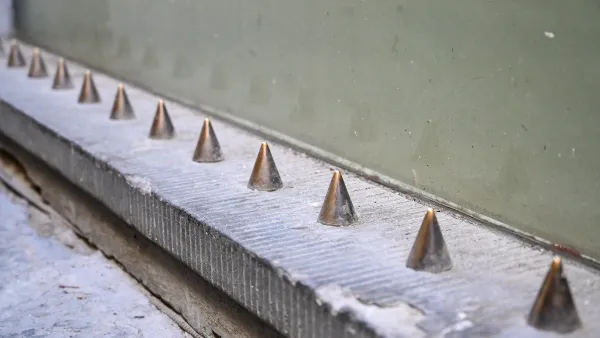
One Year Into Brazil’s ‘Hostile Architecture’ Ban
A recent law prohibits ‘defensive’ architecture designed to keep people away from buildings or public spaces.
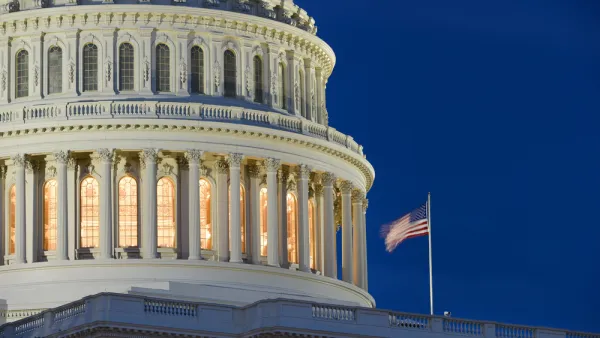
Senate Vote Illustrates America's Polarized Response to Pandemic
A Senate joint resolution to roll back the Biden administration's only vaccine mandate to be upheld by the Supreme Court passed on a party-line vote on March 2. In Europe, the legislative branch often needs to approve these measures to become law.
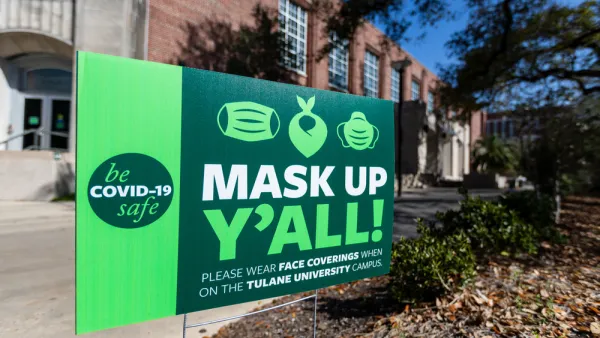
COVID Deaths: U.S. in a League of its Own
An analysis by The New York Times compares current and cumulative COVID deaths in the U.S. to other large, wealthy countries. Data analyzed include vaccination, age and obesity levels, and public trust, all factors that influence outcomes.

Planetizen Federal Action Tracker
A weekly monitor of how Trump’s orders and actions are impacting planners and planning in America.

California plans to bury El Niño’s downpour
If the state plays its cards right, it may be able to store a billion acre-feet of El Niño’s water in aquifers.

Desperate measures: Advocates weigh draining Lake Powell to fill Colorado River
Draining the reservoir could reduce evaporation losses by a couple hundred thousand acre-feet.

US buildings threatened, destroyed by fires set to triple by 2060
Researchers found a high fire risk for socioeconomically vulnerable neighborhoods in the American West.

LA residents may be allowed to paint their own crosswalks
Councilwoman Katy Yaroslavsky put out a motion instructing the Los Angeles Department of Public Transportation to study the feasibility of allowing volunteers to paint crosswalks.

Dallas moves to overhaul its zoning code
The city's zoning reform will allow more multi-family and mixed-use developments.

FREE Course: Walkable City 1: Why Walkability?
After describing his path towards focusing on walkability as the essence of good planning, Jeff Speck marches through his five principal reasons for making more walkable places.
Reinventing Malls: Planning Alchemy—Turning Gray Fields Into Gold
The course focuses on the opportunities and imperatives that shape reinvention of mall sites.

City of Rosemead
Rutgers University, Edward J. Bloustein School of Planning and Public Policy
One Hundred Miles
Hunter College, City University of New York (CUNY)
The Architects Foundation
University of Cincinnati Online
City of Cambridge
Montrose County
The Pocatello Development Authority