The question is no longer how to improve the suburbs, says Allison Arieff, but what we're going to do with all the leftover buildings and unfinished sites.


"For a long time now I've been obsessed with suburban and exurban master-planned communities and how to make them better. But as the economy and the mortgage crisis just seem to get worse, and gas prices continue to plunge, the issues around housing have changed dramatically. The problem now isn't really how to better design homes and communities, but rather what are we going to do with all the homes and communities we're left with.
In urban areas, there's rich precedent for the transformation or reuse of abandoned lots or buildings. Vacant lots have been converted into pocket parks, community gardens and pop-up stores (or they remain vacant, anxiously awaiting recovery and subsequent conversion into high-end office space condos). Old homes get divided into apartments, old factories into lofts, old warehouses into retail."
Read the full story: What Will Save the Suburbs?

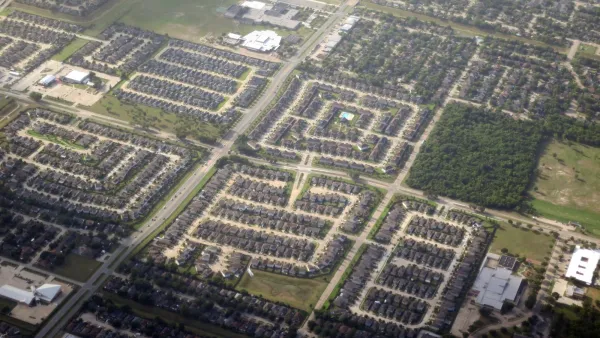
How to Fix Racist Housing Policies: Sue the Suburbs
Strengthening U.S. Department of Housing and Urban Development's civil rights enforcement could send a powerful signal to communities resistant to changing discriminatory housing rules.
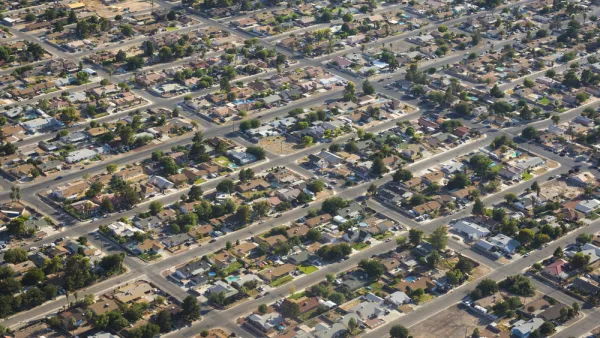
The Problems With Suburbs Are Numerous. Is a Change of Course Possible?
American suburbs are growing, and understanding the evolution of suburban sprawl is a useful guide for the future.
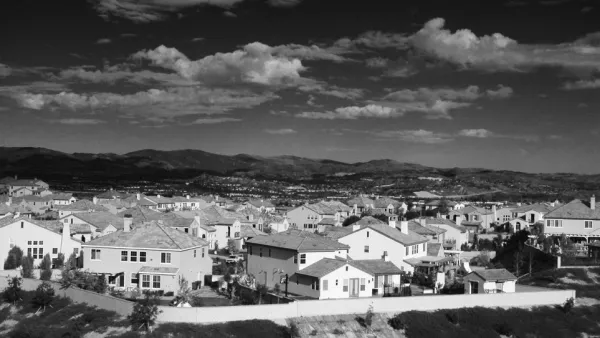
Homebuyers Return to the Exurbs
It's been a while since 2008, and a new crop of homeowners is colonizing the far-flung exurbs. Mostly foreclosed and even abandoned last time around, the exurbs are still a risky buy.

Planetizen Federal Action Tracker
A weekly monitor of how Trump’s orders and actions are impacting planners and planning in America.

Amtrak, CN end decades-long dispute with eight-year agreement
The new operating agreement establishes an updated framework for the companies to work together, including processes to resolve disputes.

Judges permit Denver to divert 77,000 acre feet from the Colorado River for reservoir expansion
Overuse and climate change have caused the Colorado River’s water levels to plummet.

NYC DOT wants faster, more permanent street upgrades
The city is examining ways to build more concrete infrastructure without getting entangled in 'decades-long' projects.

'Something we’ve never seen before:' rising utility rates could strain city finances nationwide
Data centers, climate change and other factors have caused utility rates in the United States to increase by 38% since 2020.

Trump to overrule local leaders, lease millions of acres of America’s Pacific Island territories’ seafloors to mining companies
International law says that the Indigenous people of America’s territories have a right to prior and informed consent regarding projects that impact their countries.

FREE Course: Walkable City 1: Why Walkability?
After describing his path towards focusing on walkability as the essence of good planning, Jeff Speck marches through his five principal reasons for making more walkable places.
Reinventing Malls: Planning Alchemy—Turning Gray Fields Into Gold
The course focuses on the opportunities and imperatives that shape reinvention of mall sites.

Harvard University Graduate School of Design
KFH Group Inc.
Greater Baltimore Committee
The Architects Foundation
University of Cincinnati Online
The Pocatello Development Authority
The Urban Renewal Agency of the City of Pocatello