Job growth is slower in areas that don't have enough housing, according to a new study.


"Housing production - more than home prices or tax levels - is among the most important factors in promoting long-term job growth, a new study concludes. The study, for the Massachusetts Housing Partnership, a quasi-public development agency, analyzed economic conditions in more than 200 US metropolitan areas and found that Greater Boston's failure to build enough housing contributed to its subpar job growth in recent years."
"Boston expanded its housing stock about 6 percent in the 1990s, compared to an average of more than 16 percent among all metropolitan areas, according to the study."
"In the first seven years of this decade, Boston lost jobs at an annual rate of 0.5 percent. Nationally, metropolitan areas gained jobs at an annual rate of 0.6 percent."
"Basically, the lack of housing makes it harder to attract new people, particularly young, educated workers considered critical to the knowledge economy, the study said. Without a growing population and labor force, regional economies won't grow very much."
Read the full story: Study finds housing key to job growth

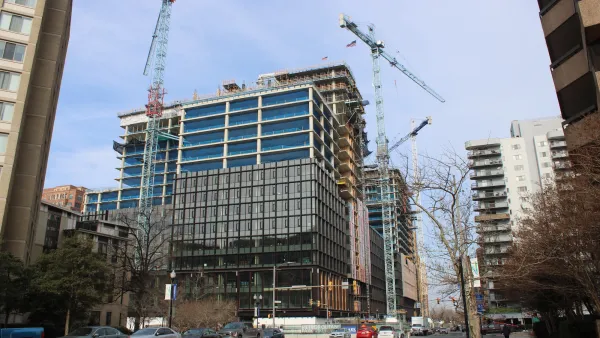
Amazon's HQ2 promised 25,000 jobs. It has created less than a third of that.
Virginia offered Amazon up to $750 million in public subsidies in exchange for creating local jobs and investment.

Data Centers Gaining Ground in Central Ohio
Massive data centers are gobbling up energy resources and tax breaks while creating few jobs in the region.
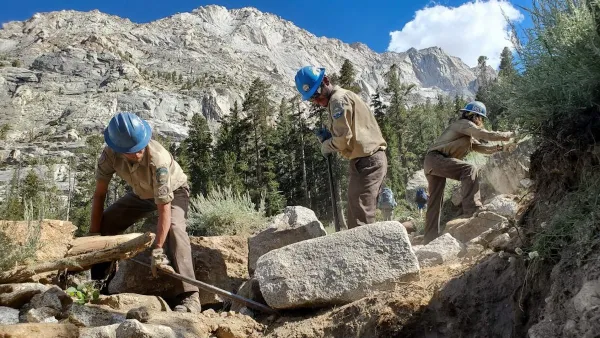
American Climate Corps Echoes New Deal Programs
A new federal initiative places young workers in jobs aimed at building climate resilience, but will it avoid the mistakes of similar programs?

Planetizen Federal Action Tracker
A weekly monitor of how Trump’s orders and actions are impacting planners and planning in America.

The state-sanctioned urbicide of Austin
People don’t kill cities. Freeways do.

US to reduce Colorado River water deliveries to Mexico
A new Colorado Treaty amendment reduces Mexico’s Colorado River water allocation by 250,000 acre feet.

Nation's most wind-powered state turns to coal as data centers increase energy demand
For the first time in decades, Iowa has increased its generation of coal power.

NYC cools commuters with city's first rain garden above a bus stop
New York City officials say the plants in the rain garden can absorb 16 gallons of rainwater during heavy storms.

Brightline West’s future may rely on $6 billion federal loan
The company has until Nov. 2 to make a $400 million equity investment into its proposed high-speed rail line.

FREE Course: Walkable City 1: Why Walkability?
After describing his path towards focusing on walkability as the essence of good planning, Jeff Speck marches through his five principal reasons for making more walkable places.
Reinventing Malls: Planning Alchemy—Turning Gray Fields Into Gold
The course focuses on the opportunities and imperatives that shape reinvention of mall sites.

Eagle County Government
Harvard University Graduate School of Design
Nashville Planning Department
The Architects Foundation
University of Cincinnati Online
The Pocatello Development Authority
The Urban Renewal Agency of the City of Pocatello
Journal of the American Planning Association