A lot, according to columnist Linda Robertson who makes the case for renaming the nation's most prized stadia. After all, she argues, many of them bear the name of the economy's most troubled corporations bailed out by Terry taxpayer.


"It's time to rename our sports stadiums, pro tournaments and college bowl games.
Erase the names of all those financial institutions and name the stadium after yourself.
Why not Joe Lunchbucket Arena instead of Comerica Park? You're paying for it.
If you can't get a piece of the $700 billion bailout, get a piece of your local sports palace, which you probably also subsidized when it was built.
Your tax dollars are now paying for dubious branding and sponsorship deals. So let's advertise hard-working Americans rather than wasteful, foundering corporations run by inept CEOs."
Read the full story: Stadium names too costly for us
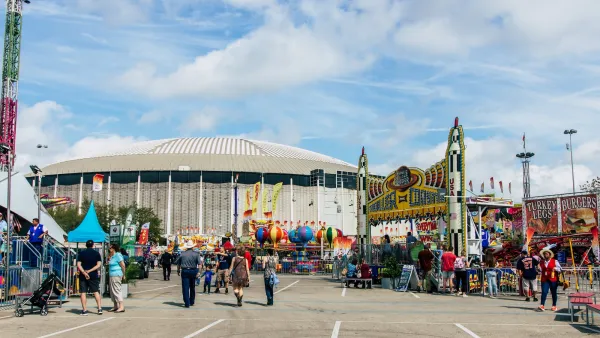
Saving the Houston Astrodome Could Cost $750 Million
Local residents have shown strong support for using public funds to preserve and restore the historic stadium as an entertainment venue.
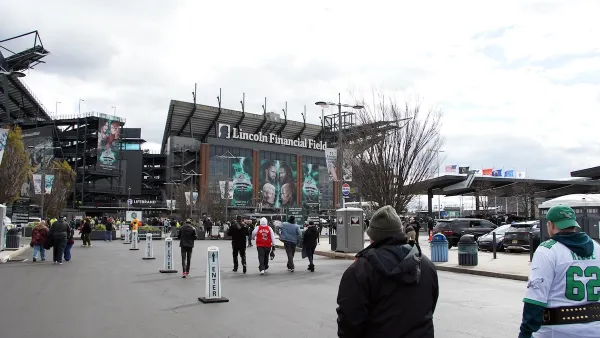
Sports Gambling Company Sponsors Suspended Philly Stadium Train Amidst SEPTA Cuts
After SEPTA announced it would have to cut the subway line that leads to Lincoln Field, FanDuel offered $80k to keep the train running for the season opener.

Planetizen’s Top Urban Planning Books of 2024
Top of mind in 2024 were the far-reaching impacts of climate displacement, zoning as a solution to the housing crisis, and the potential for safer roads and better public transit in American cities.

Planetizen Federal Action Tracker
A weekly monitor of how Trump’s orders and actions are impacting planners and planning in America.

Eastern Nebraska is running out of electricity
Data centers and electrification are straining eastern Nebraska’s grid, throttling economic development.
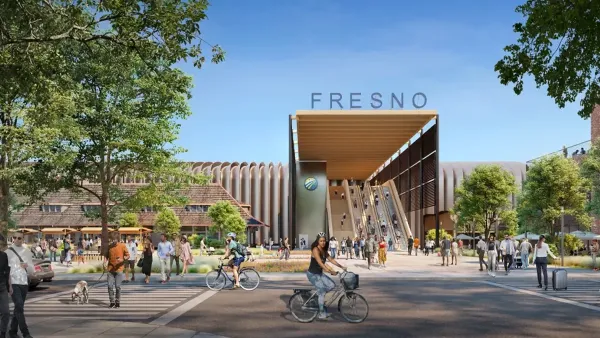
California High-Speed Rail Authority picks trainset manufacturer
The California High-Speed Rail Authority aims to start servicing passengers by 2033.

Massachusetts bogs generate both power, and cranberries
Putting solar panels above farmland is one way Massachusetts is advancing toward its goal of net-zero carbon emissions by 2050.

What could the future of LA transit look like under Raman?
The mayor-elect views broken sidewalks and potholes as crises that can be fixed with better governance.

States are counting on battery farms. Some towns don’t want them.
While fire safety has improved, some communities are still wary.

FREE Course: Walkable City 1: Why Walkability?
After describing his path towards focusing on walkability as the essence of good planning, Jeff Speck marches through his five principal reasons for making more walkable places.
Reinventing Malls: Planning Alchemy—Turning Gray Fields Into Gold
The course focuses on the opportunities and imperatives that shape reinvention of mall sites.

City of Rosemead
Rutgers University, Edward J. Bloustein School of Planning and Public Policy
One Hundred Miles
University of Michigan School for Environment and Sustainability (SEAS)
Hunter College, City University of New York (CUNY)
The Architects Foundation
City of Cambridge
The Pocatello Development Authority
The Urban Renewal Agency of the City of Pocatello