CoolTown Studios looks at a recent study in Portland, OR that shows that certain retail establishments- cafes, movie theaters, wine bars- increase property values in neighborhoods by up to 30%.


"Their study concludes that property values within a block and a half would be affected accordingly by the following businesses:
- Neighborhood theater - 14-30% higher property values. Some positives cited by the study include an increase in pedestrian traffic (safety) at more hours of the day, and the fact that such theaters have no parking which encourages a more local crowd. Neighborhood theaters also tend to play avant-garde, foreign and indie films, which attract more creatives, which then attract higher home values.
- Specialty grocery store - 20% higher property values. One explanation could be that because people will pay a bit of a premium for healthier groceries, they also have the income to pay a premium to live nearby. Then again, who doesn't want to live within walking distance of their favorite grocery.
- Wine bars - 11-21% higher property values. A quiet third place, something many people wouldn't mind living near."
Read the full story: Small movie theaters raise property values 30%?

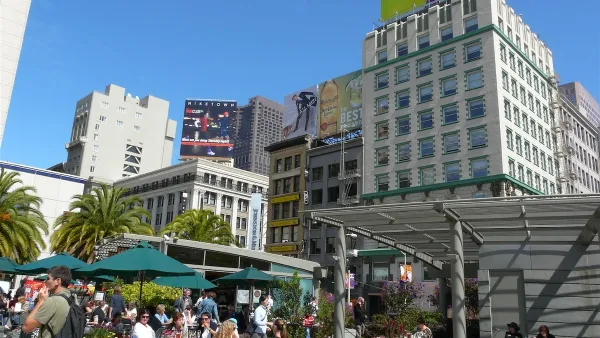
Traditional Retail is Hanging by a Thread. What Now for Cities?
After Kaid Benfield paints a rather grim retail outlook — where even retail bastions like San Diego are going dark — he suggests a series of actions for city leaders and planners.
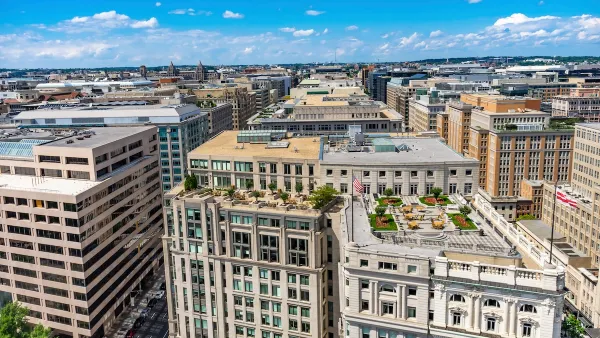
DC Announces ‘Office to Anything’ Adaptive Reuse Program
The program complements an existing residential conversion initiative and could yield up to 2.5 million square feet of new commercial space.
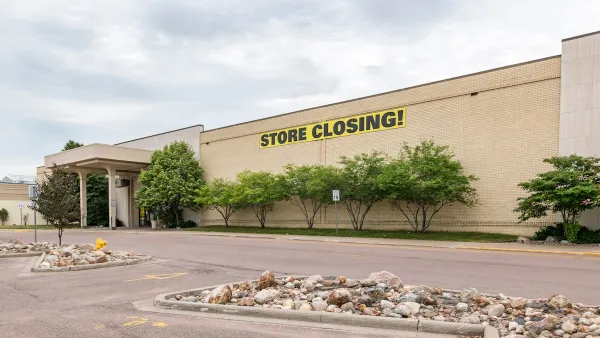
Shifts in Shopping: Transforming Malls Into Parks
Maybe zombie malls still have a second life — one with a little greenery.

Planetizen Federal Action Tracker
A weekly monitor of how Trump’s orders and actions are impacting planners and planning in America.

California plans to bury El Niño’s downpour
If the state plays its cards right, it may be able to store a billion acre-feet of El Niño’s water in aquifers.

Chicago breaks ground on $3 billion megadevelopment
The new neighborhood, titled Foundry Park, will one day host 3,700 residences.

Satanic place names
From streams and lakes to valleys and canyons, I mapped more than 1,000 places named after the Devil.

California High-Speed Rail Authority CEO resigns after $600,000 scandal
Under Ian Choudri, the authority used taxpayer dollars to fund first class flights and trips to nightclubs.

Want to study the Missouri River? Soon, you may need unanimous approval from 10 states
Legislation would require 10 governors’ permission to study or build projects moving water outside the basin.

FREE Course: Walkable City 1: Why Walkability?
After describing his path towards focusing on walkability as the essence of good planning, Jeff Speck marches through his five principal reasons for making more walkable places.
Reinventing Malls: Planning Alchemy—Turning Gray Fields Into Gold
The course focuses on the opportunities and imperatives that shape reinvention of mall sites.

City of Rosemead
Rutgers University, Edward J. Bloustein School of Planning and Public Policy
One Hundred Miles
Hunter College, City University of New York (CUNY)
The Architects Foundation
University of Cincinnati Online
City of Cambridge
Montrose County
The Pocatello Development Authority