Development encroaches on one of the last family farms in Orem, Utah. Now the Cook Family Farm intends to stand their ground in the face of new city mandates and developer pressure.


"Farmland along Utah's Wasatch Front is quickly being devoured by housing, big box stores and retail outlets. As corporate investment is flowing into Utah, cities are competing for tax revenue these will projects provide. Consequently, there are very few farms close to city centers, and there is no longer a agricultural zoning that once protected suburban farmers. Instead, farmers are zoned as mixed-multipurpose use. This allows cities to mandate that farmers obtain building permits for greenhouses and barns. In the latest twist, Orem City, Utah is imposing on Farmer Verl Cook, a requirement to provide a half-acre parking lot for his greenhouse customers, a $150-$200 thousand dollar expense.
Verl Cook's Greenhouse and Farm is providing fresh cheap produce for Salt Lake City's Farmer's market, one of the last large operation farms able to satisfy the "localvore" movement, all the while he is being pressured by both developers and Orem city to sell. According to Cook, these City mandates and pressure is all in an effort by Orem City to reap the rewards of an additional mega store or housing project where his farm is located (just off Interstate 15)."
Thanks to Richard Paul Markosian
Read the full story: Holding His Ground
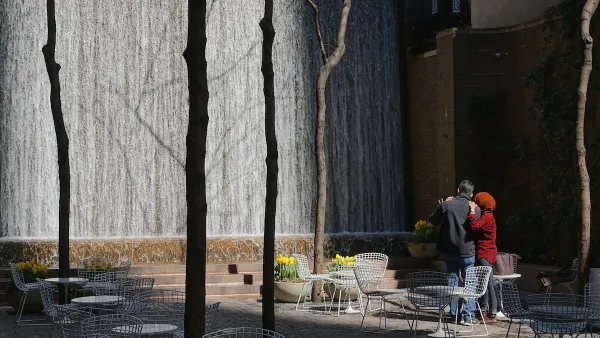
Creative Ways to Activate Roofless Buildings and Vacant Lots
Pocket parks aren’t the only way to repurpose underused urban spaces.

California Bill Would Streamline Permitting for Farmers’, Night Markets
The state currently has no unified process for night markets and other recurring events, making it difficult and costly for organizers.
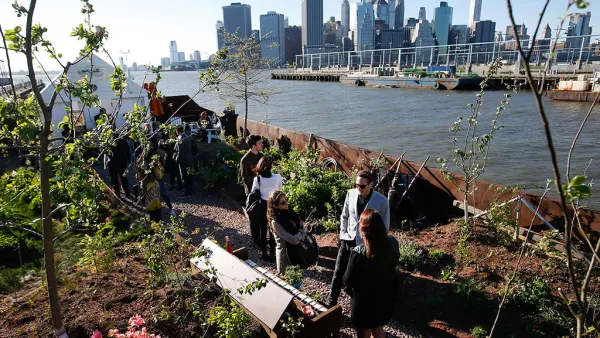
A Floating Food Forest In New York City
New York's 'barge-to-table' floating farm gives city residents without access to farmland the opportunity to pick their own food.

Planetizen Federal Action Tracker
A weekly monitor of how Trump’s orders and actions are impacting planners and planning in America.

California plans to bury El Niño’s downpour
If the state plays its cards right, it may be able to store a billion acre-feet of El Niño’s water in aquifers.

Desperate measures: Advocates weigh draining Lake Powell to fill Colorado River
Draining the reservoir could reduce evaporation losses by a couple hundred thousand acre-feet.

In Texas, data centers are swallowing promised parkland
Residents who moved to Taylor, Texas for a rural community now have to contend with three data centers in their backyard.

How a Chicago-sized wind farm beat the odds and powered on
The project spanned five presidential administrations and a standoff with a U.S. military base.

MTA gives itself 30 days to transform pit into basketball court
The site has been under construction since 2022; the city originally estimated it would finish the court in 2024.

FREE Course: Walkable City 1: Why Walkability?
After describing his path towards focusing on walkability as the essence of good planning, Jeff Speck marches through his five principal reasons for making more walkable places.
Reinventing Malls: Planning Alchemy—Turning Gray Fields Into Gold
The course focuses on the opportunities and imperatives that shape reinvention of mall sites.

City of Rosemead
Rutgers University, Edward J. Bloustein School of Planning and Public Policy
One Hundred Miles
Hunter College, City University of New York (CUNY)
The Architects Foundation
University of Cincinnati Online
City of Cambridge
Montrose County
The Pocatello Development Authority