Scenic resort towns are increasingly attracting older residents, creating a population boom that far surpasses growth rates in many cities and urban areas.


"More and more Americans are flocking to resort-like cities, places like Flagstaff, Ariz., a quaint college town near the Grand Canyon. For some, it's a move to paradise. But it can come with a steep price."
"Newcomers like Stone have been flocking to Flagstaff and other picturesque resort and college towns since the 1970s. But in the past decade, their numbers have exploded."
"Kenneth Johnson, a senior demographer at the University of New Hampshire's Carsey Institute, has a name for people like the Stones: 'amenity migrants.'"
"'Like many of us, they would say, 'Boy, when I can, I would really like to live in one of these beautiful, scenic areas,'' Johnson said. 'And as they get close to retirement, they can fulfill those wishes' - either in full retirement or by working a more flexible schedule."
"Johnson has identified 300 recreation or amenity regions attracting new residents, from Western ski towns to New England and the lake country of the upper Midwest."
"While other small towns are struggling, these communities are booming. They're growing two to three times faster than other rural areas, even faster than many metro areas. And as the baby boomers retire, Johnson says, the migration will accelerate."
Read the full story: 'Amenity Migrants' Alter Life In Resort Towns
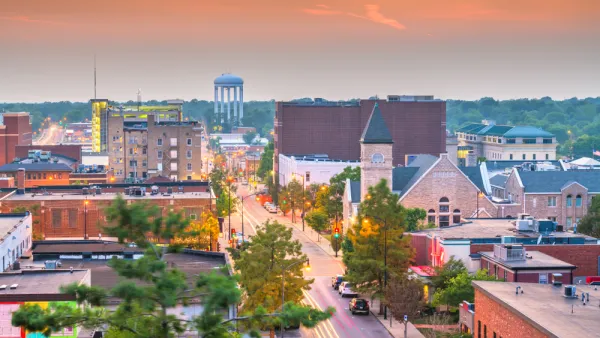
Small Towns Grow Faster Than Cities for First Time in Decades
Cities of 4 million or more people lost 600,000 residents to domestic migration.
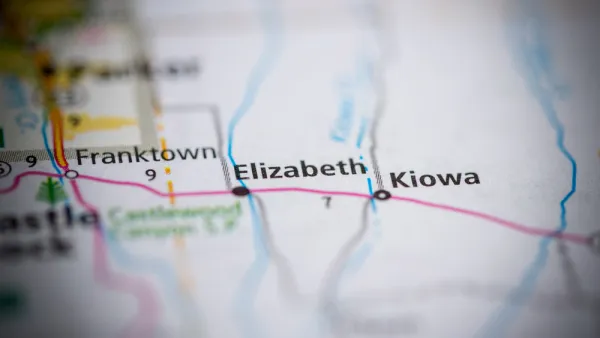
Rapid Growth and a Small Town Recall Effort
A group of organizers in the small town of Elizabeth, Colorado (population 1,700) wants to recall its entire City Council as an act of defiance in the face of rapid change and growth.
Small Towns in the Western U.S. Achieving Population and Economic Growth
A small town success story in Montana is indicative of a larger trend in the Western United States. Meanwhile, small towns in the rest of the country struggle.

Planetizen Federal Action Tracker
A weekly monitor of how Trump’s orders and actions are impacting planners and planning in America.

Eastern Nebraska is running out of electricity
Data centers and electrification are straining eastern Nebraska’s grid, throttling economic development.

Study reveals best places in the U.S. for cycling, walking
New research from Streetlight Data examines bicycle and pedestrian miles per capita in the 100 largest U.S. cities by population.

DSA members accuse Mamdani of 'abandoning values' over housing redevelopment
New York City's mayor plans to replace about 2,000 units of public housing with private, mixed-income housing.

All sides of BRT debate unhappy with CDOT’s most recent move
The Colorado Department of Transportation is no longer considering center-running bus lanes for Colorado Boulevard.

Massachusetts bogs generate both power, and cranberries
Putting solar panels above farmland is one way Massachusetts is advancing toward its goal of net-zero carbon emissions by 2050.

FREE Course: Walkable City 1: Why Walkability?
After describing his path towards focusing on walkability as the essence of good planning, Jeff Speck marches through his five principal reasons for making more walkable places.
Reinventing Malls: Planning Alchemy—Turning Gray Fields Into Gold
The course focuses on the opportunities and imperatives that shape reinvention of mall sites.

City of Rosemead
Rutgers University, Edward J. Bloustein School of Planning and Public Policy
One Hundred Miles
University of Michigan School for Environment and Sustainability (SEAS)
Hunter College, City University of New York (CUNY)
The Architects Foundation
City of Cambridge
The Pocatello Development Authority
The Urban Renewal Agency of the City of Pocatello