The cost of commuting is beginning to trump federal policies favoring exurban development, and transit ridership is at a fifty year high.


"Since the end of World War II, government policy has funded and encouraged the suburban lifestyle, subsidizing highways while starving mass transit and keeping gas taxes much lower than in some other countries...But there's been a radical shift in recent months. Americans drove 9.6 billion fewer highway miles in May than a year earlier. In the Washington area and elsewhere, mass transit ridership is setting records. Last year, transit trips nationwide topped 10.3 billion, a 50-year high."
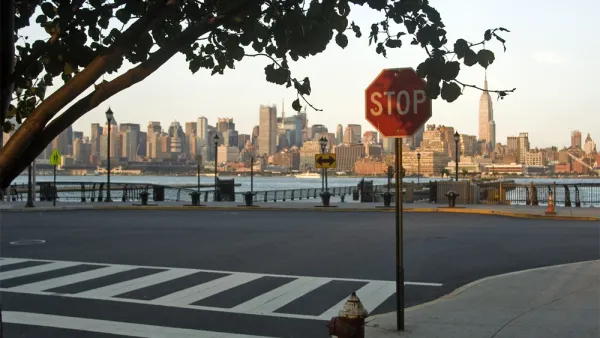
Some experts do not expect a major reshuffling of the American urban order, but it is clear that Americans have begun to reorganize their priorities around the expectation of continued high fuel costs. This means choosing more fuel-efficient cars, looking for ways to reduce vehicle miles traveled, and moving into more dense neighborhoods closer to urban cores. While much of the evidence is still anecdotal, many Americans have clearly begun to re-examine their attitude toward density.
Thanks to Franny Ritchie
How the Post-Pandemic Future Could Resemble the Pre-Pandemic Future
Response to coronavirus challenges in urban settings will likely be a continuity of work started decades ago.
New Report Ranks Metros on Transportation, Land Use, and More
To make a strategic assessment of the St. Louis region, the 7th edition of "Where We Stand" ranks the largest 50 metropolitan areas on more than 200 variables.
Louisville Wrestles With Freeway Dilemma
Critic Michael Kimmelman, fresh back from Louisville's Idea Festival, questions why that quickly emerging city wants to double down on a new freeway expansion through its downtown while other progressive cities are tearing theirs down.

Planetizen Federal Action Tracker
A weekly monitor of how Trump’s orders and actions are impacting planners and planning in America.

California plans to bury El Niño’s downpour
If the state plays its cards right, it may be able to store a billion acre-feet of El Niño’s water in aquifers.

Desperate measures: Advocates weigh draining Lake Powell to fill Colorado River
Draining the reservoir could reduce evaporation losses by a couple hundred thousand acre-feet.

Chicago voters approve permanent festival grounds, penalty for vacant property owners
Currently, major summer and fall festivals take over public parks for weeks at a time, drawing criticism from nearby residents

NYC votes to cut outdoor dining red tape, speed up permitting
New York City also voted to allow the Department of Transportation to begin work on urgent projects before notifying elected officials.

California appears to reject Prop. 45
The proposition would have expanded the projects that qualify for a streamlined environmental review, effectively paring down the California Environmental Quality Act.

FREE Course: Walkable City 1: Why Walkability?
After describing his path towards focusing on walkability as the essence of good planning, Jeff Speck marches through his five principal reasons for making more walkable places.
Reinventing Malls: Planning Alchemy—Turning Gray Fields Into Gold
The course focuses on the opportunities and imperatives that shape reinvention of mall sites.

City of Rosemead
Rutgers University, Edward J. Bloustein School of Planning and Public Policy
One Hundred Miles
Hunter College, City University of New York (CUNY)
The Architects Foundation
University of Cincinnati Online
City of Cambridge
Montrose County
The Pocatello Development Authority