Planners in Seattle want to add housing to Little Saigon, a neighborhood with a strong Vietnamese culture, without disrupting the district's character or displacing residents.


"The central Seattle neighborhood of Little Saigon is best known for its strong cultural identity and its cluster of Vietnamese groceries, restaurants and other family-owned businesses.
But city planners also know the community east of the International District for its mostly untapped potential for new housing.
That room to grow has officials plotting major change for Little Saigon. Seattle's planning department wants to bring condos and apartments to the business-oriented, close-to-downtown neighborhood surrounded by the Central District, Rainier Valley and Chinatown. A proposal for new zoning could be before the City Council as soon as late this year.
Backers say the new rules would bring vibrancy to the neighborhood while making much-needed room for more Seattle residents. They see today's long blocks of gray, low-slung buildings, vacant parcels and surface parking lots there making way for tree-lined streets and pedestrian-friendly walkways featuring bright storefronts and housing."
Read the full story: Would changes revitalize or swallow Little Saigon?
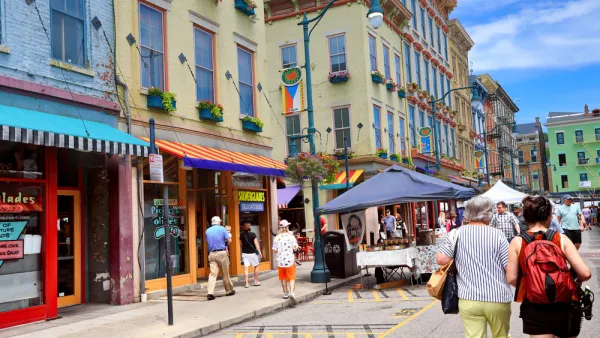
Black Residents Leaving Cincinnati's Fast Growing Urban Area
The housing market in the neighborhood of Over-the-Rhine is a 'segregation machine.'
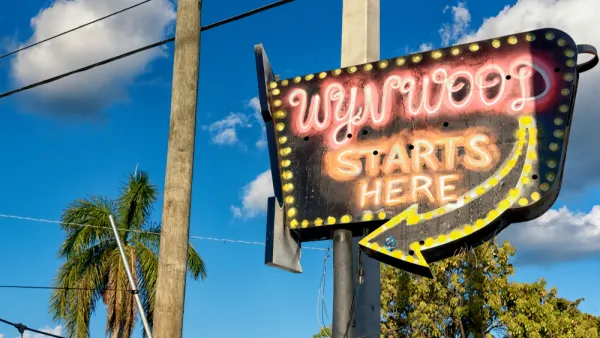
Revitalization Without Displacement: A New Model From Miami
Upzonings in working class neighborhoods usually provoke political opposition based on concerns about gentrification and displacement. But the new Wynwood Norte Neighborhood Revitalization District in Miami might have worked for a solution.
Past Civil Unrest Sets the Table for Today's Gentrification
The story is similar in Washington, D.C., Philadelphia, Los Angeles, Miami, Cincinnati, and Boston: scenes of widespread destruction—the fires, looting, and property damage of civil unrest—sow the seeds for redevelopment and gentrification.

Planetizen Federal Action Tracker
A weekly monitor of how Trump’s orders and actions are impacting planners and planning in America.

California plans to bury El Niño’s downpour
If the state plays its cards right, it may be able to store a billion acre-feet of El Niño’s water in aquifers.

Desperate measures: Advocates weigh draining Lake Powell to fill Colorado River
Draining the reservoir could reduce evaporation losses by a couple hundred thousand acre-feet.

Housing is the top priority of Seattle’s sole new councilmember
Jenks campaigned on building 1,000 new units of affordable housing.

New tax cuts may slash $1.5 billion in funding for Miami transit, public parks
Amendment 3 will save Miami-Dade homeowners $2,700 in 2028.

Arizona, Wisconsin, Pennsylvania hope to finally advance climate goals post-midterms
The three states have spent years under Republican or divided control.

FREE Course: Walkable City 1: Why Walkability?
After describing his path towards focusing on walkability as the essence of good planning, Jeff Speck marches through his five principal reasons for making more walkable places.
Reinventing Malls: Planning Alchemy—Turning Gray Fields Into Gold
The course focuses on the opportunities and imperatives that shape reinvention of mall sites.

City of Rosemead
Rutgers University, Edward J. Bloustein School of Planning and Public Policy
One Hundred Miles
University of Michigan School for Environment and Sustainability (SEAS)
Hunter College, City University of New York (CUNY)
The Architects Foundation
City of Cambridge
Montrose County
The Pocatello Development Authority