The Bureau of Land Management, with a pile of solar power plans on its desk, declares a moratorium on building on public land until they can do environmental impact studies.


"The Bureau of Land Management says an extensive environmental study is needed to determine how large solar plants might affect millions of acres it oversees in six Western states - Arizona, California, Colorado, Nevada, New Mexico and Utah.
But the decision to freeze new solar proposals temporarily, reached late last month, has caused widespread concern in the alternative-energy industry, as fledgling solar companies must wait to see if they can realize their hopes of harnessing power from swaths of sun-baked public land, just as the demand for viable alternative energy is accelerating.
"It doesn't make any sense," said Holly Gordon, vice president for legislative and regulatory affairs for Ausra, a solar thermal energy company in Palo Alto, Calif. "The Bureau of Land Management land has some of the best solar resources in the world. This could completely stunt the growth of the industry.""
Read the full story: Citing Need for Assessments, U.S. Freezes Solar Energy Projects

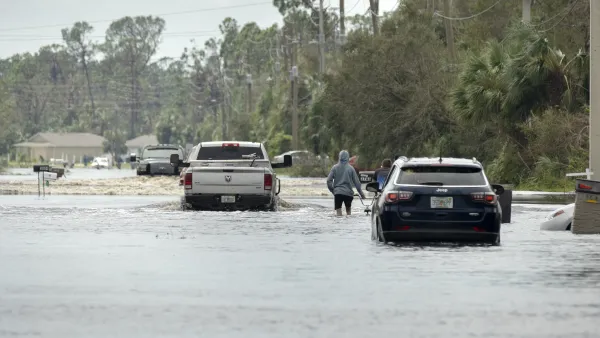
Courts order EPA to release billions in climate grants
The grants primarily funded projects aimed at Black, low-income and disadvantaged communities.
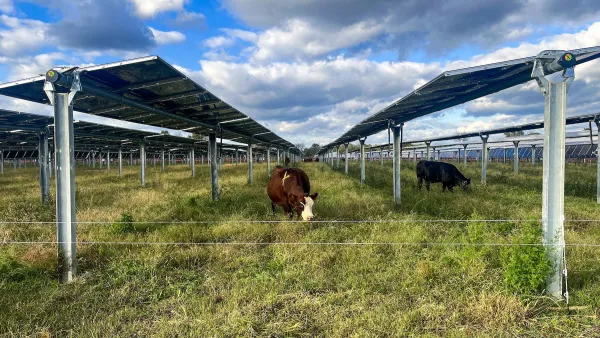
Cows at Tennessee's 'Silicon Ranch' graze under solar panels
The project aims to prove that agriculture and solar energy production can work in tandem.
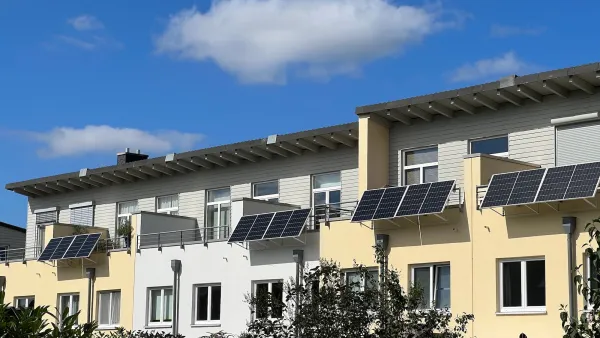
28 States and DC Could Legalize ‘Balcony Solar’
Plug-in solar panels, which are becoming popular across Europe, live in a regulatory gray area in the United States.

Planetizen Federal Action Tracker
A weekly monitor of how Trump’s orders and actions are impacting planners and planning in America.

The state-sanctioned urbicide of Austin
People don’t kill cities. Freeways do.

US to reduce Colorado River water deliveries to Mexico
A new Colorado Treaty amendment reduces Mexico’s Colorado River water allocation by 250,000 acre feet.

Nation's most wind-powered state turns to coal as data centers increase energy demand
For the first time in decades, Iowa has increased its generation of coal power.

NYC cools commuters with city's first rain garden above a bus stop
New York City officials say the plants in the rain garden can absorb 16 gallons of rainwater during heavy storms.

Brightline West’s future may rely on $6 billion federal loan
The company has until Nov. 2 to make a $400 million equity investment into its proposed high-speed rail line.

FREE Course: Walkable City 1: Why Walkability?
After describing his path towards focusing on walkability as the essence of good planning, Jeff Speck marches through his five principal reasons for making more walkable places.
Reinventing Malls: Planning Alchemy—Turning Gray Fields Into Gold
The course focuses on the opportunities and imperatives that shape reinvention of mall sites.

Greater Baltimore Committee
Eagle County Government
Harvard University Graduate School of Design
The Architects Foundation
University of Cincinnati Online
The Pocatello Development Authority
The Urban Renewal Agency of the City of Pocatello
Journal of the American Planning Association