Philadelphia has struggled to deal with its large supply of derelict housing, and it serves as a lesson for lawmakers when they try to find ways to stop neighborhoods from deteriorating.


"Supporters say local governments need federal money to help them prevent homes from being left vacant, an invitation to crime and blight. But the White House said Thursday that the main beneficiaries would be lenders stuck with foreclosed homes they can't sell."
"One point is being missed in this squabble: No matter what Congress does, some cities will end up owning more crumbling houses as owners fail to pay taxes and do their maintenance. Taxpayers will foot the bill. The bigger question is: How can cities quickly get this property back into productive use?"
"For perspective on this debate, it helps to stroll through Philadelphia's Ludlow neighborhood, about a mile north of the city center."
"When Carl Greene became executive director of the housing authority in 1998, he toured some of the 8,000 or so single-family homes then owned by the agency. Some homes had become "crack" houses used by drug dealers. Others were what he calls "jack houses" -- ones so rickety that their floors had to be held up by jacks. The agency lacked the money or expertise to manage so much property."
"Over the past decade, Mr. Greene's agency has knocked down hundreds of jack houses, renovated others and built new homes for sale or rent to low-income people. But it has been a long slog, and the housing authority still owns around 1,000 vacant single-family homes."
Read the full story: Philadelphia's Housing Woes May Provide Lesson for Lawmakers


Philadelphia lawmakers fight to save 'Chinatown Stitch' from Trump cuts
The freeway cap project, approved and funded under the Biden administration, is now in jeopardy after the federal government rescinded all but $8 million in funding.
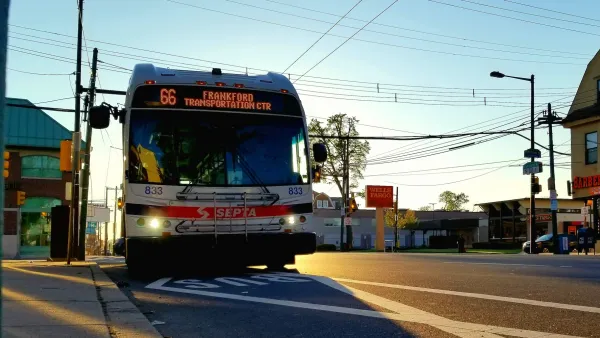
SEPTA's bus-mounted lane enforcement cameras cut travel times by up to 6%
The AI-assisted cameras have issued nearly 200,000 citations to drivers blocking bus lanes.
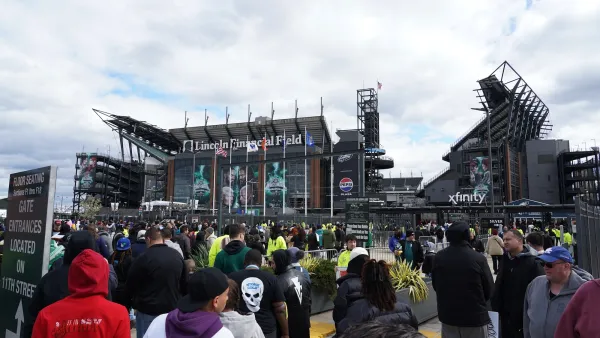
Philadelphia officials say city is ready for World Cup
The city touted its plans to ensure security and accessibility during FIFA World Cup events.

Planetizen Federal Action Tracker
A weekly monitor of how Trump’s orders and actions are impacting planners and planning in America.

Amtrak, CN end decades-long dispute with eight-year agreement
The new operating agreement establishes an updated framework for the companies to work together, including processes to resolve disputes.
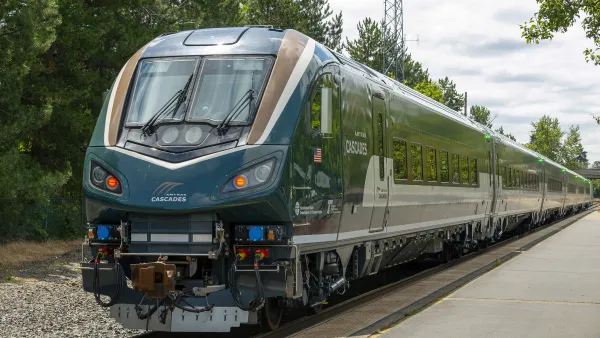
Northwest rail fans eager for Sept. 30 debut of Amtrak’s Airo fleet
Get ready for that new train smell and more seats. But they won’t go faster or run more frequently on the Cascades route in Washington and Oregon.

Brightline Florida files for bankruptcy
The transit company is over $5 billion in debt.

St. Louis Metro to test if single-car trains can reduce operating costs, maintain rider satisfaction
The pilot program will run from October to spring 2027, and begin with one single-car train operating on Metrolink’s Red and Blue lines.

Pennsylvania is building data centers in abandoned mines
Housing data centers in mines provides an alternative to destroying local forests and may spare residents from data centers’ noise and air pollution.

FREE Course: Walkable City 1: Why Walkability?
After describing his path towards focusing on walkability as the essence of good planning, Jeff Speck marches through his five principal reasons for making more walkable places.
Reinventing Malls: Planning Alchemy—Turning Gray Fields Into Gold
The course focuses on the opportunities and imperatives that shape reinvention of mall sites.

City of Thousand Oaks
City of Wisconsin Rapids
Harvard University Graduate School of Design
The Architects Foundation
University of Cincinnati Online
The Pocatello Development Authority
The Urban Renewal Agency of the City of Pocatello