With gas and food prices climbing to unprecedented levels, many families are turning to pawnshops to cover their bills. Unfortunately, pickups are down and people aren't buying, putting smaller operations at risk of closure.


"As the price of gas and groceries continues to rise, more families are turning to pawnbrokers to bridge the difference between income and expenses. While plenty of people are pawning items, hardly anybody is buying.
Bob Moulton, owner of National Jewelry & Pawn in Durham, said sales are off so much that some shops are at risk of closing. Many customers are pawning items just to make their mortgage payments, pay other bills or buy groceries.
[T]he current economic woes mean some customers aren't able to ["pickup", or buy their own items back, with interest, within 30 days]. Moulton said pickups are down 8 percent from last year.
That, in turn, has affected the bottom line at some pawnshops.
Plus, pawnbrokers say most customers have spent their tax refunds and stimulus checks already, so that won't help their shops find extra business.
Beck said things have gotten so bad that he's begun turning away merchandise, especially tools.
Pawnbrokers also are seeing a lot of customers pawning gold -- jewelry, coins and even teeth and bridgework -- to take advantage of high gold prices, which have risen to nearly $900 per ounce. (That's up from $325 per ounce five years ago.)"
Read the full story: More pawning goods for gas, food

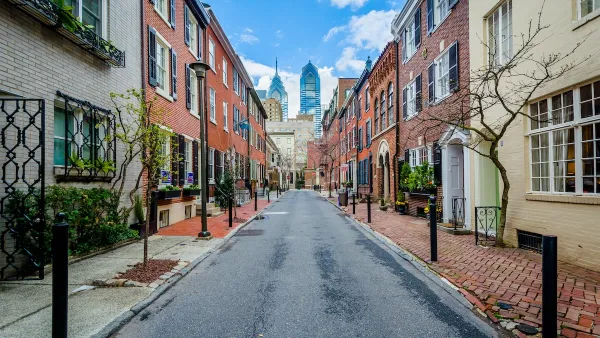
The Philadelphia Loan Program Transforming the Demographics of Development
The Jumpstart loan program is helping Black and female residents become developers.
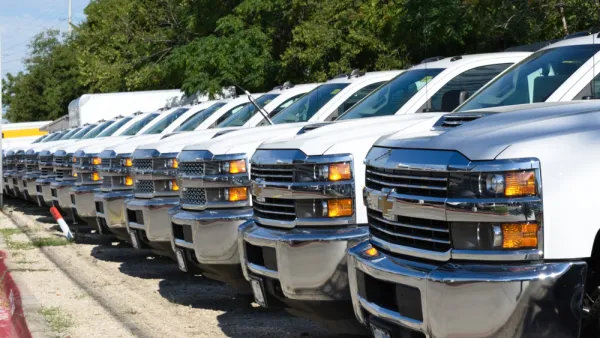
U.S. Auto Loan Debt Balloons to $1.4 Trillion, Study Says
Consumer Reports published findings of an investigation of U.S. auto loan debt, finding that debt is increasing at increasingly fast rates alongside the cost of cars over the past decade.
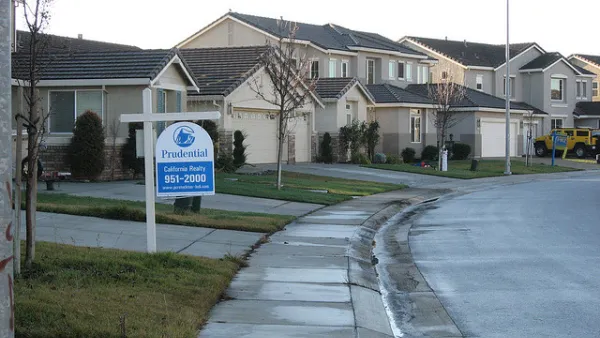
Subprime Loans Are Back—Now They're Called Nonprime Loans
Some say that "nonprime" loans will create the same financial ruins as their "subprime" predecessors. Others say the housing market needs ways for more people to buy homes and drive the industry.

Planetizen Federal Action Tracker
A weekly monitor of how Trump’s orders and actions are impacting planners and planning in America.

Amtrak, CN end decades-long dispute with eight-year agreement
The new operating agreement establishes an updated framework for the companies to work together, including processes to resolve disputes.

Judges permit Denver to divert 77,000 acre feet from the Colorado River for reservoir expansion
Overuse and climate change have caused the Colorado River’s water levels to plummet.

NYC DOT wants faster, more permanent street upgrades
The city is examining ways to build more concrete infrastructure without getting entangled in 'decades-long' projects.

'Something we’ve never seen before:' rising utility rates could strain city finances nationwide
Data centers, climate change and other factors have caused utility rates in the United States to increase by 38% since 2020.

Trump to overrule local leaders, lease millions of acres of America’s Pacific Island territories’ seafloors to mining companies
International law says that the Indigenous people of America’s territories have a right to prior and informed consent regarding projects that impact their countries.

FREE Course: Walkable City 1: Why Walkability?
After describing his path towards focusing on walkability as the essence of good planning, Jeff Speck marches through his five principal reasons for making more walkable places.
Reinventing Malls: Planning Alchemy—Turning Gray Fields Into Gold
The course focuses on the opportunities and imperatives that shape reinvention of mall sites.

Harvard University Graduate School of Design
KFH Group Inc.
Greater Baltimore Committee
The Architects Foundation
University of Cincinnati Online
The Pocatello Development Authority
The Urban Renewal Agency of the City of Pocatello