With growing numbers interested in urban agriculture, American Public Radio's Marketplace interviews one urban farmer in Pasadena, California.


"My name is Jules Dervaes. I'm 59 years old and my primary job is that of a gardener. I guess why I call myself a gardener versus calling myself a farmer is that I'm trying to separate myself from people that have the notion that we have fields and that we have equipment and that I'm out there, you know, working the acreage that doesn't exist in the city. We have a fifth of an acre lot, so I'm trying to make a distinction that we are basically microfarmers or maximum extreme gardener because we have maxed out this place with all the fruits and vegetables we've grown.
We sell first to the restaurants and caterers -- it's like they have sort of a standing order every week -- and then whatever is left over we offer to the general public. We have so much orders that we don't even need to go to the farmer's market. We have several restaurants that will take anything we have. Our problem is not having enough, but having the fields. I'm sure that they would want more if we could give it.
What I like about this job is the sense of fulfillment that it gives me and I feel empowered that I'm able to grow my own food and I feel independent. I'm not tied to somebody else providing me with what I needed for life."
Read the full story: Day in the Work Life: Urban farmer

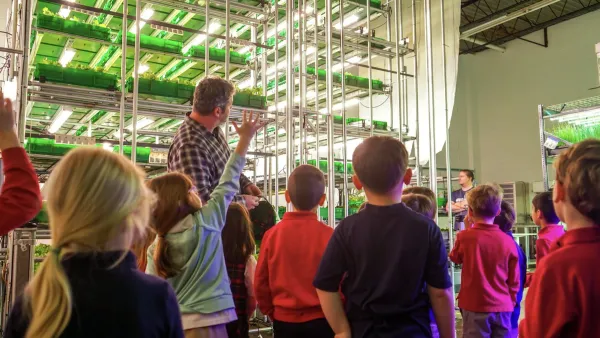
A Multimillion Dollar Virginia Company is Turning Empty Office Buildings Into Farms
Area 2 Farms envisions a world where 90% of the U.S. population lives within 10 miles of an indoor farm.
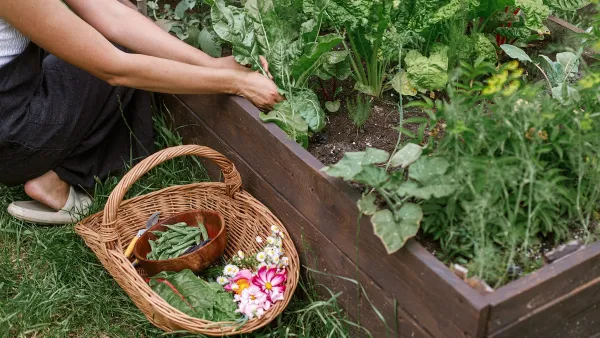
Urban Farming Addressing Hunger (and More) in Pittsburgh
Urban farming provides opportunities to increase food security in addition to other benefits.
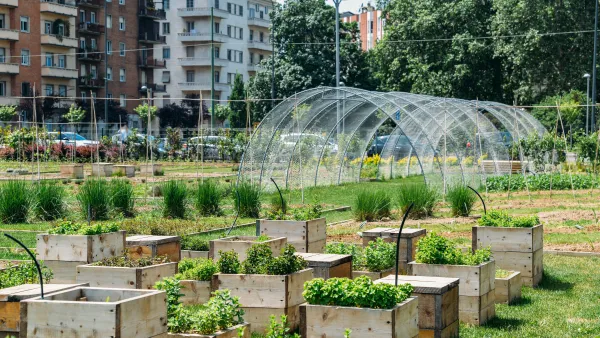
Urban Ag Activists Up In Arms About New Study
Researchers looked at the carbon footprint of urban farming versus conventional, and the results were surprising.

Planetizen Federal Action Tracker
A weekly monitor of how Trump’s orders and actions are impacting planners and planning in America.

The state-sanctioned urbicide of Austin
People don’t kill cities. Freeways do.

US to reduce Colorado River water deliveries to Mexico
A new Colorado Treaty amendment reduces Mexico’s Colorado River water allocation by 250,000 acre feet.

Nation's most wind-powered state turns to coal as data centers increase energy demand
For the first time in decades, Iowa has increased its generation of coal power.

NYC cools commuters with city's first rain garden above a bus stop
New York City officials say the plants in the rain garden can absorb 16 gallons of rainwater during heavy storms.

Brightline West’s future may rely on $6 billion federal loan
The company has until Nov. 2 to make a $400 million equity investment into its proposed high-speed rail line.

FREE Course: Walkable City 1: Why Walkability?
After describing his path towards focusing on walkability as the essence of good planning, Jeff Speck marches through his five principal reasons for making more walkable places.
Reinventing Malls: Planning Alchemy—Turning Gray Fields Into Gold
The course focuses on the opportunities and imperatives that shape reinvention of mall sites.

Eagle County Government
Harvard University Graduate School of Design
Nashville Planning Department
The Architects Foundation
University of Cincinnati Online
The Pocatello Development Authority
The Urban Renewal Agency of the City of Pocatello
Journal of the American Planning Association