With rising sea levels and a penchant for ambitious new building ideas, Dubai is moving forward with plans to construct floating buildings and islands.


"Paul van de Camp moved to Dubai from Holland because of that 'anything is possible' spirit. He isn't interested in skiing in the desert, but he has opened an office in Dubai to try to sell an equally bold concept: building on water. His company, Dutch Docklands, specializes in floating structures."
"Constructing floating houses or restaurants or even villages is an idea that first came to him in his native Holland, where land to build on is scarce and water is plentiful."
"Dubai has plenty of desert, but it also has miles of coastline along the Persian Gulf. They've built loads of artificial islands offshore, but they've run out of sand."
"Van de Camp has given them a new option: floating islands."
"He's just gotten the green light to begin building a string of islands, each in the shape of an Arabic letter. If you were to look at the proposed islands from an airplane or an orbiting satellite, they would spell a bit of Arabic poetry written by Sheikh Mohammed bin Rashid Al Maktoum, the prime minister of the United Arab Emirates and ruler of Dubai."
Read the full story: Spurred by Rising Seas, Dubai's Floating Ambition
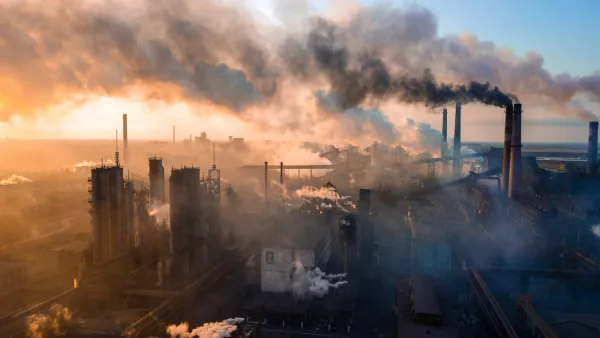
COP28: Will Developed Nations Reduce Emissions?
Tensions between developed and developing nations surfaced over emissions and energy, with the former focused on reducing fossil fuels and the latter pointing to unrealized emissions reductions from the nations most responsible for global warming.
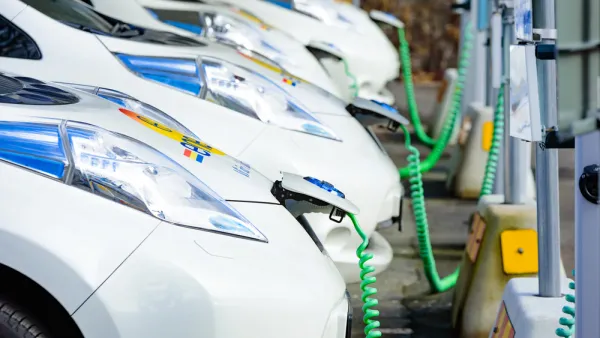
Dubai to Offer Free Parking and Charging to Electric Car Drivers
A city famous for its oil money is implementing generous incentives for electric cars.

World's First Passenger Drone Readies for Takeoff in Dubai
This summer, commuters may have another option for moving around Dubai as a pilotless drone is prepared to shuttle passengers around the city.

Desperate measures: Advocates weigh draining Lake Powell to fill Colorado River
Draining the reservoir could reduce evaporation losses by a couple hundred thousand acre-feet.

Eastern Nebraska is running out of electricity
Data centers and electrification are straining eastern Nebraska’s grid, throttling economic development.

Malls are becoming the midtowns of the future
Mall and office park redevelopments are a generational opportunity to create new nodes of urbanity.

NYC breaks ground on anti-flooding infrastructure project
New York City's new system will reduce stormwater flows to local sewers by 90%.

One Kentucky town’s secret to affordable housing
The Smoketown Community Land Trust has already built seven affordable homes for community members.

Houston gains petal-shaped cooling infrastructure to make streets more ‘delightful’
The city has installed the pavilions along 15 blocks in Houston.

FREE Course: Walkable City 1: Why Walkability?
After describing his path towards focusing on walkability as the essence of good planning, Jeff Speck marches through his five principal reasons for making more walkable places.
Reinventing Malls: Planning Alchemy—Turning Gray Fields Into Gold
The course focuses on the opportunities and imperatives that shape reinvention of mall sites.

City of Rosemead
Rutgers University, Edward J. Bloustein School of Planning and Public Policy
One Hundred Miles
University of Michigan School for Environment and Sustainability (SEAS)
Hunter College, City University of New York (CUNY)
The Architects Foundation
City of Cambridge
Montrose County
The Pocatello Development Authority