Federal and state environmental guidelines have been waived by the Federal government to fast-track construction of nearly 700 miles of fencing along the U.S. Mexico Border.


"In an aggressive move to finish 670 miles of barriers along the U.S.-Mexico border by the end of the year, the Department of Homeland Security on Tuesday announced plans to waive federal and state environmental laws."
"The two waivers, which were approved by Congress, will allow Homeland Security to slash through a thicket of more than 30 environmental and cultural laws to speed construction."
"Homeland Security Secretary Michael Chertoff said Tuesday that the department was committed to minimizing the impact on the environment. The draft environmental assessments, he said, show the projects will have only 'insignificant impacts on the environment and cultural resources.'"
"'DHS is neither compromising its commitment to responsible environmental stewardship nor its commitment to solicit and respond to the needs of state, local and tribal governments,' Chertoff said in a prepared statement."
"Critics, however, said the waivers were intended to sidestep growing and unexpectedly fierce opposition -- especially in Arizona and in Texas, where concerns have been raised about endangered species and fragile ecosystems along the Rio Grande."
FULL STORY: Environmental rules waived for Mexican border fence

Border Fence Plan Fight Continues in Texas
This report from NPR examines the controversy and battle brewing between the federal government and small towns in Texas over a Department of Homeland Security plan to build more than 700 miles of fencing along the U.S.-Mexico border.
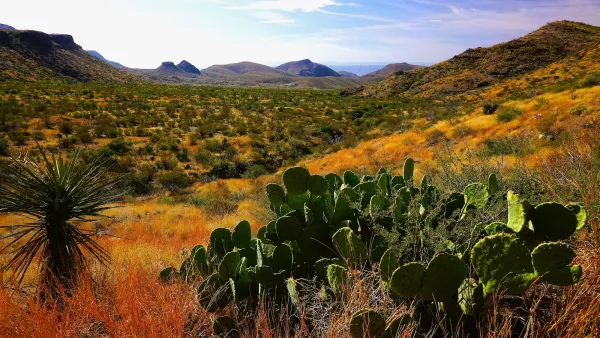
DHS Waived 28 Environmental and Historic Protection Laws to Expedite Building of South Texas Border Wall
The barrier would run through Big Bend National Park, raising alarms among environmentalists who say it will harm wildlife in the region.
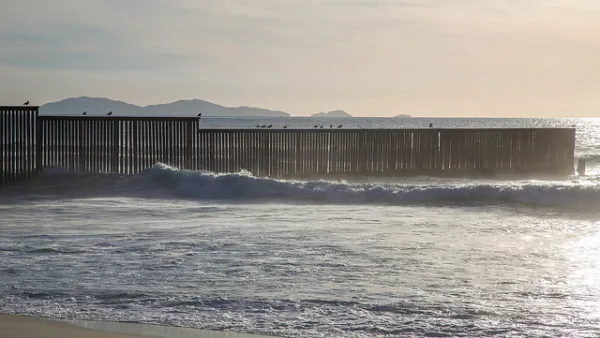
Department of Homeland Security Will Skip Environmental Review for the Border Wall
Also, the House of Representatives has approved the funding president trump wants for the wall, but the Senate is likely to balk.

Planetizen Federal Action Tracker
A weekly monitor of how Trump’s orders and actions are impacting planners and planning in America.

The state-sanctioned urbicide of Austin
People don’t kill cities. Freeways do.

US to reduce Colorado River water deliveries to Mexico
A new Colorado Treaty amendment reduces Mexico’s Colorado River water allocation by 250,000 acre feet.

5 New England states march closer to 800 megawatt wind energy project
Securing federal approval for the project may be complicated under the Trump administration, which has historically been hostile towards domestic wind power.

Baltimore to break ground on $50 million Transit Priority Project
The project will bring faster bus trips, safer streets and better bike connections to Baltimore.

Airbnb launches $250 million 'last-dollar financing' housing accelerator, makes first investment in Austin
The company will put $6.4 million towards affordable housing development in Texas’ capital.

FREE Course: Walkable City 1: Why Walkability?
After describing his path towards focusing on walkability as the essence of good planning, Jeff Speck marches through his five principal reasons for making more walkable places.
Reinventing Malls: Planning Alchemy—Turning Gray Fields Into Gold
The course focuses on the opportunities and imperatives that shape reinvention of mall sites.

Eagle County Government
Harvard University Graduate School of Design
Nashville Planning Department
The Architects Foundation
University of Cincinnati Online
The Pocatello Development Authority
The Urban Renewal Agency of the City of Pocatello
Journal of the American Planning Association