My colleague, Chris Haller, has done some great research on online mapping tools/techniques that can be used for community planning and community building. Here's some stuff he discovered on GeoTagging. Since Google started its mapping service, based on xml and an API open to everyone, a lot of non-affiliated web applications have been emerging that bring GIS and online mapping closer to “Joe Internetuser”.



My colleague, Chris Haller, has done some great research on online mapping tools/techniques that can be used for community planning and community building. Here's some stuff he discovered on GeoTagging. Since Google started its mapping service, based on xml and an API open to everyone, a lot of non-affiliated web applications have been emerging that bring GIS and online mapping closer to “Joe Internetuser”.
|
 |
A short look at the emerging world of “map hacking”
As a starting point, a movie of how somebody hacked google maps and created a neighborhood tour: http://weblog.infoworld.com/udell/gems/gmap2_flash.html
This blog provides a how-to, and also gives a good semi-techy explanation on how geotagging (georeferenced entries in a xml document) works. http://www.engadget.com/entry/1234000917034960/
In the meantime a lot of web services have been developed, taking advantage of these possibilities.
As a result of enabling tags with spatial references, geotagged pictures hosted at flickr are shown on a google map of the united states at geobloggers.com. http://www.geobloggers.com/
MyGMaps.com lets users create, save and host their personal maps by simply filling out a form. http://mygmaps.com/mygmaps.cgi/
Foundcity enables members to send photos and text messages from the street to a personal map: http://www.foundcity.net
An even more impressive application is the linkage of housing offers on craigslist with google maps: http://www.housingmaps.com/
Readers tech-savvy enough, inspired by the examples above, might want to start developing similar web services.
Here is some guidance, plus download of a cgi program enabling communication with Google maps:
The amazing result of this movement is that online mapping finally leaves the stage of a small group of experts and hits a broader audience of web users . . . unless of course Google decides to redefine the licensing arrangements for distributing the data.


Planetizen Federal Action Tracker
A weekly monitor of how Trump’s orders and actions are impacting planners and planning in America.

Colorado’s Largest Data Center Could Rise Next to Homes — Without a Public Hearing
The proposed campus would consume 11 times the power of Denver International Airport; as it has across the country, opposition mounts.

US to reduce Colorado River water deliveries to Mexico
A new Colorado Treaty amendment reduces Mexico’s Colorado River water allocation by 250,000 acre feet.

'This is going to be painful:’ Virginia stares down $1.7 billion funding gap for highway maintenance
The state may address the deficit by shifting $290 million from its construction budget to maintenance projects.
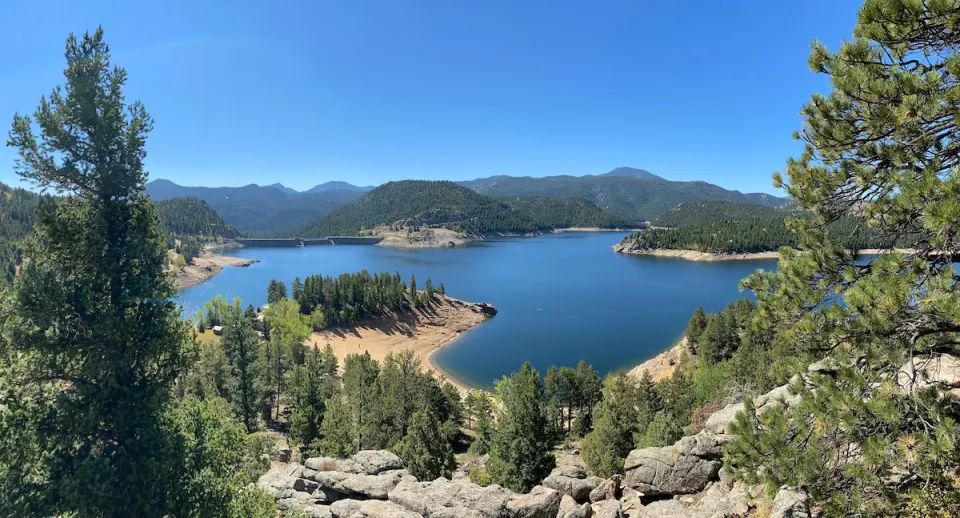
Judges permit Denver to divert 77,000 acre feet from the Colorado River for reservoir expansion
Overuse and climate change have caused the Colorado River’s water levels to plummet.

Amtrak, CN end decades-long dispute with eight-year agreement
The new operating agreement establishes an updated framework for the companies to work together, including processes to resolve disputes.

FREE Course: Walkable City 1: Why Walkability?
After describing his path towards focusing on walkability as the essence of good planning, Jeff Speck marches through his five principal reasons for making more walkable places.
Reinventing Malls: Planning Alchemy—Turning Gray Fields Into Gold
The course focuses on the opportunities and imperatives that shape reinvention of mall sites.

KFH Group Inc.
Greater Baltimore Committee
Eagle County Government
The Architects Foundation
University of Cincinnati Online
The Pocatello Development Authority
The Urban Renewal Agency of the City of Pocatello

