A team of researchers has shown that in urban landscapes -- such as in the cracks of sidewalks -- plant species must evolve their reproduction habits to stay alive.


"As concrete slabs chop up more and more of our urban landscapes, plants are forced to evolve in ways that may not benefit them in the long run, a new study suggests."
"As a plant or any organism's habitat becomes fragmented - whether by intervening sidewalks and roads in cities or by logging in rain forests - it can be cut off from other members of its species, making reproduction more difficult."
"Ecologists at the National Center for Scientific Research (CNRS) in France studied how a weed, Crepis sancta, changed its reproductive strategy when faced with ever-increasing amounts of concrete sidewalks."
Read the full story: Urban landscapes force plants to evolve
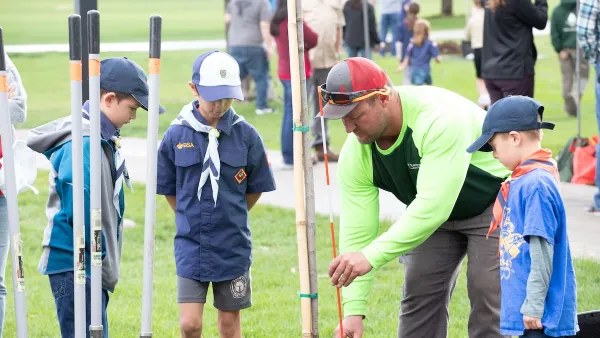
Lakewood Celebrates Arbor Day and Strengthens Urban Forestry Legacy
Lakewood celebrated Arbor Day and its 43rd year as a Tree City USA community with a youth-led tree planting event at O’Kane Park, reinforcing its long-standing commitment to urban forestry and environmental education.
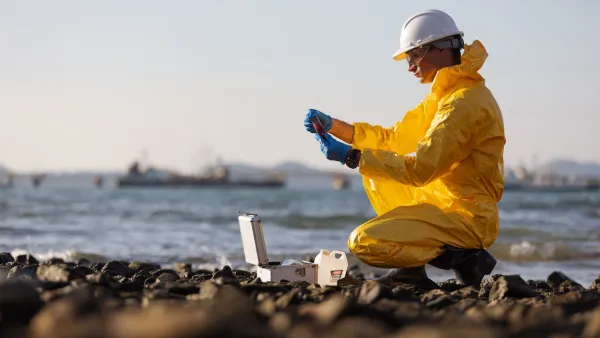
USGS Water Science Centers Targeted for Closure
If their work is suspended, states could lose a valuable resource for monitoring, understanding, and managing water resources.
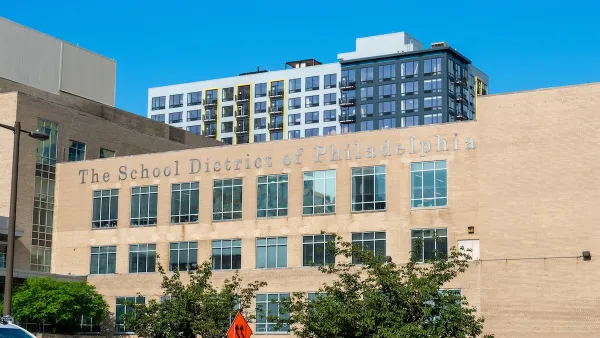
Concrete to Community: A Schoolyard Makeover in West Philly
With guidance from the Trust for Public Land, third graders at Overbrook Elementary are leading the redesign of their asphalt schoolyard into a vibrant green space, learning valuable skills and creating lasting community impact in the process.

Desperate measures: Advocates weigh draining Lake Powell to fill Colorado River
Draining the reservoir could reduce evaporation losses by a couple hundred thousand acre-feet.

Eastern Nebraska is running out of electricity
Data centers and electrification are straining eastern Nebraska’s grid, throttling economic development.

Move over, LA: St. Louis gears up for Olympics, invests millions in downtown redevelopment
The Missouri city will host the 2028 Olympic soccer group stage and knockout matches.

Mass. votes against statewide minimum lot size for single-family homes
Over 2 million residents voted on Question 7; it was decided by just over 30,000 votes.

Maryland’s $15 billion bridge project gains key approval
The Maryland Transit Authority said the project will create over 60,000 jobs and add $23 billion to the local economy.

‘No clear next steps’ for Chicago's permanent festival grounds
Eleventh Ward Ald. Nicole Lee has suggested Soldier Field as a possible location for the permanent event space.

FREE Course: Walkable City 1: Why Walkability?
After describing his path towards focusing on walkability as the essence of good planning, Jeff Speck marches through his five principal reasons for making more walkable places.
Reinventing Malls: Planning Alchemy—Turning Gray Fields Into Gold
The course focuses on the opportunities and imperatives that shape reinvention of mall sites.

City of Rosemead
Rutgers University, Edward J. Bloustein School of Planning and Public Policy
One Hundred Miles
University of Michigan School for Environment and Sustainability (SEAS)
Hunter College, City University of New York (CUNY)
The Architects Foundation
City of Cambridge
Montrose County
The Pocatello Development Authority