As a record-breaking drought leaves Melbourne dry, the government is considering imposing broad restrictions on water use. Water storage levels are now less than 43% and are expected to drop below 30% by March.


To deal with the drought, Melbourne officials may be faced with the task of enforcing strict restrictions on water use which would include a total ban on watering gardens and grass. Another plan to help deal with the water shortage would be to expedite a plan to connect a nearby reservoir to Melbourne's water sources -- a project that was planned to take place in 2010. Scientists are predicting that restrictions on water use will need to be enforced by March.
"Stage four restrictions, which would include a total ban on watering gardens and lawns, would come into effect automatically when storages dropped to 29.3 per cent of capacity."
"'We are not planning for Melbourne to run out of water,' Mr Skinner said. 'The worst-case scenario is that Melbourne would get down to the extreme minimum operating level.'"
But all across the country, towns are facing water shortages and tight restrictions.
"There are 113 Victorian towns already on stage four restrictions, with Geelong set to join them within weeks."
"From next month, East Gippsland will become the only region in the state not on water restrictions when north-west towns along the Murray River move to stage one restrictions."
Read the full story: Melbourne Water plans for 'worst-case scenario'


Planetizen Federal Action Tracker
A weekly monitor of how Trump’s orders and actions are impacting planners and planning in America.

‘Going backwards:’ Baltimore mayor, students rally against state's transit funding plan
Maryland's proposed six-year plan provides no funding for Baltimore’s BMORE bus program and reduces its road maintenance funding.
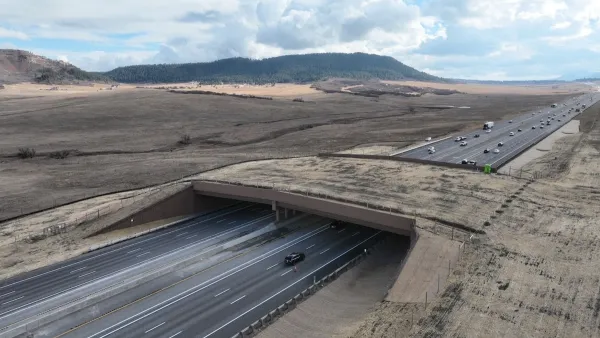
Record-breaking wildlife overpass in Colorado brings 91% reduction in animal collisions
Prior to the overpass, vehicles were hitting one deer per day on Colorado’s Interstate 25.

Mamdani sent nearly 6,000 pied-à-terre tax warnings to homes that didn’t qualify
A judge has ordered the administration to cancel thousands of pied-à-terre tax notices after it sent 35% of them erroneously.

Detroit to transform waterfront with $2.2 billion investment
Developers will convert about 18 acres of unused parking lot space into civic spaces.

‘Going backwards:’ Baltimore mayor, students rally against state's transit funding plan
Maryland's proposed six-year plan provides no funding for Baltimore’s BMORE bus program and reduces its road maintenance funding.

FREE Course: Walkable City 1: Why Walkability?
After describing his path towards focusing on walkability as the essence of good planning, Jeff Speck marches through his five principal reasons for making more walkable places.
Reinventing Malls: Planning Alchemy—Turning Gray Fields Into Gold
The course focuses on the opportunities and imperatives that shape reinvention of mall sites.

City of Thousand Oaks
City of Wisconsin Rapids
Harvard University Graduate School of Design
The Architects Foundation
University of Cincinnati Online
Northern Illinois Transit Authority (NITA)
The Pocatello Development Authority
The Urban Renewal Agency of the City of Pocatello