A conveninent tool for coming up with attractive names for suburban subdivisions.


"Suburban developers evidently believe that everyone in Colorado would prefer to live in a secluded alpine hide-away. Consequently, the words they use to describe the invented "place" these dwellings are "at" typically have no historical or physical context to the actual site itself. Instead, various flora, fauna, landform or Western folklore terms are used in clever combinations to evoke a rustic Colorado setting of unparalled beauty and tranquility. So, when you put it all together, your typical new suburban Denver subdivision will follow a template that gives us fabulously fake names like "The Enclave at Panorama Canyon Meadows" or "The Sanctuary at Antelope Bluff Vista." Of course, there is no canyon or antelope or bluff or meadow, but that's beside the point."
Read the full story: Guide to Suburban Denver Subdivision Names


‘Going backwards:’ Baltimore mayor, students rally against state's transit funding plan
Maryland's proposed six-year plan provides no funding for Baltimore’s BMORE bus program and reduces its road maintenance funding.

Detroit to transform waterfront with $2.2 billion investment
Developers will convert about 18 acres of unused parking lot space into civic spaces.
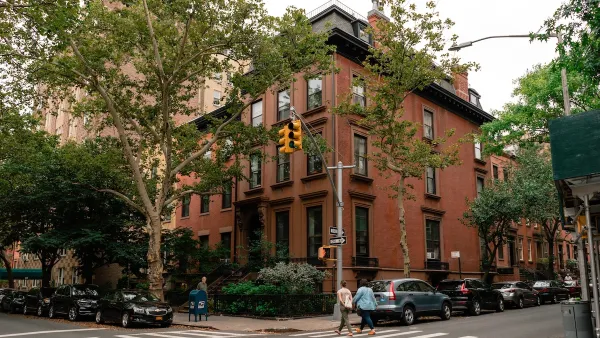
Mamdani sent nearly 6,000 pied-à-terre tax warnings to homes that didn’t qualify
A judge has ordered the administration to cancel thousands of pied-à-terre tax notices after it sent 35% of them erroneously.

25 states, cities sue the EPA over erased power plant emissions limits
The coalition also intends to sue the EPA for not regulating emissions from gas-fired power plants.

Newsom vetoes giving CA tribes greater voice in water projects
In his veto letter, Newsom said the bill would add ‘uncertainty’ to the state’s fight to secure Californians’ water supplies.

Michigan Senate votes to revise 'lax' dam safety laws
A Bridge Michigan investigation found more than 100,000 Michigan residents live in the floodpath of a high or significant-hazard dam.

FREE Course: Walkable City 1: Why Walkability?
After describing his path towards focusing on walkability as the essence of good planning, Jeff Speck marches through his five principal reasons for making more walkable places.
Reinventing Malls: Planning Alchemy—Turning Gray Fields Into Gold
The course focuses on the opportunities and imperatives that shape reinvention of mall sites.

City of Thousand Oaks
City of Wisconsin Rapids
Harvard University Graduate School of Design
The Architects Foundation
University of Cincinnati Online
Northern Illinois Transit Authority (NITA)
The Pocatello Development Authority
The Urban Renewal Agency of the City of Pocatello