Broward County, Florida, will take a large step Friday towards completing its plan to incorporate the county's 60 unincorporated areas by 2010. Only 14,000 people will still live in unincorporated areas, down from over 150,000 10 years ago.


"Friday's the day when pockets of unincorporated areas and their populations of nearly 10,000 people will become parts of five cities. This leaves just 14,190 people still living in unincorporated areas. When a concerted push to incorporate or annex all of Broward -- except some large county facilities -- into cities by 2010 began in 1996, nearly 150,000 people were living in nearly 60 unincorporated areas, the largest being Weston."
The county is being praised for its good rational planning measures as residents are now able to obtain basic services such as garbage collection from the cities they are now a part of. The brunt of providing services is gradually being taken off the shoulders of the county, which many believe will now function more efficiently.
Read the full story: Good planning, good government

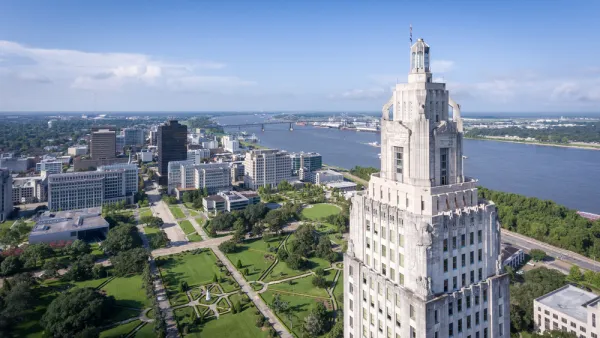
Baton Rouge Will Split into Two Cities Following Court Ruling
A wealthy portion of Baton Rouge will split off and incorporate its own city in what proponents say is a bid for better schools and reduced crime, but critics say it will gut Baton Rouge’s tax base and result in a wealthy ‘white enclave.’

How Rent Control Helped Create East Palo Alto
The story of East Palo Alto’s incorporation is one marked by great contention among local stakeholders, but also provides valuable lessons for organizers in forging and mobilizing local coalitions.

Georgia State Senate Pumps the Breaks on Cityhood Processes
Atlanta's quickly growing region means many communities are seeking to incorporate. Several controversial processes, however, have compelled the state to reform the incorporation process.

Planetizen Federal Action Tracker
A weekly monitor of how Trump’s orders and actions are impacting planners and planning in America.

The state-sanctioned urbicide of Austin
People don’t kill cities. Freeways do.

Colorado’s Largest Data Center Could Rise Next to Homes — Without a Public Hearing
The proposed campus would consume 11 times the power of Denver International Airport; as it has across the country, opposition mounts.

Judges permit Denver to divert 77,000 acre feet from the Colorado River for reservoir expansion
Overuse and climate change have caused the Colorado River’s water levels to plummet.

Amtrak, CN end decades-long dispute with eight-year agreement
The new operating agreement establishes an updated framework for the companies to work together, including processes to resolve disputes.

Raised interest rates may kill financially vulnerable construction projects
The chief economist at ConstructConnect warns that if construction project owners are negatively impacted by the raised rates, it could result in delayed payments to contractors.

FREE Course: Walkable City 1: Why Walkability?
After describing his path towards focusing on walkability as the essence of good planning, Jeff Speck marches through his five principal reasons for making more walkable places.
Reinventing Malls: Planning Alchemy—Turning Gray Fields Into Gold
The course focuses on the opportunities and imperatives that shape reinvention of mall sites.

Greater Baltimore Committee
Eagle County Government
Harvard University Graduate School of Design
The Architects Foundation
University of Cincinnati Online
The Pocatello Development Authority
The Urban Renewal Agency of the City of Pocatello
Journal of the American Planning Association