Beijing's new 'green' ministry of science building is China's first to pass the stringent, globally-recognized LEED certification.


"The gray eight-story squeezed into a row of sedate official buildings seems innocuous. But from its radically efficient basement generator to the light volcanic ash soil on the garden roof deck, this is one of the cleanest and most energy efficient structures in China.
In a country both energy-starved and cash-conscious, the new ministry of science building is a small wonder. It uses 70 percent less energy than similar federal buildings, and saves 10,000 tons of water a year through rainwater collection. Wise use of quality materials inside a simple, plain design also make it far cheaper to build and maintain than comparable Beijing buildings.
..China has 11 'green city' projects under construction and 140 building projects. But few foreign experts feel those projects could pass a genuine international green test - involving low energy use, low cost, recycling water systems, and 'intelligent' integrated design and materials."
Read the full story: A 'green' building rises amid Beijing smog


Planetizen Federal Action Tracker
A weekly monitor of how Trump’s orders and actions are impacting planners and planning in America.

‘Going backwards:’ Baltimore mayor, students rally against state's transit funding plan
Maryland's proposed six-year plan provides no funding for Baltimore’s BMORE bus program and reduces its road maintenance funding.
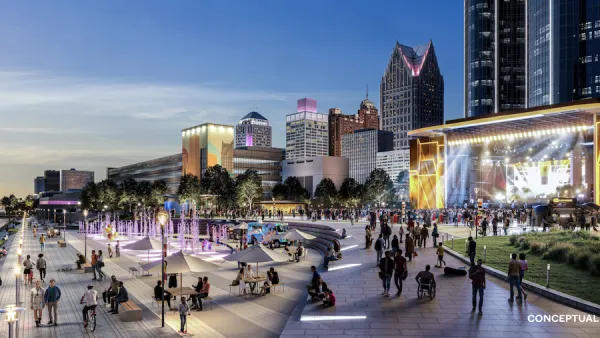
Detroit to transform waterfront with $2.2 billion investment
Developers will convert about 18 acres of unused parking lot space into civic spaces.

NYC’s landfills will soon overflow — expanding them invites health risks
In as little as 16 years, New York City will have to find new places to dump its trash.

This Boston neighborhood is filling its roads with obstacles — intentionally
Somerville is embracing ‘extreme street makeovers’ to make its roads safer for pedestrians and cyclists.

Planned $2 billion courthouse in MA sparks tension with local government
Springfield owns an essential piece of the land developers intend to build on, and some city officials do not want to see the project come to fruition.

FREE Course: Walkable City 1: Why Walkability?
After describing his path towards focusing on walkability as the essence of good planning, Jeff Speck marches through his five principal reasons for making more walkable places.
Reinventing Malls: Planning Alchemy—Turning Gray Fields Into Gold
The course focuses on the opportunities and imperatives that shape reinvention of mall sites.

City of Thousand Oaks
City of Wisconsin Rapids
Harvard University Graduate School of Design
The Architects Foundation
University of Cincinnati Online
Northern Illinois Transit Authority (NITA)
The Pocatello Development Authority
The Urban Renewal Agency of the City of Pocatello