The jewels in a new proposal for San Francisco's Treasure Island remain hidden, writes urban design critic Morris Newman.


"Treasure Island has nearly every necessary feature to make it the most exciting new residential development in San Francisco. This 403-acre island just a few minutes north of the city's Ferry Terminal has superb views of both downtown San Francisco and the other bay islands. It has dozens of acres of greenfields and an environmentally sensitive coastline, to make it a regional eco-attraction. And the island, with its 125-acre companion,Yerbe Buena, are close enough to the city to become a self-contained, functional neighborhood.
And for a city in perpetual need of new housing, Treasure Island joins Mission Bay as San Francisco's two largest home-building opportunities.
What could be lacking? Start with a coherent urban design."
Thanks to Peter Slatin
Read the full story: Where's The Treasure?


Planetizen Federal Action Tracker
A weekly monitor of how Trump’s orders and actions are impacting planners and planning in America.

Data reveals that NYC’s bet on congestion pricing has paid off
After almost two years of the program, reports show positive impacts on traffic and air quality and no disruptions to parking.
HUD modernizes 50-year-old manufactured housing framework
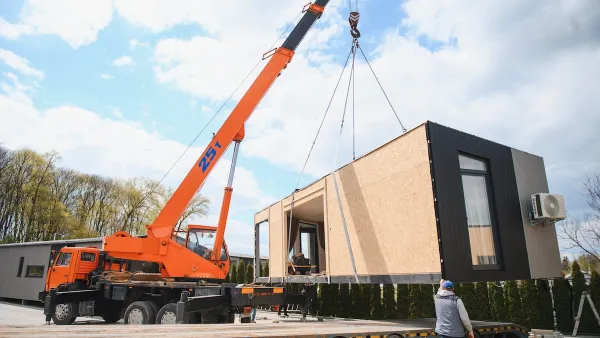
The Next Generation Manufactured Housing Action Plan establishes new energy-efficiency standards for manufactured homes, and new guidelines for anchoring them.

This Chicago neighborhood is using planning to increase life expectancy
The Garfield Park Quality-Of-Life Plan aims to bring residents everything from easier access to fresh food to revitalized commercial corridors.

Boston connects suburbs to the city with 5 free bus routes
The city will launch the new routes in 2027, and offer them for at least three years.

Who pays when a remote Alaska village can no longer stay?
A year after ex-Typhoon Halong, the struggle for two communities to find safer ground has become part of a national debate over who should bear the costs of the climate crisis.

FREE Course: Walkable City 1: Why Walkability?
After describing his path towards focusing on walkability as the essence of good planning, Jeff Speck marches through his five principal reasons for making more walkable places.
Reinventing Malls: Planning Alchemy—Turning Gray Fields Into Gold
The course focuses on the opportunities and imperatives that shape reinvention of mall sites.

Rutgers University, Edward J. Bloustein School of Planning and Public Policy
One Hundred Miles
County of Mendocino
The Architects Foundation
University of Cincinnati Online
Montrose County
Northern Illinois Transit Authority (NITA)
The Pocatello Development Authority