If the Bush Administration continues to refuse to fund coastal wetland restoration, then New Orleans is doomed and should be abandoned, argues Mike Tidwell.


"Katrina destroyed the Big Easyâ€"and future Katrinas will do the sameâ€"not because of engineering failures but because one million acres of coastal islands and marshland have vanished in Louisiana in the last century due to human interference. These land forms served as natural 'speed bumps,' reducing the lethal surge tide of past hurricanes and making New Orleans habitable in the first place.
"But while encouraging city residents to return home and declaring for the media audience that 'we will do whatever it takes' to save the city, the President earlier this month formally refused the one thing New Orleans simply cannot live without: A restored network of barrier islands and coastal wetlands.
"Tens of billions of dollars have been authorized to treat the symptomsâ€"broken levees, insufficient emergency resources, destroyed roads and bridgesâ€"but next to nothing for the disease itself, that of disappeared land, which ushered the ocean into the city to begin with. No amount of levee building or stockpiling of bottled water will ever save New Orleans until the state's barrier shoreline is restored."
Read the full story: Goodbye, New Orleans: It's Time we Stopped Pretending


Planetizen Federal Action Tracker
A weekly monitor of how Trump’s orders and actions are impacting planners and planning in America.

Chicago breaks ground on $3 billion megadevelopment
The new neighborhood, titled Foundry Park, will one day host 3,700 residences.
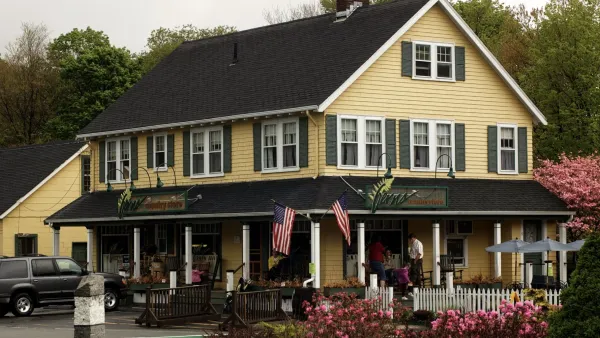
This MA town is drowning in its own sewage — and residents like it that way
Susan Murcott, a waste water expert, said if Carlisle didn't address their leaking sewage, the problem could turn “deadly.”

Iowa taxpayers are paying thousands to clean manure out of their water
While the Clean Water Act makes states responsible for regulating factory farms that discharge pollutants, Iowa has turned a blind eye to the polluting farms.

Amtrak cuts ribbon on Seattle Airo maintenance facility
The $250 million, nearly 100,000-square-foot building can house an entire Cascades Airo trainset.

To power data centers, Google seeks autonomous control of thousands of homes’ electricity
The tech company has signed a deal to indirectly pay Mid-Atlantic residents to reduce their power demand when the grid is strained.

FREE Course: Walkable City 1: Why Walkability?
After describing his path towards focusing on walkability as the essence of good planning, Jeff Speck marches through his five principal reasons for making more walkable places.
Reinventing Malls: Planning Alchemy—Turning Gray Fields Into Gold
The course focuses on the opportunities and imperatives that shape reinvention of mall sites.

City of Rosemead
Rutgers University, Edward J. Bloustein School of Planning and Public Policy
One Hundred Miles
The Architects Foundation
University of Cincinnati Online
Montrose County
The Pocatello Development Authority
The Urban Renewal Agency of the City of Pocatello