Randal O'Toole compares smart growth communities with 1960's-era communist planning.


"American suburbs are 'a chaotic and depressing agglomeration of buildings covering enormous stretches of land.' The cost of providing services to such 'monotonous stretches of individual low-rise houses' is too high. As a result, 'the search for a future kind of residential building leads logically to' high-density, mixed-use housing.
This sounds like typical writings of New Urbanist or smart-growth planners. In fact, these words were written nearly forty years ago by University of Moscow planners in a book titled The Ideal Communist City. The principles in their book formed a blueprint for residential construction all across Russia and eastern Europe. With a couple of minor changes, they could also be the blueprint for smart growth.
...Like the New Urbanists, the soviet planners saw several advantages to such high-density housing."
Thanks to Chris Steins
Read the full story: Smart Growth and the Ideal City


Planetizen Federal Action Tracker
A weekly monitor of how Trump’s orders and actions are impacting planners and planning in America.

Amtrak, CN end decades-long dispute with eight-year agreement
The new operating agreement establishes an updated framework for the companies to work together, including processes to resolve disputes.

Colorado’s Largest Data Center Could Rise Next to Homes — Without a Public Hearing
The proposed campus would consume 11 times the power of Denver International Airport; as it has across the country, opposition mounts.

Federal judge strikes down DOE orders to keep Michigan power plant open past retirement date
The decision is one of the first successful legal challenges to President Trump’s “national energy emergency” ruling, which instructs federal agencies to use emergency powers to increase fossil fuel production.

'This is going to be painful:’ Virginia stares down $1.7 billion funding gap for highway maintenance
The state may address the deficit by shifting $290 million from its construction budget to maintenance projects.
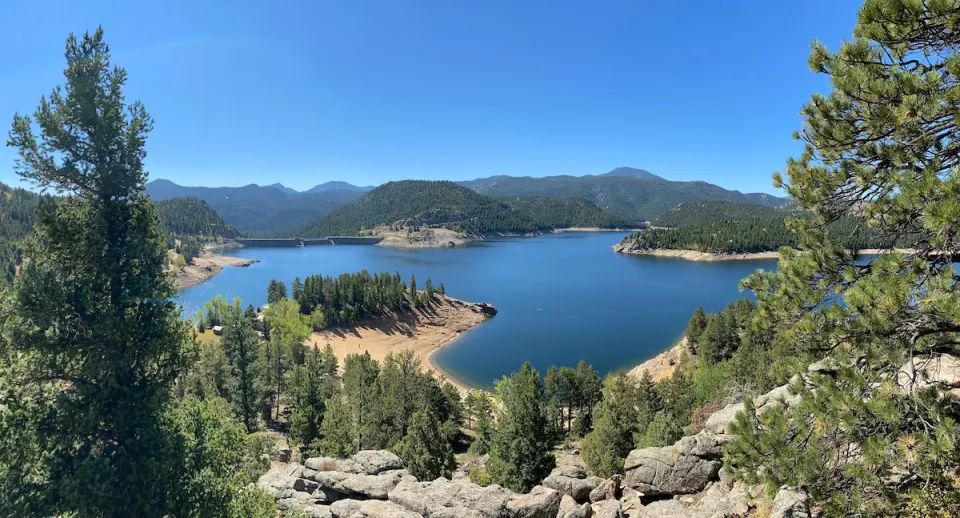
Judges permit Denver to divert 77,000 acre feet from the Colorado River for reservoir expansion
Overuse and climate change have caused the Colorado River’s water levels to plummet.

FREE Course: Walkable City 1: Why Walkability?
After describing his path towards focusing on walkability as the essence of good planning, Jeff Speck marches through his five principal reasons for making more walkable places.
Reinventing Malls: Planning Alchemy—Turning Gray Fields Into Gold
The course focuses on the opportunities and imperatives that shape reinvention of mall sites.

KFH Group Inc.
Greater Baltimore Committee
Eagle County Government
The Architects Foundation
University of Cincinnati Online
The Pocatello Development Authority
The Urban Renewal Agency of the City of Pocatello