The Army will detonate the lead inside underground concrete chambers.


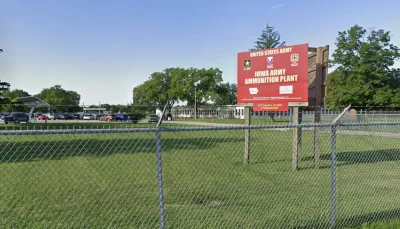
The U.S. Army planned to blow up 68 recently-discovered barrels of highly reactive lead waste at an ammunition plant in Iowa on Friday, Sarah Kaplan writes for the Washington Post. “Though the operation had been in the works for months, it wasn’t until Sunday that the Army notified the public about a resulting plume of lead particles that could extend as far as 100 miles north of the plant,” Kaplan writes.
“But the extra time may not be enough to allay fears of lead contamination in a state where many are already on edge about the nation’s fast-rising cancer rate and potential health effects from pesticide use. Lead is a potent neurotoxin that can cause developmental problems and other health harms if it is inhaled or swallowed, according to the EPA. Infants, children and pregnant women are especially vulnerable, and science has not established any safe level of exposure,” The Washington Post reports.
On Tuesday, President Trump ordered the Army to not go through with the detonation. The Army had originally planned to detonate the lead inside of the underground concrete chambers where it has sat for the last 20 years. The chambers would have been covered in two-stories worth of sand, and sprayed with misters “in an effort to limit the amount of lead that is released,” The Post reports. In a statement released prior to Trump's orders, the Army said the operation would have a “less-than-signifigant” impact on public health, but still instructed one town to evacuate, and for nearby residents to stay indoors with the windows closed until the government said it was safe.
Read the full story: Iowans say warning Army is going to blow up degraded lead came too late

Iowa taxpayers are paying thousands to clean manure out of their water
While the Clean Water Act makes states responsible for regulating factory farms that discharge pollutants, Iowa has turned a blind eye to the polluting farms.
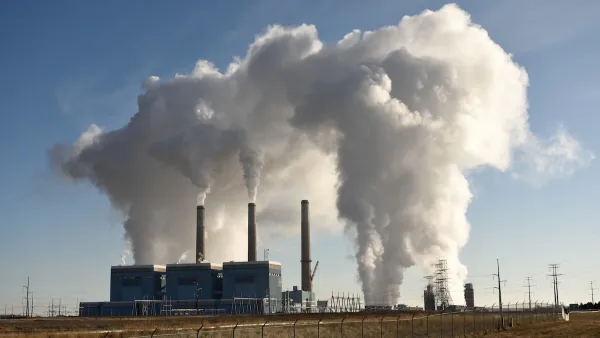
25 states, cities sue the EPA over erased power plant emissions limits
The coalition also intends to sue the EPA for not regulating emissions from gas-fired power plants.
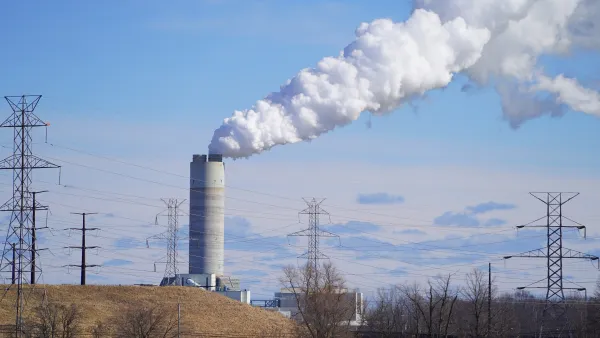
EPA erases limits on planet-warming pollution from power plants
Under Monday’s plan, power plants would still have some limits on how much mercury, arsenic and other contaminants they can emit.

Washington state to charge fee to drivers with fuel-efficient cars
Revenue from the fee will go towards supporting the state’s highways.

Illinois considers spending $1 billion in taxpayer money on data center
A quantum computing campus and data center are currently under construction in Chicago.

Trump to blast ‘hydrocarbon highway’ through ‘world’s longest art gallery’
Environmental and historic preservation groups are suing to stop the project.

U.S. Army plan to explode reactive lead waste in Iowa postponed indefinitely
The Army will detonate the lead inside underground concrete chambers.

Data centers may drain 4 billion gallons of water annually from U.S.’s driest state
Nevada already has three dozen data centers; several dozen more are planned.

Boston City Council votes to no longer mandate parking in residential developments
The Boston Zoning Commission still needs to approve the proposal.

FREE Course: Walkable City 1: Why Walkability?
After describing his path towards focusing on walkability as the essence of good planning, Jeff Speck marches through his five principal reasons for making more walkable places.
Reinventing Malls: Planning Alchemy—Turning Gray Fields Into Gold
The course focuses on the opportunities and imperatives that shape reinvention of mall sites.

City of Charlotte
City of Rosemead
Rutgers University, Edward J. Bloustein School of Planning and Public Policy
University of Michigan School for Environment and Sustainability (SEAS)
Hunter College, City University of New York (CUNY)
The Architects Foundation
University District Partnership