In June 2023, Philadelphia repaired a melted interstate in 12 days thanks to an emergency order.


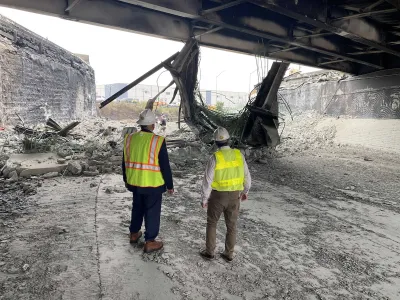
In June 2023, a gasoline fire destroyed a miles-long stretch of the I-95 and brought one of the East Coast’s busiest interstates to a halt. Experts anticipated that rebuilding would take several months; in a "legendary if unlikely triumph of American infrastructural prowess,” repairs took 12 days, Sara Herschander writes for Vox. Herschander goes on to pose the question: “Why can’t America always build with such precise, even delightful, speed?”
Pennsylvania Gov. Josh Shapiro’s emergency declaration played a large role in the speed of the project. Vox reports:
Shapiro’s emergency order “waived everything, literally everything,” said Stephanie Pollack, a leading expert on transportation policy and an adjunct lecturer at the Harvard Kennedy School. Suddenly, with that order in hand, she said, officials like [Mike Carroll, Pennsylvania’s transportation secretary] knew: “I can buy things I couldn’t buy. I can contract in ways I couldn’t contract. I don’t have to worry about permits. I don’t have to worry about work hours,” she said. “And that, to me, is the lesson of I-95. It’s not that emergencies make things happen; it’s that throwing everything out makes things happen.”
The I-95 repair project was allowed to break the rules, enabling it to blast through the red tape that constrains so many other projects in America. “If the US wants to fix more highways, build more train lines, or paint more bike lanes more quickly, it will need to get better at knowing when to break these rules more often, and not only when there’s an emergency,” Herschander writes. Pollock believes that the Bipartisan American Affordability and Jobs Act, which aims to expedite large energy projects, is a step in the right direction.
Read the full story: Philly fixed a melted interstate in 12 days. Why does everything else take so long?
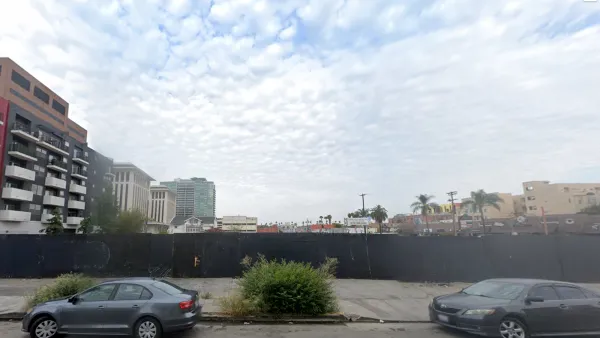
80-unit affordable building is the first to open under LA's fast-track development program
The project was fast-tracked under an executive order issued by Mayor Karen Bass in late 2022.

This Mexican city went paperless — and permitting times dropped by 84%
Guadalajara created an online permitting system that dramatically cut permitting times and bribe solicitations. Now, the entire state of Jalisco is using it.
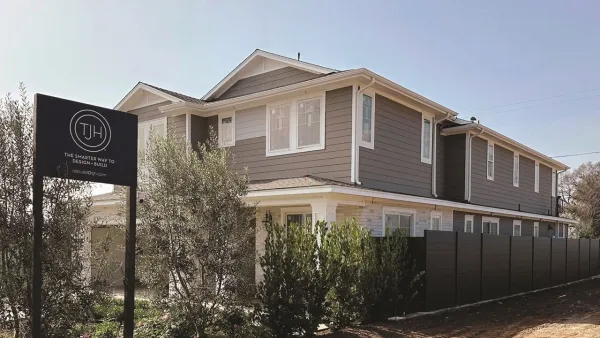
Los Angeles Issues First Occupancy Permit in Pacific Palisades Since Wildfires
Permits in the Palisades are being issued at nearly three times the typical rate as before the wildfires.

Planetizen Federal Action Tracker
A weekly monitor of how Trump’s orders and actions are impacting planners and planning in America.

Eastern Nebraska is running out of electricity
Data centers and electrification are straining eastern Nebraska’s grid, throttling economic development.

Study reveals best places in the U.S. for cycling, walking
New research from Streetlight Data examines bicycle and pedestrian miles per capita in the 100 largest U.S. cities by population.

Why does it take an emergency for the U.S. to expedite infrastructure projects?
In June 2023, Philadelphia repaired a melted interstate in 12 days thanks to an emergency order.

Federal government nominates new FTA administrator
Mark Aesch is currently the founder and CEO of a transportation management consulting firm.

Developers reveal $10 billion stadium plan as ‘Hail Mary’ to keep Bears in Chicago
The plan would also boast a public park, high- and mid-rise buildings and a youth sports complex.

FREE Course: Walkable City 1: Why Walkability?
After describing his path towards focusing on walkability as the essence of good planning, Jeff Speck marches through his five principal reasons for making more walkable places.
Reinventing Malls: Planning Alchemy—Turning Gray Fields Into Gold
The course focuses on the opportunities and imperatives that shape reinvention of mall sites.


City of Charlotte
City of Rosemead
Rutgers University, Edward J. Bloustein School of Planning and Public Policy
University of Michigan School for Environment and Sustainability (SEAS)
Hunter College, City University of New York (CUNY)
The Architects Foundation
City of Cambridge
The Pocatello Development Authority
The Urban Renewal Agency of the City of Pocatello