Researchers found a high fire risk for socioeconomically vulnerable neighborhoods in the American West.


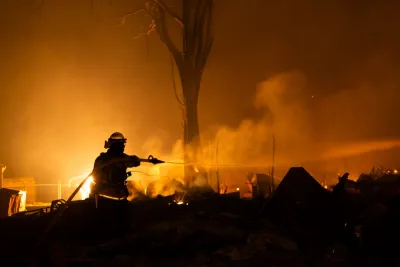
By 2060, the number of buildings threatened by wildfires in the United States could nearly triple, according to new research from the University of Colorado Boulder’s Cooperative Institute for Research in Environmental Sciences. On the current trajectory, the West could see 1 billion hectares of land destroyed and the East could see a five-fold increase in burned areas, Jake Bolster writes for Inside Climate News.
The researchers also found a high fire risk for socioeconomically vulnerable neighborhoods in the American West. “With fast-moving fires increasingly pushing into urban spaces, [Virginia Iglesias, the paper’s lead author] said that socioeconomically vulnerable communities ‘may not have the resources for mitigation. Insurance may be more precarious and recovery if a fire hits might be much more difficult, if not impossible,’” Inside Climate News reports.
Grasslands in the Central U.S. may also see a sharp increase in fire activity, with as many as 111 million hectares at risk of burning.
Read the full story: US Buildings Lost to Wildfires Could Triple By 2060
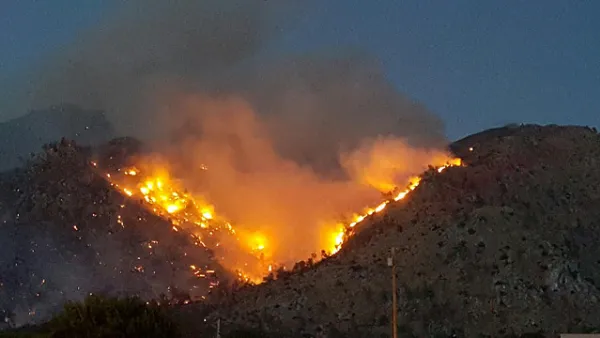
In California, Policies Spur Rebuilding in the Wildland-Urban Interface
After the worst wildfire season ever, changes to local land use and state insurance rules essentially ensure that the same thing will happen again.
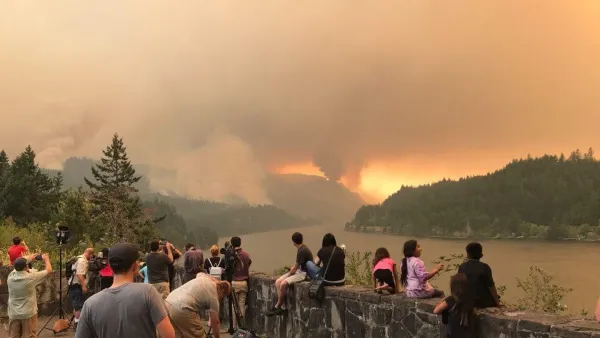
How the West Got Bigger, Badder Fires
Two new books chronicle the origin of U.S. policy on wildfire, the damage that policy has done, and why it’s unlikely to change any time soon.
Keeping the theater open
Rustin Thompson's film, "The Last Picture Shows," presents the movie theater as a useful starting point for assessing which elements of urban tradition are worth retaining.

Planetizen Federal Action Tracker
A weekly monitor of how Trump’s orders and actions are impacting planners and planning in America.

California plans to bury El Niño’s downpour
If the state plays its cards right, it may be able to store a billion acre-feet of El Niño’s water in aquifers.

Desperate measures: Advocates weigh draining Lake Powell to fill Colorado River
Draining the reservoir could reduce evaporation losses by a couple hundred thousand acre-feet.

US buildings threatened, destroyed by fires set to triple by 2060
Researchers found a high fire risk for socioeconomically vulnerable neighborhoods in the American West.

LA residents may be allowed to paint their own crosswalks
Councilwoman Katy Yaroslavsky put out a motion instructing the Los Angeles Department of Public Transportation to study the feasibility of allowing volunteers to paint crosswalks.

Dallas moves to overhaul its zoning code
The city's zoning reform will allow more multi-family and mixed-use developments.

FREE Course: Walkable City 1: Why Walkability?
After describing his path towards focusing on walkability as the essence of good planning, Jeff Speck marches through his five principal reasons for making more walkable places.
Reinventing Malls: Planning Alchemy—Turning Gray Fields Into Gold
The course focuses on the opportunities and imperatives that shape reinvention of mall sites.

City of Rosemead
Rutgers University, Edward J. Bloustein School of Planning and Public Policy
One Hundred Miles
Hunter College, City University of New York (CUNY)
The Architects Foundation
University of Cincinnati Online
City of Cambridge
Montrose County
The Pocatello Development Authority