The site has been under construction since 2022; the city originally estimated it would finish the court in 2024.


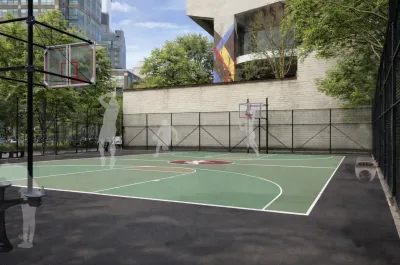
New York City transit officials say a pit in Downtown Manhattan that’s been in “MTA construction purgatory” for the last four years will transform into a basketball court by November, Liam Quigley writes for Grist. The city ripped up the court in 2022, and originally estimated it would reopen by the end of 2024. When that deadline passed, the city promised it would reopen by April 2026. The court's budget has ballooned from $45 million in 2014 to $83.7 million today.
“The site was abuzz with activity Thursday. Crews were still working in pits below the street shored up with timber. The site has not yet been paved and none of the new amenities — or the basketball court and hoops — have been installed,” Grist reports.
The city destroyed the original court to build a new substation that provides electricity to trains. The new Grand Canal Court will feature upgraded lighting and fencing, new benches and a water fountain.
Read the full story: Buzzer beater? MTA vows to turn this SoHo pit into a basketball court in 30 days.

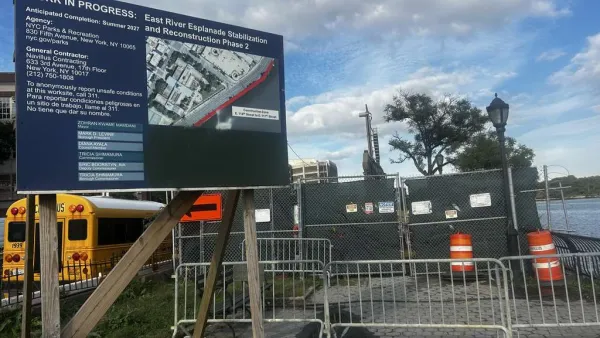
Ballooning costs delay NYC green space restoration after six years of planning
“There’s a stark inequity in how the city prioritizes infrastructure projects across different Manhattan neighborhoods," said Maria Kessler, executive director for Friends of the East River Esplanade. “Why is this neighborhood the last and unserved?”
NYC needs 700,000 new homes to resolve housing crisis, report states
The report gave every neighborhood a non-binding development target.
Average Manhattan Rent Topped $5,400 This Year
The borough’s vacancy rate is just aboe 2 percent.

Planetizen Federal Action Tracker
A weekly monitor of how Trump’s orders and actions are impacting planners and planning in America.

California plans to bury El Niño’s downpour
If the state plays its cards right, it may be able to store a billion acre-feet of El Niño’s water in aquifers.

Desperate measures: Advocates weigh draining Lake Powell to fill Colorado River
Draining the reservoir could reduce evaporation losses by a couple hundred thousand acre-feet.

How a Chicago-sized wind farm beat the odds and powered on
The project spanned five presidential administrations and a standoff with a U.S. military base.

MTA gives itself 30 days to transform pit into basketball court
The site has been under construction since 2022; the city originally estimated it would finish the court in 2024.

Non-stop party: Chicago voters weigh permanent festival grounds
A stable place for bleachers, stages and drainage may streamline the setup and teardown of large events.

FREE Course: Walkable City 1: Why Walkability?
After describing his path towards focusing on walkability as the essence of good planning, Jeff Speck marches through his five principal reasons for making more walkable places.
Reinventing Malls: Planning Alchemy—Turning Gray Fields Into Gold
The course focuses on the opportunities and imperatives that shape reinvention of mall sites.

City of Rosemead
Rutgers University, Edward J. Bloustein School of Planning and Public Policy
One Hundred Miles
Hunter College, City University of New York (CUNY)
The Architects Foundation
University of Cincinnati Online
City of Cambridge
Montrose County
The Pocatello Development Authority