Your healthcare system treats you after you get sick. Your city decides whether your health declines at all. Singapore is proving that planning is preventive medicine.


This is the second article in Rajiv Ahuja’s Longevity-Cities series. Read part one here.
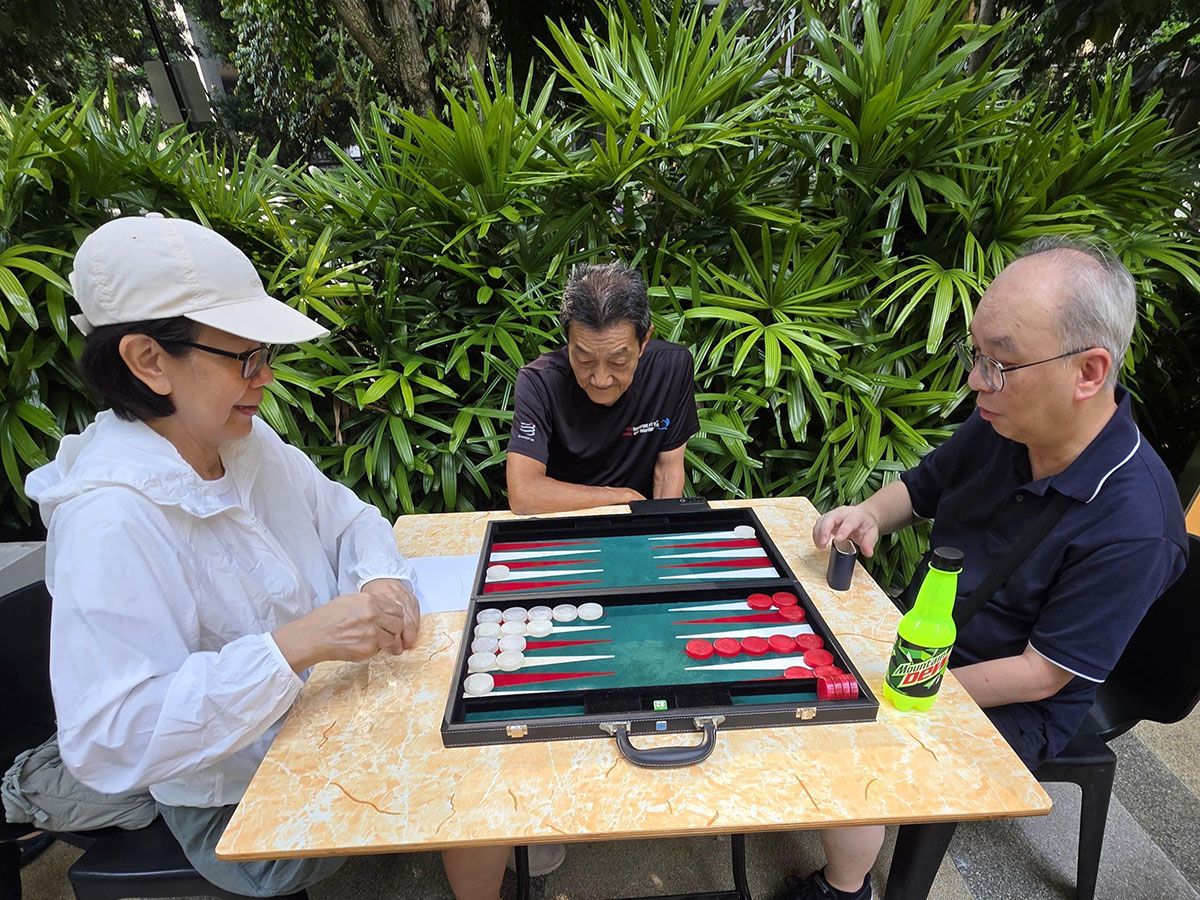
In Queenstown, Singapore's oldest public housing estate, my WRLDCTY cohort gathered in a courtyard around a small patch of grass. Our guides described this unremarkable lawn as the place where residents share meals, dance, sing, play games, advocate for each other and celebrate together. All of this, on maybe a hundred square feet of grass.
We looked around at the small square of lawn, and back to our guides. Someone finally had to ask: “Wait — are you talking about this patch of grass?”
They were. This gathering was run by Queenstown Kakis — “Kakis” is Singlish for buddies. It’s a resident-led community founded by Melissa Kwee, who once ran Singapore's National Volunteer & Philanthropy Centre. When she stepped down from that role, she said only one question still compelled her: could you learn how to be a good neighbor? For Kwee, being a good neighbor is the lens for everything a neighborhood needs — health, connection and belonging — practiced a hundred square feet at a time.
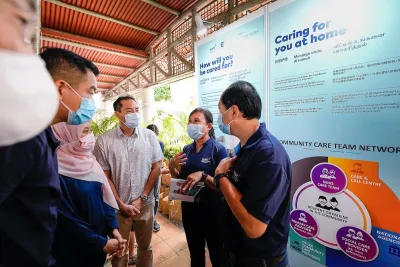
Kakis is located inside the Health District @ Queenstown, a unique partnership among the National University of Singapore, the Housing & Development Board and the national health system, designed to help its residents live longer, healthier lives. Kakis is one of the district's official public health initiatives. Given that I was in a health district, I expected clinics, screenings and health tech. But the most important part of the health district wasn’t the clinic. It was a small patch of lawn where neighbors hang out and help each other.
This lawn reframed my whole trip. Singapore isn't just building more clinics and hospitals in its neighborhoods. In Singapore, health goes beyond blood tests and biomarkers. The neighborhoods themselves are being built to keep people moving and connected.
The engineered Blue Zone
In my last article on Longevity Ready Cities, I described how Copenhagen embeds long life into its streets and public spaces. Singapore takes this further. It engineers longevity by connecting housing, transportation, healthcare and community services into one system. And it treats its neighborhoods, not its hospitals, as where the system begins.
This year, Singapore became a super-aged society. More than one in five residents are 65 or older; by 2030, it’ll be one in four. There is no countryside to retire to and no sunbelt to migrate toward. As one planning official told our cohort, the whole idea in Singapore is that you are “home for life.”
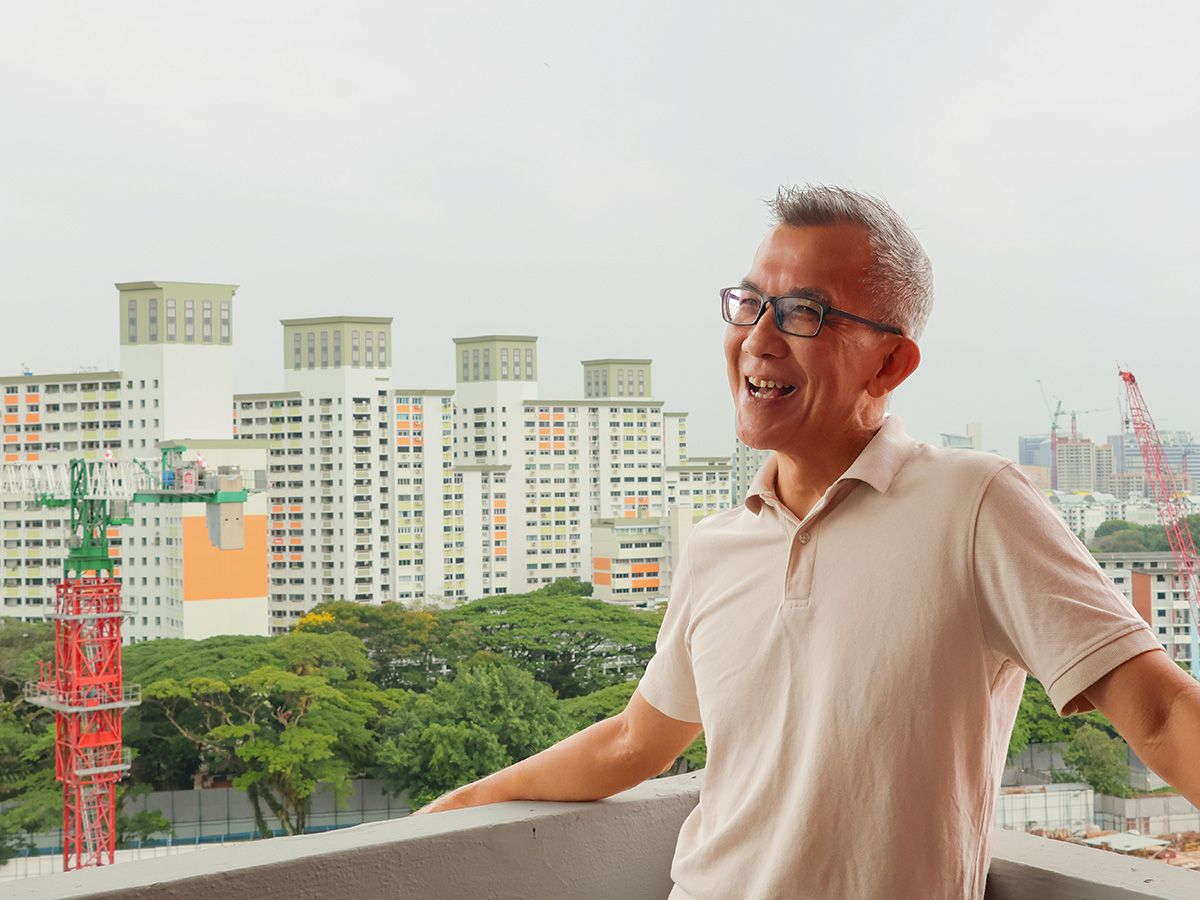
And Singapore is making good on that promise. Longevity researcher Dan Buettner has described Singapore as the world's sixth Blue Zone, and the first engineered one. The original five, from Okinawa to Sardinia, inherited their longevity from centuries of culture. Singapore designed its own: life expectancy has risen roughly 20 years since 1960, and it now boasts among the world's highest healthy life expectancies — the years people live in good health, not just the years they live.
When dementia becomes a planning standard
One of the more interesting examples I came across of how Singapore increased healthy life expectancies didn’t involve a hospital.
Singapore studied how older adults with early dementia use their neighborhoods. It found that a sense of safety determines whether they go outside at all. When streets feel confusing, older adults with early dementia stay home. As a result, they become isolated and lose social connections. This, ultimately, leads to accelerating cognitive decline and often ends in institutional care.
In Yishun, Singapore's first dementia-friendly town, housing blocks are color-coded so residents can navigate by memory of place rather than memory of signs, with wayfinding murals and rest points extending the safe zone block by block. The physical changes are only part of what makes this work. Shopkeepers, neighbors and caregivers also help people with dementia feel comfortable and find their way around. In this case, the physical design of the space gives people a place to connect, but the community brings it to life.
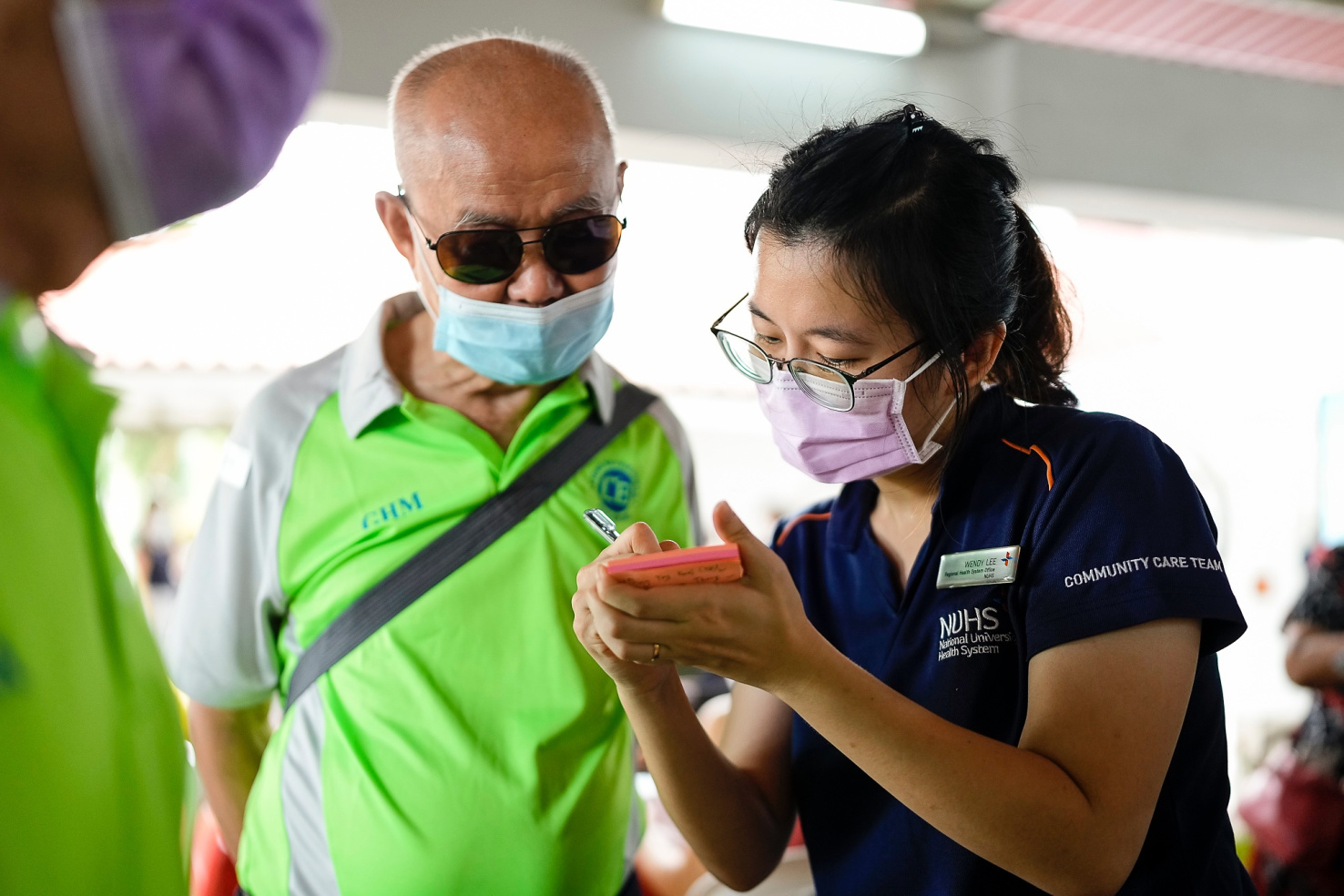
More than a dozen neighborhoods have followed, including Queenstown. The research has been translated into a national Dementia-Friendly Neighborhood Design Guide for built-environment professionals and is intended for replication island-wide. The HDB is already building dementia-friendly features into new public housing. In this case, a very specific health outcome — the cognitive decline of thousands of people — is being managed through urban planning's most ordinary instruments: guidelines, standards and development practice.
When the housing authority is a health agency
Eight in 10 Singaporeans live in public housing. When that many people live in homes the government designs, the housing authority is functionally a public health agency. We shouldn’t only count how many houses are being built. Instead, we should ask whether living there makes people healthier and happier.
I saw this at the HDB Hub where Singaporeans come to secure their flats. It was like a DMV where people waited for their number to flash on a big board. Except, in this case, the mood was celebratory. A bakery outside even sold balloons. Upstairs, families slipped off their shoes to walk through sample apartments of every size and layout.
Prime Minister Lawrence Wong captured the philosophy at this year's World Cities Summit: “the home is not just shelter.” It's where communities are built and the social fabric of the city is woven over generations.
That philosophy also shows up in what Singapore chose not to build. Rather than developing retirement villages, which are the age-segregated enclaves familiar across America, Singapore is creating Age Well neighborhoods, where seniors age in their communities. These neighborhoods are supported by community services, healthcare partnerships and housing grants for families who live close to aging parents.
The built proof is Kampung Admiralty: senior apartments (independent homes, not a nursing facility) stacked above a medical center, a childcare center paired with an active aging hub and a 900-seat hawker center. Grandparents and toddlers share the same building by design and policy. Many older adults prefer these options: senior-eligible flats in recent HDB launches draw roughly four applications per unit, and three-generation flats are routinely oversubscribed.
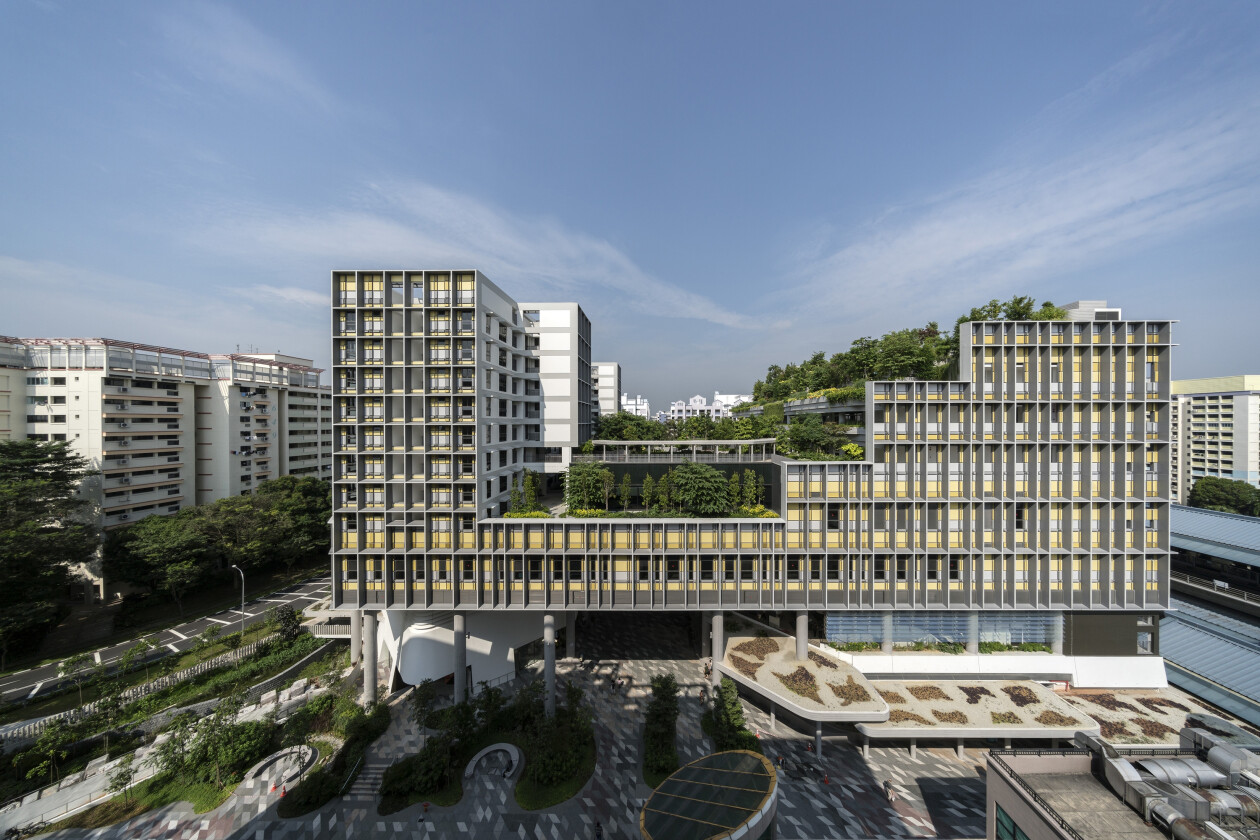
Then there are the void decks: the open-air ground floors of every HDB block that are deliberately left empty. At first, they look like nothing: just shaded, unprogrammed spaces. These spaces are left open so residents can decide how to use them. Depending on the day, the same space might host an exercise class, a wedding, a funeral or a child’s birthday party. These resident-led activations of public spaces are useful to maintaining connections and nudging residents toward being more visible in their community. The hawker centers work the same way. They do more than just provide inexpensive food. They give people of different ages a comfortable place to eat, meet friends, escape the heat, and spend time in their community. These centers serve as one space with six health functions, and zero of them are labeled “health.”
What makes a city a health system
A collection of good projects, though, does not make a health system. A system must do three things: reach a whole population, turn evidence into repeatable standards and deliver its benefits over and over through daily life. Singapore succeeds at all three. Public housing provides the reach. Initiatives like the dementia guide turn research into practice. And the void decks, hawker centers and hundred-square-foot lawns deliver interventions daily, through ordinary routine rather than one-off events..
Singapore’s success suggests a metric American urban planners don't yet calculate. We measure housing yield, retail productivity and trips generated. But what about health yield: how much a place contributes to people’s health by helping them walk more, meet friends, find their way around and stay independent for longer. By that measure, the small lawn in Queenstown outperforms many signature parks. A destination park visited once a month can produce less cumulative health than an unremarkable shaded space used twice a day. Good planning makes the healthy choice routine.
What American planners can actually do
American planners don't control 80% of the housing stock. But Singapore's lesson is deeper than just state capacity. It's about which urban tools deliver health. And they turned out to be the ordinary ones that planners already hold: codes, zoning, streetscapes, parks and public space.
Age-friendly housing modifications also have financial benefits. Falls among older adults cost the US roughly $80 billion a year, most of it borne by Medicare and Medicaid. Social isolation adds an estimated $6.7 billion more in annual Medicare spending. A private nursing home room costs a median of about $130,000 a year. When urban design keeps someone mobile, connected and in their own home for another year, it defers six figures in care costs. Multiply that across an entire aging population. Safe crossings, seating, shade and clear wayfinding are among the highest-return health investments a city can make.
A record 17% of US homes purchased in 2024 were multigenerational, which is the highest share since the National Association of Realtors began tracking it. The growth of multigenerational housing suggests that American families are already looking for different ways to live across generations. The demand exists. But our zoning and housing models have not necessarily kept pace.
So before approving the next project, ask four questions. Will people encounter its benefits every day? Can they use it at eight, 48 and 88? Does it produce more than one public benefit? And can the city reproduce it beyond one site? Then run the ground-level test, borrowed from a speaker in Singapore: walk one neighborhood as a 75-year-old with early cognitive decline. Is the wayfinding understandable? Is there anywhere to sit, relax and reorient? These answers will shape how cities design their public space.
My time in Singapore changed how I think about urban planning and health. Everything that urban planners decide, like streets, parks and housing, influences how healthy people are
The question health can't answer
A city can keep you mobile, connected and out of the hospital. But standing on those hundred square feet of grass in Queenstown, listening to residents describe the meals, the dancing and the advocacy, I realized the Health District's real innovation wasn't medical. It was giving people the space to show up for each other.
Which raises the question no hospital or clinic can answer, and the one I'll take up next: a city can help you stay healthy, but can it give you a reason to get up in the morning?
Next in the Longevity Cities series: designing cities for purpose and belonging.

Eating, littering on Singapore buses now a fineable offense
Passengers who put other riders in danger may be charged thousands of Singapore dollars.
Singapore's secret to keeping transit cool in sweltering heat
The tropical city state known for superior transit has a tip or two for keeping transit manageable as cities heat up.
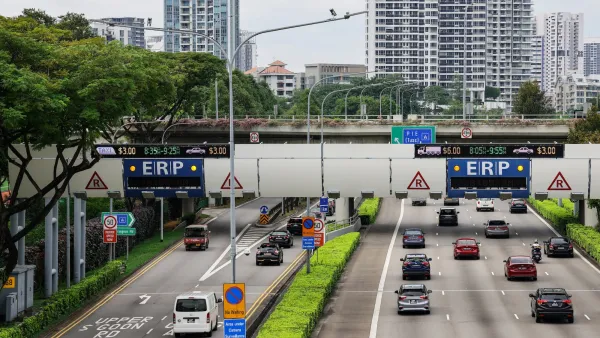
Singapore adopts in-vehicle GPS tech to manage road tolls
The city's latest update to its congestion pricing system could open the door to distance-based tolling.

Planetizen Federal Action Tracker
A weekly monitor of how Trump’s orders and actions are impacting planners and planning in America.

‘Going backwards:’ Baltimore mayor, students rally against state's transit funding plan
Maryland's proposed six-year plan provides no funding for Baltimore’s BMORE bus program and reduces its road maintenance funding.

Detroit to transform waterfront with $2.2 billion investment
Developers will convert about 18 acres of unused parking lot space into civic spaces.

HUD modernizes 50-year-old manufactured housing framework
The Next Generation Manufactured Housing Action Plan establishes new energy-efficiency standards for manufactured homes, and new guidelines for anchoring them.

New CA housing laws tear down development red tape
Recently-signed legislation makes building starter homes and ADUs cheaper and faster in California.

Metrolink finishes first expansion in 20 years
The transit agency is now one of very few in the United States to connect two major airports.

FREE Course: Walkable City 1: Why Walkability?
After describing his path towards focusing on walkability as the essence of good planning, Jeff Speck marches through his five principal reasons for making more walkable places.
Reinventing Malls: Planning Alchemy—Turning Gray Fields Into Gold
The course focuses on the opportunities and imperatives that shape reinvention of mall sites.

County of Mendocino
planning NEXT
City of Thousand Oaks
The Architects Foundation
University of Cincinnati Online
Montrose County
Northern Illinois Transit Authority (NITA)
The Pocatello Development Authority

