Recently-signed legislation makes building starter homes and ADUs cheaper and faster in California.


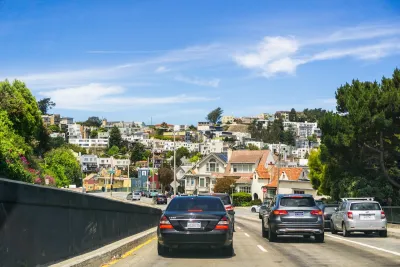
California Gov. Gavin Newsom signed multiple housing bills last week “promising myriad reforms to reduce red tape, incentivize construction and boost housing affordability,” Ryan Kushner writes for Smart Cities Dive. The bills may diversify California’s housing portfolio: they make building ADUs cheaper and approving townhome developments faster.
The recently-signed California’s Missing Middle Townhome Act “establishes by-right approval for townhome development projects of up to 150 units and authorizes local governments to set up a fast-track 60-day ministerial approval timeline for qualifying projects,” Smart Cities Dive reports. Another bill creates a 60-day approval process for townhomes and condominiums.
New legislation will also eliminate an impact fee for ADUs larger than 750 square feet, replacing it with a marginal fee that will direct local governments to charge “proportionally for the square footage above 750 square feet, rather than per each square foot, for the first two ADUs built on a property,” Kushner writes.
Read the full story: More diverse housing types could result from new laws in California

California distributes $1.3 billion to prevent transit service cuts, bolster projects
Twenty-eight projects across California received a portion of the funding.
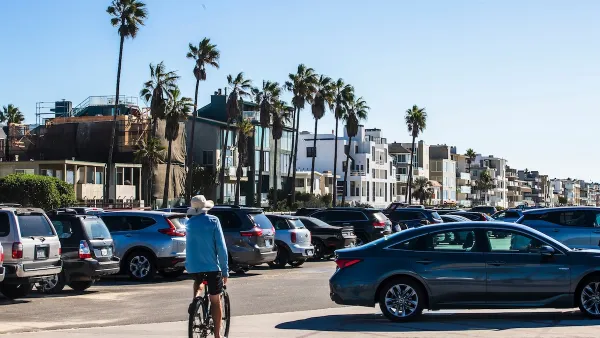
Not in my parking spot: LA renters oppose ADU development in their garages
Some tenants advocates say taking away residents’ parking spaces harms senior citizens and people with disabilities who rely on their cars to navigate the city.

California’s ‘unrecognizable’ water plan may go down the drain
After four years of regulatory processes, water agencies say the plan to overhaul how cities and farms take water from the Sacramento-San Joaquin Delta has changed dramatically.

Planetizen Federal Action Tracker
A weekly monitor of how Trump’s orders and actions are impacting planners and planning in America.

Washington state to charge fee to drivers with fuel-efficient cars
Revenue from the fee will go towards supporting the state’s highways.

Illinois considers spending $1 billion in taxpayer money on data center
A quantum computing campus and data center are currently under construction in Chicago.

People Mover delayed again, LAX and contractor trade barbs
The automated train was last slated to open in January 2027.

Trump to blast ‘hydrocarbon highway’ through ‘world’s longest art gallery’
Environmental and historic preservation groups are suing to stop the project.

25 states cast bids to be the home of U.S. Space Academy
The academy will train scientists, officers and astronauts for the U.S. Space Force.

FREE Course: Walkable City 1: Why Walkability?
After describing his path towards focusing on walkability as the essence of good planning, Jeff Speck marches through his five principal reasons for making more walkable places.
Reinventing Malls: Planning Alchemy—Turning Gray Fields Into Gold
The course focuses on the opportunities and imperatives that shape reinvention of mall sites.

City of Charlotte
City of Rosemead
Rutgers University, Edward J. Bloustein School of Planning and Public Policy
University of Michigan School for Environment and Sustainability (SEAS)
Hunter College, City University of New York (CUNY)
The Architects Foundation
University District Partnership