International law says that the Indigenous people of America’s territories have a right to prior and informed consent regarding projects that impact their countries.


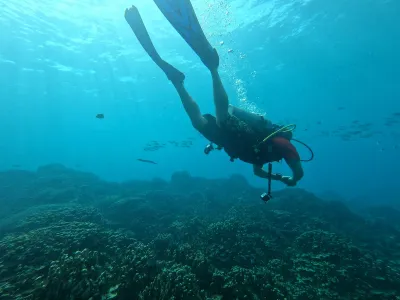
The Trump administration intends to lease millions of acres of seafloor surrounding America’s Pacific Island territories to mining companies, despite local leaders and environmentalists’ opposition. While international law says that the Indigenous people of America’s territories have a right to prior and informed consent regarding projects that impact their country, the Trump administration says it has the authority to proceed under U.S. law, Anita Hofschneider and Sachi Kitajima Mulkey write for Grist.
Lou Leon Guerrero, the governor of Guam, said she was reassured by Bill Hague, an official in the Department of the Interior, “that mining would never proceed without the community’s support. Nearly a year later, that’s exactly what’s happening,” Grist reports. In August, the Marine Minerals Administration said it would auction more than 67 million acres of seafloor on either side of the Marianas archipelago, which includes Guam, to mining companies.
“Earthjustice, an environmental law nonprofit, filed lawsuits against the Trump administration on behalf of conservation groups in American Samoa and the Mariana Islands, arguing that the government does not yet know if seabed mining would harm animals that are protected by the Endangered Species Act, like whales and sea turtles,” Hofschneider and Kitajima Mulkey report.
Read the full story: She governs a US territory. But she has no say in who mines its waters.
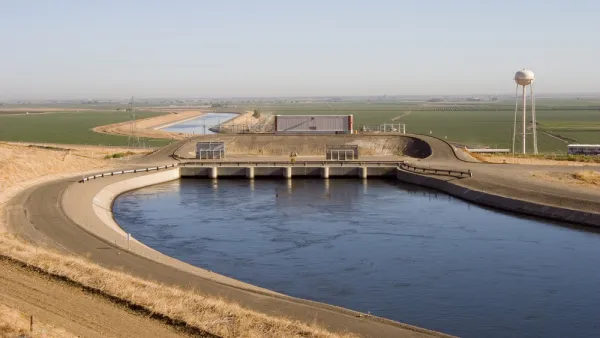
Trump Administration's New CA Water Plan Chooses Farmers Over Fish
A plan to divert water to farmers in California, released at the end of October, would allow for the annihilation of winter-run Chinook Salmon.
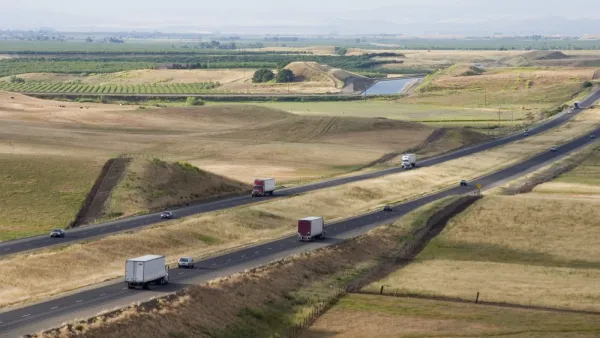
Trump Administration Finds a Way to Divert California Water to Farmers
A new federal program will clear the way for more water to be delivered to the state of California's agriculture industry, overruling environmental safeguards that protected fish.
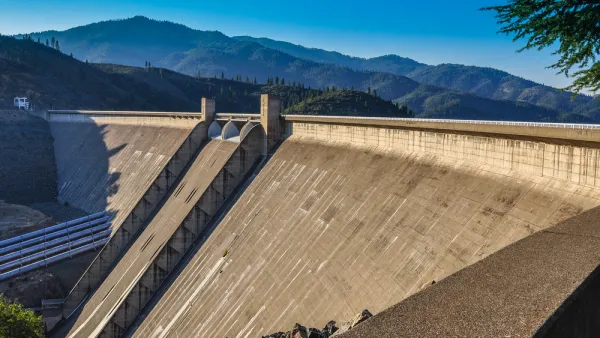
Why Are the Feds Suddenly in Favor of Raising the Shasta Dam?
Despite state opposition and potential violations of California law, the Trump Administration has revived a project that was deemed impracticable only a few years ago.

Planetizen Federal Action Tracker
A weekly monitor of how Trump’s orders and actions are impacting planners and planning in America.

California plans to bury El Niño’s downpour
If the state plays its cards right, it may be able to store a billion acre-feet of El Niño’s water in aquifers.

Desperate measures: Advocates weigh draining Lake Powell to fill Colorado River
Draining the reservoir could reduce evaporation losses by a couple hundred thousand acre-feet.

Chicago voters approve permanent festival grounds, penalty for vacant property owners
Currently, major summer and fall festivals take over public parks for weeks at a time, drawing criticism from nearby residents

NYC votes to cut outdoor dining red tape, speed up permitting
New York City also voted to allow the Department of Transportation to begin work on urgent projects before notifying elected officials.

California appears to reject Prop. 45
The proposition would have expanded the projects that qualify for a streamlined environmental review, effectively paring down the California Environmental Quality Act.

FREE Course: Walkable City 1: Why Walkability?
After describing his path towards focusing on walkability as the essence of good planning, Jeff Speck marches through his five principal reasons for making more walkable places.
Reinventing Malls: Planning Alchemy—Turning Gray Fields Into Gold
The course focuses on the opportunities and imperatives that shape reinvention of mall sites.

City of Rosemead
Rutgers University, Edward J. Bloustein School of Planning and Public Policy
One Hundred Miles
Hunter College, City University of New York (CUNY)
The Architects Foundation
University of Cincinnati Online
City of Cambridge
Montrose County
The Pocatello Development Authority