The American Water Works Association estimates that roughly $2 trillion will be needed to update municipal water systems for contemporary conditions.



Climate change is piling additional stress on the U.S.’s already-strained water systems, leading to water system leaks, damaged utilities and lead contamination across the nation. 67 million American utility customers are served by water utilities with high climate risk: according to the American Water Works Association, between $2.1 and 2.4 trillion will be required between now and 2050 to redesign and update municipal water systems to prepare them for contemporary conditions.
If utility companies cannot secure federal funding, and pass the cost along to consumers, it would increase drinking water bills by at least 126% according to the American Water Works Association.
“Climate change has been particularly hard on water utilities. Bigger temperature swings, stronger floods and changes in groundwater levels mean expanding and contracting soil, shifting pipes and more water main breaks. Drought empties reservoirs and forces operators to tap alternative sources. Expanded periods of high heat strain equipment made to operate in cooler climates. More severe rain storms require expanded stormwater capacities. Rising sea levels threaten water sources and low-lying treatment plants with saltwater intrusion,” Patrick Sisson writes for Next City.
Read the full story: Aging US Water Systems Are No Match for Climate Change

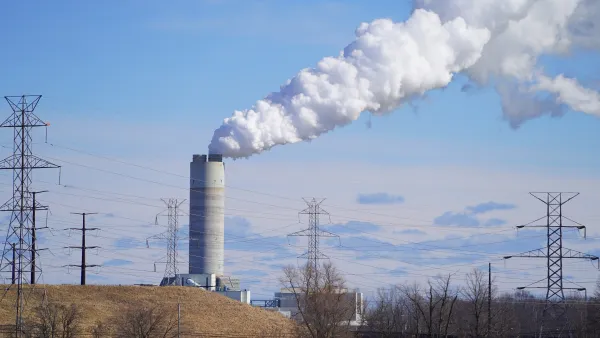
EPA erases limits on planet-warming pollution from power plants
Under Monday’s plan, power plants would still have some limits on how much mercury, arsenic and other contaminants they can emit.
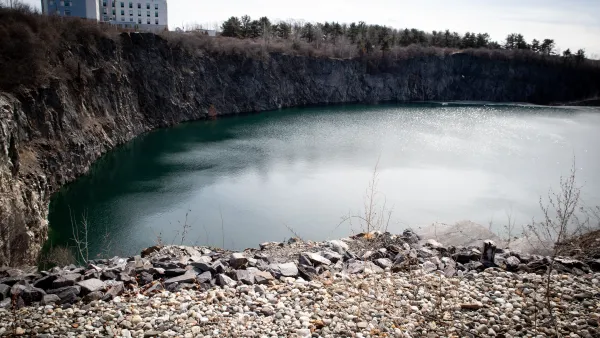
Maine’s booming quarry industry is sending disruptive shockwaves into homes
Climate change has caused sea level rise, flooding and erosion along the coast of Maine, leading to a trend of coastal residents erecting or repairing stone walls.
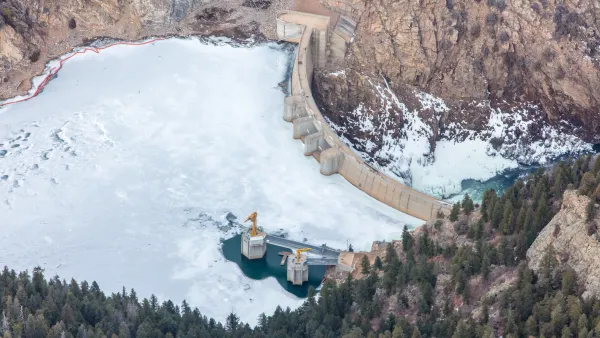
Instead of water, sediment from droughts and wildfire is choking U.S. dams
Sediment has filled 8% of dam storage capacity in the United States. Because of climate change, researchers expect it will only accumulate quicker.

Planetizen Federal Action Tracker
A weekly monitor of how Trump’s orders and actions are impacting planners and planning in America.

Amtrak, CN end decades-long dispute with eight-year agreement
The new operating agreement establishes an updated framework for the companies to work together, including processes to resolve disputes.

Colorado’s Largest Data Center Could Rise Next to Homes — Without a Public Hearing
The proposed campus would consume 11 times the power of Denver International Airport; as it has across the country, opposition mounts.

'This is going to be painful:’ Virginia stares down $1.7 billion funding gap for highway maintenance
The state may address the deficit by shifting $290 million from its construction budget to maintenance projects.
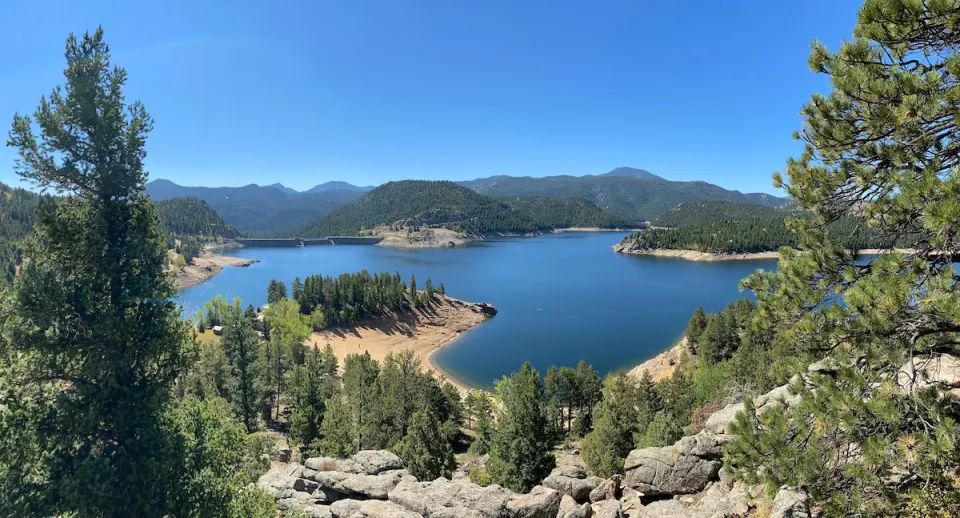
Judges permit Denver to divert 77,000 acre feet from the Colorado River for reservoir expansion
Overuse and climate change have caused the Colorado River’s water levels to plummet.

Amtrak, CN end decades-long dispute with eight-year agreement
The new operating agreement establishes an updated framework for the companies to work together, including processes to resolve disputes.

FREE Course: Walkable City 1: Why Walkability?
After describing his path towards focusing on walkability as the essence of good planning, Jeff Speck marches through his five principal reasons for making more walkable places.
Reinventing Malls: Planning Alchemy—Turning Gray Fields Into Gold
The course focuses on the opportunities and imperatives that shape reinvention of mall sites.

KFH Group Inc.
Greater Baltimore Committee
Eagle County Government
The Architects Foundation
University of Cincinnati Online
The Pocatello Development Authority
The Urban Renewal Agency of the City of Pocatello