The Baltimore & Potomac Tunnel Replacement Program is Amtrak's largest-ever single infrastructure investment, and will pave the way for more reliable passenger rail service between Baltimore, Washington and Virginia.


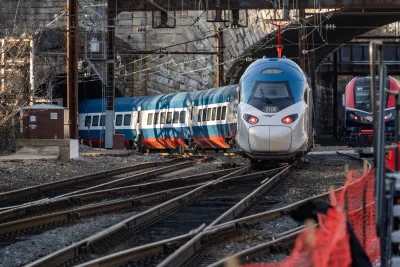
Five years after Amtrak announced its $6-billion Baltimore & Potomac Tunnel Replacement Program, contractors have completed excavation work for the first of five bridges that must be rebuilt, with the other four remaining ahead of schedule. Crews have also broken through the final section of rock separating both sides of the utility siphon tunnel, which will carry water, communications and electrical infrastructure beneath existing and future railroad tracks.
The project is Amtrak's largest-ever single infrastructure investment, and will pave the way for more reliable passenger rail service between Baltimore, Washington and Virginia. Currently, trains passing through the 1.4 mile tunnel must slow to 30mph, making it one of the most notorious bottlenecks on the Northeast Corridor. The new tunnel will support speeds of up to 100 mph.
“Despite the progress, substantial work remains before tunnel boring begins. Crews continue soil stabilization, jet grouting, sewer installation, roadway modifications and site mobilization activities throughout the project corridor,” Grant Cameron writes for Daily Commercial News. Tunneling is expected to begin in 2028.
Read the full story: Amtrak’s $6B Baltimore tunnel project moves closer to a faster Northeast Corridor
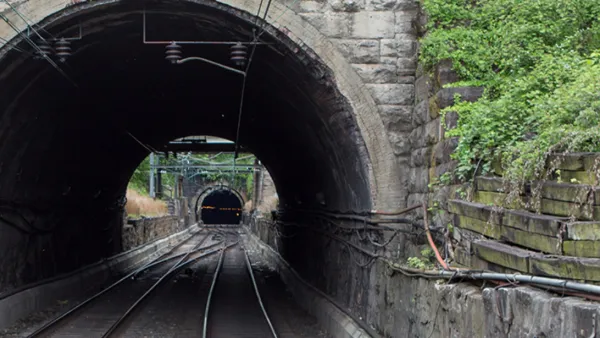
Creating a Meaningful Community Input Process in Baltimore
Seeking to avoid the mistakes of the past, the city undertook a robust community engagement process when planning the reconstruction of the Baltimore & Potomac Tunnel.
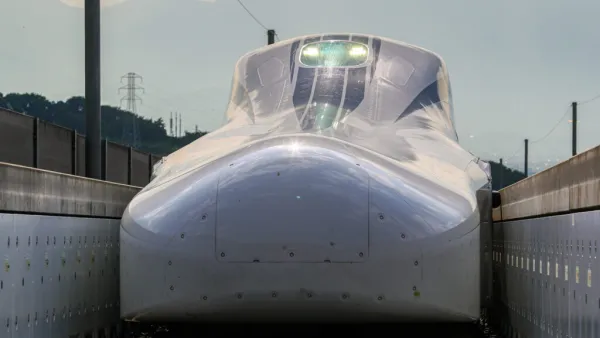
D.C. Has Concerns About Parking and the Cost of Maglev Proposal
Washington, D.C. officials are urging modifications to key components of a proposal to build a maglev system between D.C. and Baltimore, citing disruptions to neighborhoods and cost concerns.
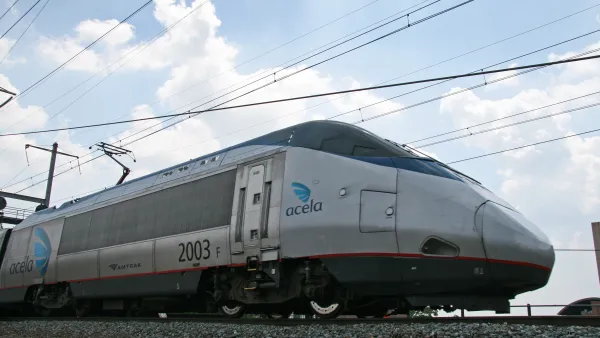
Maryland Looks to Replace Reconstruction-Era Train Tunnel
The 148-year old tunnel, which slows trains to 30 miles per hour, is the biggest bottleneck between Washington, D.C. and New Jersey.

Planetizen Federal Action Tracker
A weekly monitor of how Trump’s orders and actions are impacting planners and planning in America.

California plans to bury El Niño’s downpour
If the state plays its cards right, it may be able to store a billion acre-feet of El Niño’s water in aquifers.

Desperate measures: Advocates weigh draining Lake Powell to fill Colorado River
Draining the reservoir could reduce evaporation losses by a couple hundred thousand acre-feet.

US buildings threatened, destroyed by fires set to triple by 2060
Researchers found a high fire risk for socioeconomically vulnerable neighborhoods in the American West.

LA residents may be allowed to paint their own crosswalks
Councilwoman Katy Yaroslavsky put out a motion instructing the Los Angeles Department of Public Transportation to study the feasibility of allowing volunteers to paint crosswalks.

Dallas moves to overhaul its zoning code
The city's zoning reform will allow more multi-family and mixed-use developments.

FREE Course: Walkable City 1: Why Walkability?
After describing his path towards focusing on walkability as the essence of good planning, Jeff Speck marches through his five principal reasons for making more walkable places.
Reinventing Malls: Planning Alchemy—Turning Gray Fields Into Gold
The course focuses on the opportunities and imperatives that shape reinvention of mall sites.

City of Rosemead
Rutgers University, Edward J. Bloustein School of Planning and Public Policy
One Hundred Miles
Hunter College, City University of New York (CUNY)
The Architects Foundation
University of Cincinnati Online
City of Cambridge
Montrose County
The Pocatello Development Authority