Of America’s 10 largest cities, Houston had the second-most renters spending more than 30% of their income on housing in 2024.



A Kinder Institute analysis revealed that Houston had the second-highest share of “cost-burdened” renters — people who spend more than 30% of their income on housing — among the 10 largest U.S. cities in 2024, John Brannen writes for Urban Edge, the digital publication of Kinder Institute. About 293,000 Houston renters, or 55% of those whose spending rates were calculated, were “cost-burdened.”
Urban Edge reports:
“While the median Houston rent ranked second-lowest among the 10 largest cities — about $1,400 per month — local renters also earned the least. The median household income for Houston renters totaled about $48,100, while renters in several other cities earned $10,000-plus more."
Houston’s affordability challenges come in tandem with elevated housing prices, mortgage rates and property taxes.
Read the full story: Houston rents are lower than New York City’s. That doesn’t make them more affordable.


Houston Habitat for Humanity builds modular homes in one-third the construction time of traditional houses
The nonprofit known for facilitating affordable homeownership is working to cut costs as traditional construction becomes more expensive.
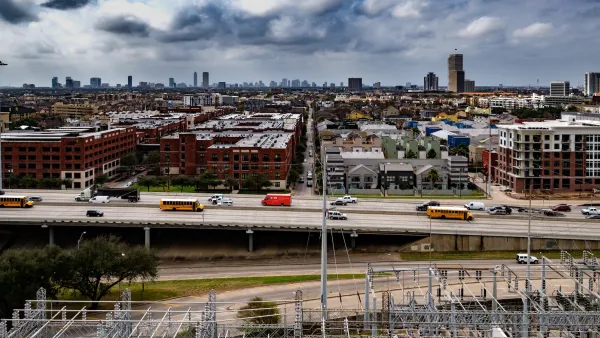
Missing Houston housing authority records put tenant housing at risk
The rebranded Houston housing agency is still working to reconcile records lost during a 2024 software switch.
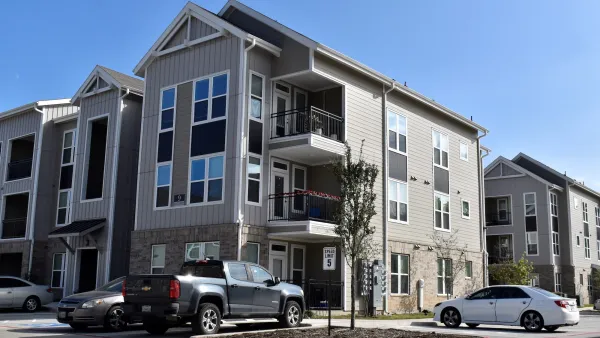
HUD Orders Houston to Submit Plan for Fixing Mismanaged Affordable Housing System
The Houston Housing Authority recently rebranded with a new name, a new CEO, and a new financial team after years of complaints about mismanagement and a lack of transparency.

Planetizen Federal Action Tracker
A weekly monitor of how Trump’s orders and actions are impacting planners and planning in America.

Data reveals that NYC’s bet on congestion pricing has paid off
After almost two years of the program, reports show positive impacts on traffic and air quality and no disruptions to parking.

Denver is solving homelessness. Why aren't the rest of us?
Since 2023, Denver's street homeless population has decreased by 64%, proving that effective tools exist to support those in need of housing.

Chicago's streets are littered with dead birds. Will the city protect them?
Chicago sits in the route of migratory birds traveling south. Its abundance of glass buildings and bright lights make it particularly disorienting for the animals.

CA city to shut down airport, transform it into utopian park
The western side of the 200-acre park will feature a dog park, nature education center and arboretum.

NYC to vote on supporting outdoor dining, streamlining bus and bike lane creation
The city has five proposed amendments to its municipal constitution on the ballot this November.

FREE Course: Walkable City 1: Why Walkability?
After describing his path towards focusing on walkability as the essence of good planning, Jeff Speck marches through his five principal reasons for making more walkable places.
Reinventing Malls: Planning Alchemy—Turning Gray Fields Into Gold
The course focuses on the opportunities and imperatives that shape reinvention of mall sites.

City of Rosemead
Rutgers University, Edward J. Bloustein School of Planning and Public Policy
One Hundred Miles
The Architects Foundation
University of Cincinnati Online
Montrose County
Northern Illinois Transit Authority (NITA)
The Pocatello Development Authority