While lower basin states may see increased precipitation, increased snowfall in upper basin states is needed to bring sufficient water to the West.


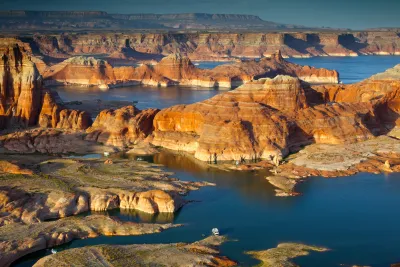
Lake Mead and Lake Powell, both critical water reservoirs for the Colorado River, which provides water to seven different states, have hit multiple record lows throughout August. While the projected El Niño could bring additional rainfall to the region, experts warn it won’t be enough.
For the lakes to refill, the upper basin states — Colorado, Utah, New Mexico, and Wyoming – must see increased snow, so their snowmelt can replenish Lake Mead and Lake Powell. Though El Niños broadly lead to wetter weather patterns, that precipitation increase doesn’t always apply to the upper basin states. In fact, the correlation is moderate at best, Molly Taft writes for WIRED.
Even if the upper basin states do see increased precipitation, they may also see a warmer winter, with precipitation evaporating immediately, or fall as rain instead of snow, to the lake's detriment. The lower basin states will almost certainly see increased precipitation, but as they are downstream from Lake Powell and Lake Mead, more water in these areas won’t do much for them.
“All of the experts agreed that the best-case scenario—in which the mountains that feed the Colorado get a record snowpack year, and Lake Powell and Lake Mead get pulled back from the brink—won’t be nearly enough to make a serious dent in the problem,” Taft writes. “Some projections show that the river’s flow could shrink as much as 30 percent by 2050 thanks to climate change.”
Read the full story, below.
Read the full story: The Super El Niño Won’t Fix the West’s Water Crisis
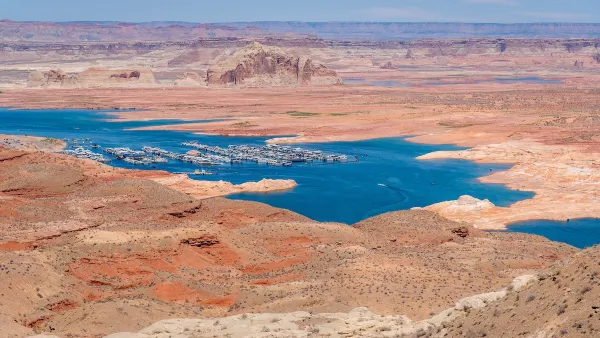
Desperate measures: Advocates weigh draining Lake Powell to fill Colorado River
Draining the reservoir could reduce evaporation losses by a couple hundred thousand acre-feet.
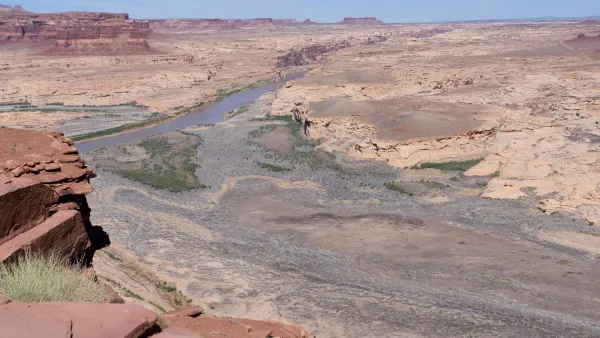
Feds say Arizona, California and Nevada must cut Colorado River water use by 1.25 million acre-feet
The new plan does not apply mandatory cuts to any of the river’s upper basin states.
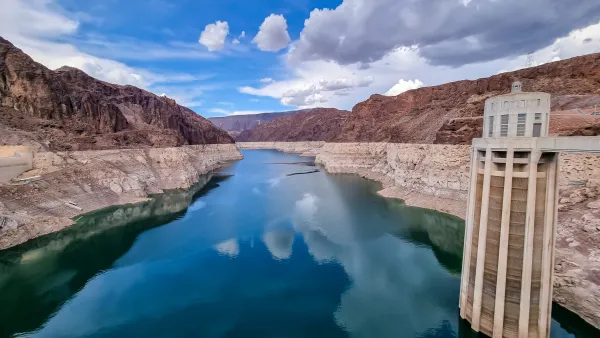
Why a Colorado River water conservation agreement is so hard to reach
As the nation's two largest reservoirs hit their lowest levels on record, what would it take to avert the crisis? An expert weighs in.

Washington state to charge fee to drivers with fuel-efficient cars
Revenue from the fee will go towards supporting the state’s highways.

Illinois considers spending $1 billion in taxpayer money on data center
A quantum computing campus and data center are currently under construction in Chicago.

Trump to blast ‘hydrocarbon highway’ through ‘world’s longest art gallery’
Environmental and historic preservation groups are suing to stop the project.

NYC, state sue feds over mixed-immigration-status housing assistance rule
The state’s lawsuit argues that the rule change violates the Administrative Procedure Act.

Michigan to turn neighborhood into virtual power plant
Residents will soon be able to divert their excess energy to the grid in exchange for compensation.

Data center, mining project swarm to long-awaited Alaska railroad line
The state-owned railroad approved final plans for the spur line this week; the project is expected to cost $311 million, mostly funded by the federal government

FREE Course: Walkable City 1: Why Walkability?
After describing his path towards focusing on walkability as the essence of good planning, Jeff Speck marches through his five principal reasons for making more walkable places.
Reinventing Malls: Planning Alchemy—Turning Gray Fields Into Gold
The course focuses on the opportunities and imperatives that shape reinvention of mall sites.

City of Charlotte
City of Rosemead
Rutgers University, Edward J. Bloustein School of Planning and Public Policy
University of Michigan School for Environment and Sustainability (SEAS)
Hunter College, City University of New York (CUNY)
The Architects Foundation
University District Partnership