Washington’s fire season lasts through October.


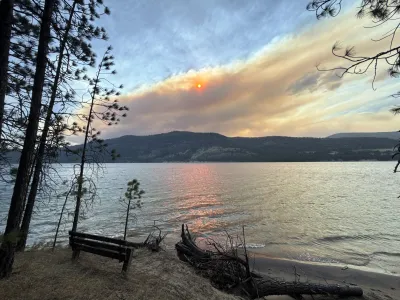
On Aug. 1, the Spokane Complex forest fires ignited in Washington state and blazed for nearly two weeks across the eastern side of the state. With the smoke beginning to clear, Washington will have to reckon with the financial impact of fighting the fires: barely a month into the new fiscal year, Washington’s Department of Natural Resources has already spent $207 million fighting forest fires, nearly two-thirds of what it spent in the entirety of the fiscal year prior.
The 2025 fiscal year fires also had a devastating financial impact: the state budgeted just $18 million to fight forest fires and spent $304.5 million combatting them. In 2026, wildfires have already destroyed over 770,000 acres in Washington, the third-highest on record, writes Aspen Ford for Washington State Standard.
Washington’s Department of Natural Resources will request emergency funding from the federal government in an attempt to close its funding gap, the highest request on record. It will also likely request additional wildfire funding from Washington Governor Bob Ferguson for the next fiscal year.
Read the full story, below.
Read the full story: Cost to battle 20 wildfires in WA has topped $200M
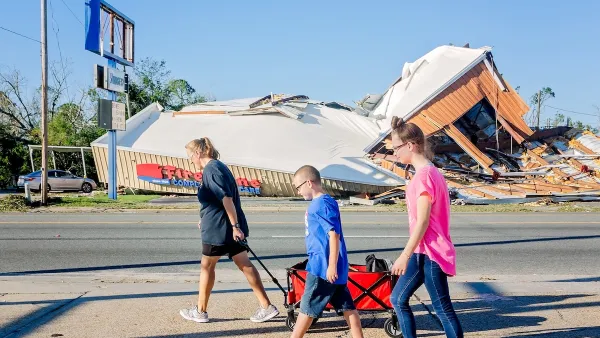
How ‘post-disaster gentrification’ alters neighborhoods after natural calamities
After hurricanes, fires or other calamities, the original residents of a community are often replaced by younger, wealthier residents.
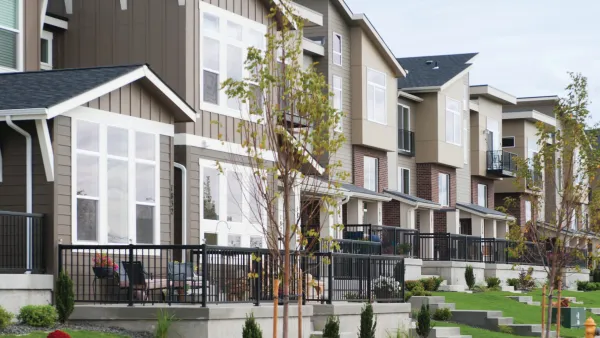
'Missing middle housing' accounted for nearly 20% of Spokane permits in 2025
Recent laws making it easier and less costly to build smaller residential buildings are having their intended effect.
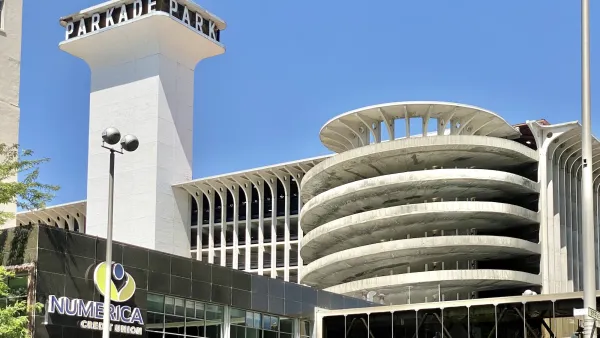
Spokane Passes 12% Parking Tax
The new tax will support city transportation projects.

Planetizen Federal Action Tracker
A weekly monitor of how Trump’s orders and actions are impacting planners and planning in America.

Washington state to charge fee to drivers with fuel-efficient cars
Revenue from the fee will go towards supporting the state’s highways.

Illinois considers spending $1 billion in taxpayer money on data center
A quantum computing campus and data center are currently under construction in Chicago.

Texas cities and counties forgo $1 billion in taxes to data centers in exchange for few job guarantees
The Tribune found 53 local tax agreements across 34 data centers guaranteed a total of 465 jobs. Roughly half of the agreements had no job stipulations.

Mamdani unveils his ‘most ambitious bus lane project’ so far
The city has added two new bus lanes, which it expects to speed up tens of thousands of bus riders’ commutes.

New Jersey and New York suggest $10.3 billion budget for transit
Some of the budget is dedicated to replacing Manhattan's Midtown Bus Terminal.

FREE Course: Walkable City 1: Why Walkability?
After describing his path towards focusing on walkability as the essence of good planning, Jeff Speck marches through his five principal reasons for making more walkable places.
Reinventing Malls: Planning Alchemy—Turning Gray Fields Into Gold
The course focuses on the opportunities and imperatives that shape reinvention of mall sites.

City of Charlotte
City of Rosemead
Rutgers University, Edward J. Bloustein School of Planning and Public Policy
University of Michigan School for Environment and Sustainability (SEAS)
Hunter College, City University of New York (CUNY)
The Architects Foundation
University District Partnership
City of Cambridge
The Pocatello Development Authority