The new Seattle Social Housing Developer funds affordable housing through a tax on the city's highest-paying companies.


The Seattle city council approved a plan to allow the city's Social Housing Developer to issue bonds, a move designed to help leverage more financing for affordable housing.
As Randy Diamond explains in The Center Square, the program is funded by a tax on companies that pay some employees over $1 million. "The organization received $116 million from the city of Seattle this year, which collects the tax, but won’t receive a new allotment of funds until 2027."
According to the charter change, the developer would use its existing building assets as collateral for debt, which would not have to be paid back by city taxpayers. "The charter changes would also allow the Seattle Social Housing Developer to bundle retail space in buildings it acquires and sell it as condominiums to private developers."
The agency has garnered criticism for its decision to purchase a luxury, market-rate building, where current tenants are allowed to stay. That means only a few of the 150 units actually became available to the 10,000 new applicants hoping to access an apartment. Mike Eliason, director of design and policy for the Seattle Social Housing Developer, said they plan to acquire 1,040 units and build 630 new units over the next five years.
Read the full story: Seattle's affordable housing developer given bonding power by city council
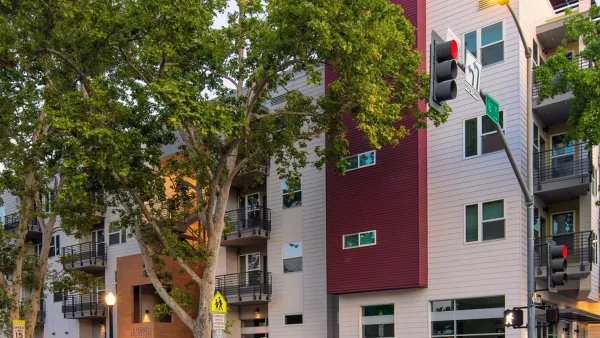
New Washington State Law Lets Cities Give Social Housing Developers City-owned Land
In its current form, HB 1687, which authorizes local governments to assist social housing agencies with land or other resources, only applies to Seattle.

Seattle Social Housing Tax on Highest-paid Jobs Will Bring in Close to $115 Million in First Year
A 5 percent tax on the highest-paying jobs has brought in twice as much new revenue for social housing as originally predicted.

The Need for Social Housing in Seattle
Seattle trails international peer cities in its social housing stock, but there are steps city leaders can take to produce more units and increase affordability.

Planetizen Federal Action Tracker
A weekly monitor of how Trump’s orders and actions are impacting planners and planning in America.

California plans to bury El Niño’s downpour
If the state plays its cards right, it may be able to store a billion acre-feet of El Niño’s water in aquifers.

Desperate measures: Advocates weigh draining Lake Powell to fill Colorado River
Draining the reservoir could reduce evaporation losses by a couple hundred thousand acre-feet.

Los Angeles just elected an urban planner as its mayor
Transportation analysts are optimistic that Raman will be more aggressive in addressing transit issues than Bass.

Mamdani’s pied-à-terre tax survives legal challenge
A panel of judges found that the plaintiffs failed to demonstrate injury as a result of New York City's implementation of the tax.

Eastern Nebraska is running out of electricity
Data centers and electrification are straining eastern Nebraska’s grid, throttling economic development.

FREE Course: Walkable City 1: Why Walkability?
After describing his path towards focusing on walkability as the essence of good planning, Jeff Speck marches through his five principal reasons for making more walkable places.
Reinventing Malls: Planning Alchemy—Turning Gray Fields Into Gold
The course focuses on the opportunities and imperatives that shape reinvention of mall sites.

City of Rosemead
Rutgers University, Edward J. Bloustein School of Planning and Public Policy
One Hundred Miles
University of Michigan School for Environment and Sustainability (SEAS)
Hunter College, City University of New York (CUNY)
The Architects Foundation
City of Cambridge
Montrose County
The Pocatello Development Authority