The action marks a drastic shift in wildlife management policy for the Yellowstone-adjacent bison herd.


The Trump administration has ordered the removal of over 900 bison from federal land in Montana, citing concerns about disease transmission to cattle and property damage.
According to an article by Ben Ryder in Outdoor Hub, "The removal process typically involves capturing bison through specialized facilities and either relocating them to tribal lands, transferring them to conservation herds, or culling the animals. Montana has long grappled with managing bison populations that leave the protected boundaries of Yellowstone, where the largest wild bison herd in the United States resides. These animals represent descendants of the few hundred bison that survived near-extinction in the late 1800s."
The directive drew "immediate opposition" from conservationists and Indigenous leaders. "Multiple conservation organizations have signaled their intent to contest the decision through legal channels, arguing that the removal lacks scientific justification and undermines decades of collaborative wildlife management efforts." Critics of the plan say that native bison provide ecological benefits that grazing cattle don't. Moreover, "Large-scale removals can affect the genetic diversity and age structure of the remaining population, particularly when targeting specific groups or locations."
According to Ryder, "The long-term implications of this decision will depend on whether it represents an isolated management action or the beginning of a broader policy pattern affecting wildlife conservation on federal lands."
Read the full story: More than 900 Montana bison face removal from federal land after Trump administration decision

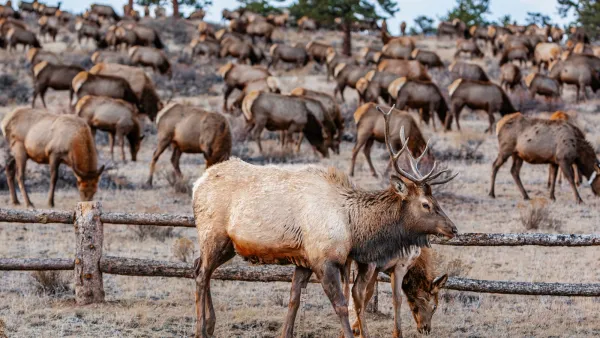
Colorado oil and gas land lease on public land could imperil nation's largest elk herd
The federal government approved the largest land lease to oil and gas interests in Colorado history.

Colorado creates wildlife crossings fund
Residents will have the option to add $5 to their car registration to fund infrastructure that prevents wildlife-vehicle collisions.
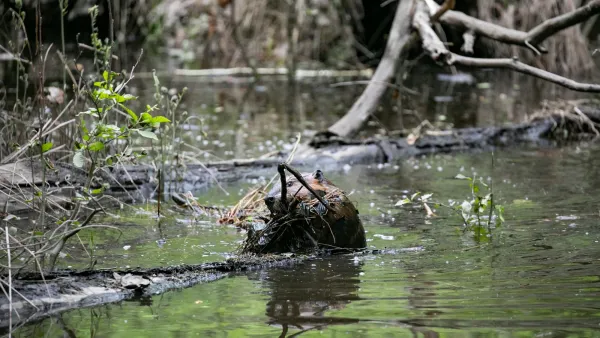
Two years after California reintroduced beavers, they are transforming the landscape into a 'climate-resilient powerhouse'
A beaver restoration program is proving that ancient solutions can help solve modern problems.

Planetizen Federal Action Tracker
A weekly monitor of how Trump’s orders and actions are impacting planners and planning in America.

Amtrak, CN end decades-long dispute with eight-year agreement
The new operating agreement establishes an updated framework for the companies to work together, including processes to resolve disputes.

Northwest rail fans eager for Sept. 30 debut of Amtrak’s Airo fleet
Get ready for that new train smell and more seats. But they won’t go faster or run more frequently on the Cascades route in Washington and Oregon.

LAX SkyLink opening delayed again, contractor won’t commit to new deadline
The project was supposed to open its doors to the public in 2023.

Caltrain may slash over one-third of its stations
If Bay Area voters reject two transit tax measures, Caltrain, BART and AC Transit will see steep service cuts.

A 'dangerous' precedent: North Carolina successfully pressures communities into voting for toll roads
Two mayors resigned from the Charlotte Regional Transportation Planning Organization after it voted in favor of the toll roads.

FREE Course: Walkable City 1: Why Walkability?
After describing his path towards focusing on walkability as the essence of good planning, Jeff Speck marches through his five principal reasons for making more walkable places.
Reinventing Malls: Planning Alchemy—Turning Gray Fields Into Gold
The course focuses on the opportunities and imperatives that shape reinvention of mall sites.

City of Thousand Oaks
City of Wisconsin Rapids
Harvard University Graduate School of Design
The Architects Foundation
University of Cincinnati Online
The Pocatello Development Authority
The Urban Renewal Agency of the City of Pocatello