Smaller households are more prevalent than ever, but most homes in the state are still designed for larger families.


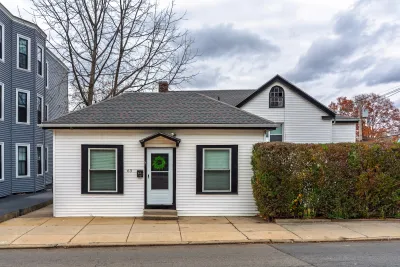
A report from the Pioneer Institute suggests that while household sizes in Massachusetts are shrinking, the homes being built don't reflect this need for smaller housing units.
As Jennifer Smith notes in an article in News From The States, "In 2024, 63 percent of Massachusetts households had one or two people, but just 44 percent of occupied housing units had two or fewer bedrooms, according to the report."
According to report author Andrew Mikula, barriers to building smaller homes include a "cornucopia of regulations, and bureaucratic processes, and land values rising, and other trends that make it very difficult to build new homes that are small and low-cost in the same way that a ranch style home or bungalow would have been 50 years ago." Mikula is proposing a ballot measure that would prevent cities from imposing minimum lot sizes greater than 5,000 square feet or more than 50 feet of frontage for single-family homes.
As Smith explains, "The report offers a suite of policy recommendations to encourage more starter home construction, including, but going beyond, similar zoning changes to the ballot question. These range from zoning changes, to boosting the state’s accessory dwelling unit law, to allowing denser construction in certain areas."
Read the full story: New report urges state to think small on housing crisis

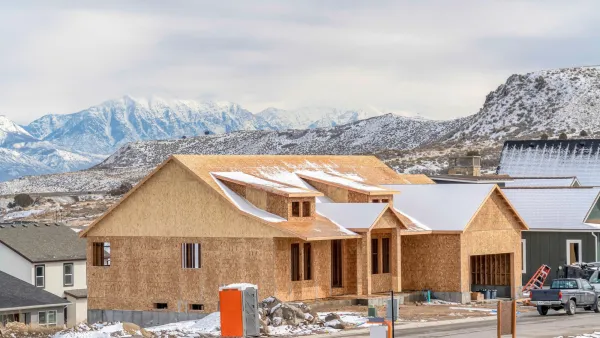
Southern Utah tackles housing crisis with smaller homes, career support for construction workers
St. George and other communities are feeling the strain of a rapidly growing population.

Americans are Fleeing Blue States, Even When Politics Misalign. The Culprit? Housing Affordability.
Will the blue state starter home ever return?
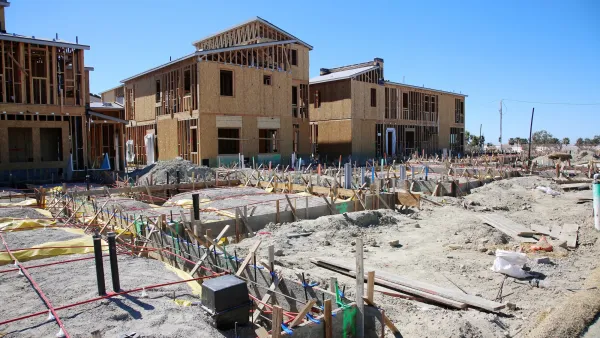
Less than 6% of California cities are building enough housing for very low-income households
Only five jurisdictions are on track to meet their housing goals for all income brackets.

Planetizen Federal Action Tracker
A weekly monitor of how Trump’s orders and actions are impacting planners and planning in America.

Amtrak, CN end decades-long dispute with eight-year agreement
The new operating agreement establishes an updated framework for the companies to work together, including processes to resolve disputes.

Judges permit Denver to divert 77,000 acre feet from the Colorado River for reservoir expansion
Overuse and climate change have caused the Colorado River’s water levels to plummet.

NYC DOT wants faster, more permanent street upgrades
The city is examining ways to build more concrete infrastructure without getting entangled in 'decades-long' projects.

'Something we’ve never seen before:' rising utility rates could strain city finances nationwide
Data centers, climate change and other factors have caused utility rates in the United States to increase by 38% since 2020.

Trump to overrule local leaders, lease millions of acres of America’s Pacific Island territories’ seafloors to mining companies
International law says that the Indigenous people of America’s territories have a right to prior and informed consent regarding projects that impact their countries.

FREE Course: Walkable City 1: Why Walkability?
After describing his path towards focusing on walkability as the essence of good planning, Jeff Speck marches through his five principal reasons for making more walkable places.
Reinventing Malls: Planning Alchemy—Turning Gray Fields Into Gold
The course focuses on the opportunities and imperatives that shape reinvention of mall sites.

Harvard University Graduate School of Design
KFH Group Inc.
Greater Baltimore Committee
The Architects Foundation
University of Cincinnati Online
The Pocatello Development Authority
The Urban Renewal Agency of the City of Pocatello