This year's fires are not contained to the West, with wildfires destroying hundreds of thousands of acres in Texas, Oklahoma and Kansas.


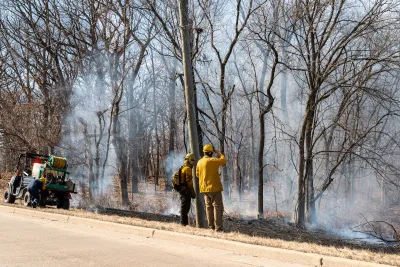
Roughly 2.3 million acres of land in the United States have already burned in wildfires this year, before the fire season has even started, reports Everett Sloane in Morning Overview.
That number, spread out over more than 29,000 fires, is over one million more acres than at the same time last year, Sloane adds. "To put the acreage in perspective, the 10-year average for acres burned through late May typically falls well below two million. Crossing that threshold before June signals a season that is not just early but structurally different from recent norms."
The increase in fires was caused by a combination of a warmer-than-average winter and increased drought conditions. Although fires are typically concentrated in the western states, this year large grassland fires also burned in Texas, Oklahoma and Kansas.
According to Sloane, "Federal agencies including the U.S. Forest Service and the Department of the Interior maintain fire hiring portals and have expanded recruitment in recent years. But no public statement from NICC or NIFC officials about 2026 staffing levels, equipment prepositioning, or budget adequacy has surfaced in available federal reporting." Sloane notes that not every season with a "hot start" has continued to surge, and this summer's predicted El Niño could bring more than the usual amount of rain.

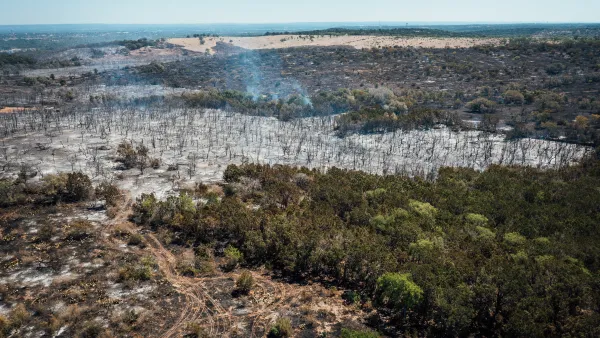
As Central Texas Population Grows, So Does Fire Risk
Sprawl in and around Austin is contributing to growing wildfire risks, and local officials worry about a lack of public awareness of the issue.
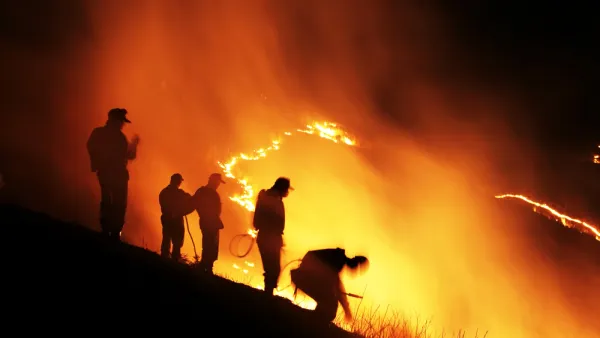
'Fire Weather' Is Stoking More Extreme Wildfires
The number of annual 'fire weather' days has increased over the past 50 years, leading to deadlier and more massive fires in the West.
The Incredible, Rising Cost of Forest Fires
The kicker in a recent article about the current realities of forest fires—and the cost of fighting them—in the United States: The federal government spends 624 percent more on fires than it did 20 years ago.

Planetizen Federal Action Tracker
A weekly monitor of how Trump’s orders and actions are impacting planners and planning in America.

The state-sanctioned urbicide of Austin
People don’t kill cities. Freeways do.

US to reduce Colorado River water deliveries to Mexico
A new Colorado Treaty amendment reduces Mexico’s Colorado River water allocation by 250,000 acre feet.

5 New England states march closer to 800 megawatt wind energy project
Securing federal approval for the project may be complicated under the Trump administration, which has historically been hostile towards domestic wind power.

Baltimore to break ground on $50 million Transit Priority Project
The project will bring faster bus trips, safer streets and better bike connections to Baltimore.

Airbnb launches $250 million 'last-dollar financing' housing accelerator, makes first investment in Austin
The company will put $6.4 million towards affordable housing development in Texas’ capital.

FREE Course: Walkable City 1: Why Walkability?
After describing his path towards focusing on walkability as the essence of good planning, Jeff Speck marches through his five principal reasons for making more walkable places.
Reinventing Malls: Planning Alchemy—Turning Gray Fields Into Gold
The course focuses on the opportunities and imperatives that shape reinvention of mall sites.

Eagle County Government
Harvard University Graduate School of Design
Nashville Planning Department
The Architects Foundation
University of Cincinnati Online
The Pocatello Development Authority
The Urban Renewal Agency of the City of Pocatello
Journal of the American Planning Association