Although the city has built thousands of new homes, few of them are available to the lowest-earning households.


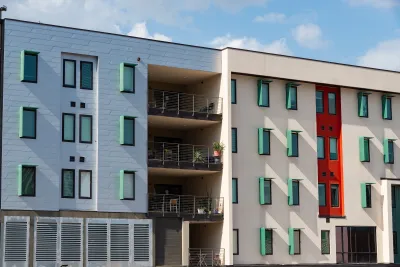
Despite making progress on its affordable housing goals, the city of Austin has not done enough to support its lowest-income households, according to new data assessing the city's 10-year Strategic Housing Blueprint.
As Ben Thompson explains in Community Impact, the plan aims to create at least 60,000 new income-restricted housing units by 2028. But affordability is based on median family income, which has risen by 56% since 2018.
While Austin already passed its goal of adding at least 15,000 new units for 61%-80% MFI earners, "The 2024 blueprint scorecard noted almost no progress toward Austin goals for housing at 30% MFI and below, the extremely low-income level that includes tenants exiting homelessness." New housing was also concentrated in specific geographic areas. While a few districts have surpassed their housing goals, most are no more than 45% of the way there.
FULL STORY: Austin added tens of thousands of affordable units since 2018, but gaps for lowest-income residents remain

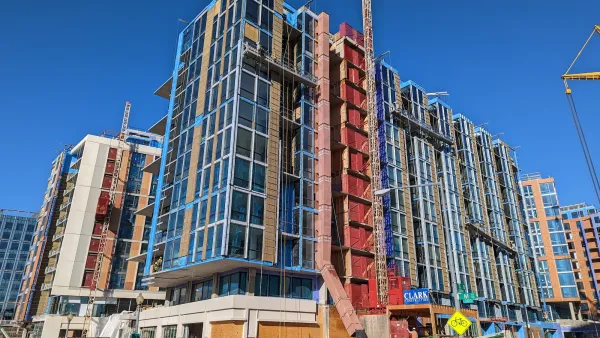
Analysis: DC needs tens of thousands of new homes — not just 'zoned capacity'
Estimates for Washington DC's housing needs range from 15,000 to 170,000.
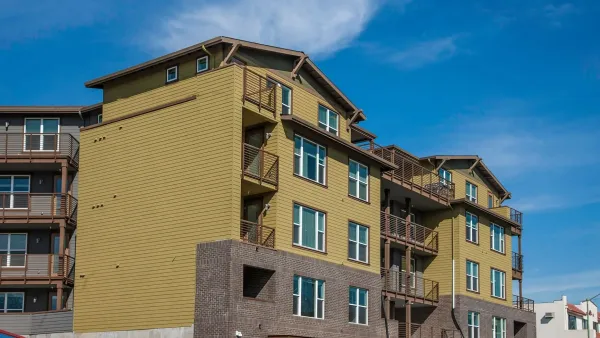
Oakland opens first affordable housing for teachers
The school district says 70% of its teachers can't afford to live in Oakland.
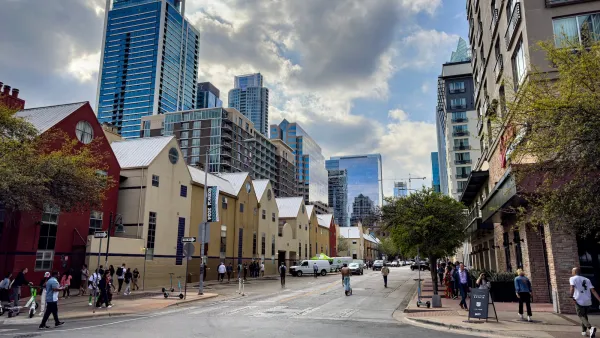
How Austin Became Texas’ Most Expensive City
The average mortgage payment in Austin was $2,955 in 2024.

Planetizen Federal Action Tracker
A weekly monitor of how Trump’s orders and actions are impacting planners and planning in America.

The state-sanctioned urbicide of Austin
People don’t kill cities. Freeways do.

US to reduce Colorado River water deliveries to Mexico
A new Colorado Treaty amendment reduces Mexico’s Colorado River water allocation by 250,000 acre feet.

5 New England states march closer to 800 megawatt wind energy project
Securing federal approval for the project may be complicated under the Trump administration, which has historically been hostile towards domestic wind power.

Baltimore to break ground on $50 million Transit Priority Project
The project will bring faster bus trips, safer streets and better bike connections to Baltimore.

Airbnb launches $250 million 'last-dollar financing' housing accelerator, makes first investment in Austin
The company will put $6.4 million towards affordable housing development in Texas’ capital.

FREE Course: Walkable City 1: Why Walkability?
After describing his path towards focusing on walkability as the essence of good planning, Jeff Speck marches through his five principal reasons for making more walkable places.
Reinventing Malls: Planning Alchemy—Turning Gray Fields Into Gold
The course focuses on the opportunities and imperatives that shape reinvention of mall sites.

Eagle County Government
Harvard University Graduate School of Design
Nashville Planning Department
The Architects Foundation
University of Cincinnati Online
The Pocatello Development Authority
The Urban Renewal Agency of the City of Pocatello
Journal of the American Planning Association