As Austin works to upgrade the city's pipes, Austin Water’s My ATX Water program also offers near-real-time data, detecting and alerting customers to potential leaks.



A digital smart meter initiative is identifying and monitoring leaks in Austin, Texas — and has saved the city over a billion gallons of water since 2021.
Smart Cities Dive reports that Austin, like many large Texas cities, loses over 9 billion gallons per year due to leaks and water main breaks — enough to fill Lake Austin, an audit found.
But the 267,000 wireless smart meters that Austin Water has installed through the My ATX Water program since 2020 have begun to plug the drain.
"Along with alerting users to potential leaks, the smart water system offers daily water-usage reports, water-budgeting tools and water conservation opportunities," SCD reports. "The city is also replacing insufficient water pipes and secured $45 million from the state last year to upgrade its polybutylene pipes. Polybutylene, a material that was popular from the 1960s to the 1980s, becomes brittle over time and is prone to leaks, according to the city."
Read the full story, below.
FULL STORY: Smart meters have saved Austin, Texas, more than a billion of gallons of water, utility says


To guarantee residents fresh water, Tijuana looks to the sea
Construction on one of the largest desalination plants in Latin America will soon break ground to reduce reliance on the dwindling Colorado river.
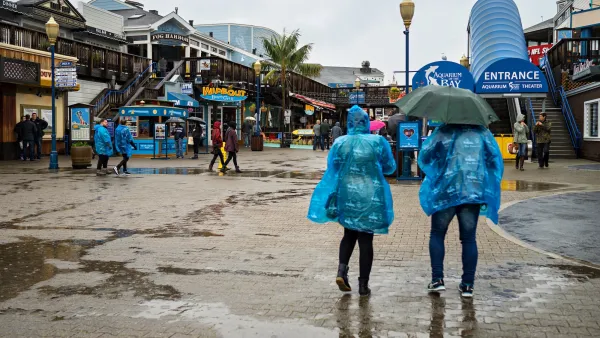
Rain gardens keep up to 99% of pollutants out of San Francisco Bay
The city's roadside rain gardens soak up stormwater and filter out dozens of harmful micropollutants.
Climate change could double household water costs in some cities, study finds
New research suggests that climate change-related stressors are straining municipal water systems.

Planetizen Federal Action Tracker
A weekly monitor of how Trump’s orders and actions are impacting planners and planning in America.

The state-sanctioned urbicide of Austin
People don’t kill cities. Freeways do.

US to reduce Colorado River water deliveries to Mexico
A new Colorado Treaty amendment reduces Mexico’s Colorado River water allocation by 250,000 acre feet.

5 New England states march closer to 800 megawatt wind energy project
Securing federal approval for the project may be complicated under the Trump administration, which has historically been hostile towards domestic wind power.

Baltimore to break ground on $50 million Transit Priority Project
The project will bring faster bus trips, safer streets and better bike connections to Baltimore.

Airbnb launches $250 million 'last-dollar financing' housing accelerator, makes first investment in Austin
The company will put $6.4 million towards affordable housing development in Texas’ capital.

FREE Course: Walkable City 1: Why Walkability?
After describing his path towards focusing on walkability as the essence of good planning, Jeff Speck marches through his five principal reasons for making more walkable places.
Reinventing Malls: Planning Alchemy—Turning Gray Fields Into Gold
The course focuses on the opportunities and imperatives that shape reinvention of mall sites.

Eagle County Government
Harvard University Graduate School of Design
Nashville Planning Department
The Architects Foundation
University of Cincinnati Online
The Pocatello Development Authority
The Urban Renewal Agency of the City of Pocatello
Journal of the American Planning Association