Construction on one of the largest desalination plants in Latin America will soon break ground to reduce reliance on the dwindling Colorado river.



Nearly a million residents of Tijuana and Playas de Rosarito, Mexico depend on the Colorado River for freshwater — but its reserves are growing increasingly low. On Monday, Mexico’s National Water Commission moved one step closer to opening one of largest desalination plants in Latin America in an effort to ensure residents have access to drinking water, awarding the construction contract to Cox Energy.
Smart Water Magazine reports that the project is expected to produce 2,200 liters of fresh water per second — about 190,000 cubic metres a day — and increase available freshwater in the region by 45%. Construction is set to begin on Aug. 18, one day after signing the contract but nearly three weeks after the project's intended start date of Aug. 1. It is expected to be complete in 2029.
The desalination plant was initially planned as a private-public partnership, but former governor of Baja California Jaime Bonilla canceled the early iteration of the project in 2020. In 2024, Mexican President Claudia Sheinbaum reintroduced the plant as a public work.
Read the full story, below.
Read the full story: Cox to build the Playas de Rosarito desalination plant, one of Latin America’s largest

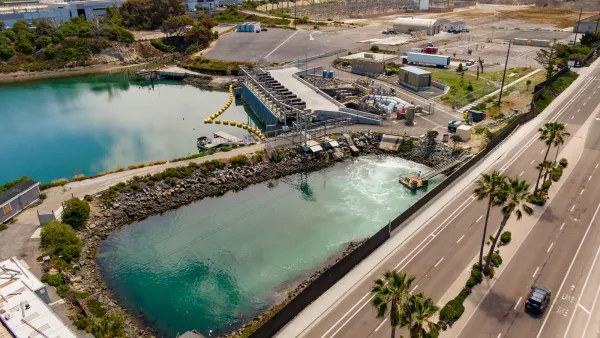
New agreement would let Arizona, Nevada use water from California desalination plant
The plan will help reduce strain on Lake Mead during extreme drought periods.

Corpus Christi Faces Uncertain Water Future as City Cancels Desalination Plan
The Texas refinery town is grappling with an impending water shortage after a seven-year drought, but a dramatic increase in the projected cost of a desalination plant prompted the city to look for other ways to bring in additional water.
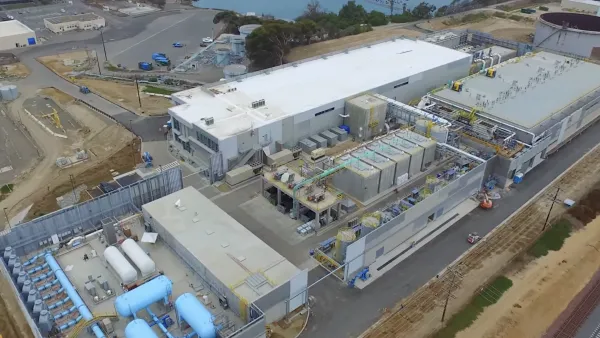
Federal Loan to Support San Diego Desalination Plant Overhaul
The financing will go toward funding an updated cooling system and ensuring the protection of local marine life.

Planetizen Federal Action Tracker
A weekly monitor of how Trump’s orders and actions are impacting planners and planning in America.

‘Going backwards:’ Baltimore mayor, students rally against state's transit funding plan
Maryland's proposed six-year plan provides no funding for Baltimore’s BMORE bus program and reduces its road maintenance funding.
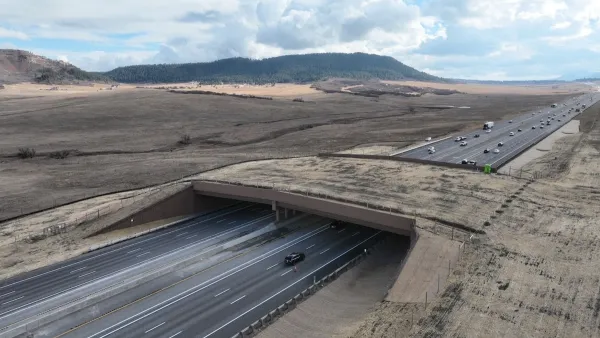
Record-breaking wildlife overpass in Colorado brings 91% reduction in animal collisions
Prior to the overpass, vehicles were hitting one deer per day on Colorado’s Interstate 25.

Mamdani sent nearly 6,000 pied-à-terre tax warnings to homes that didn’t qualify
A judge has ordered the administration to cancel thousands of pied-à-terre tax notices after it sent 35% of them erroneously.

Detroit to transform waterfront with $2.2 billion investment
Developers will convert about 18 acres of unused parking lot space into civic spaces.

‘Going backwards:’ Baltimore mayor, students rally against state's transit funding plan
Maryland's proposed six-year plan provides no funding for Baltimore’s BMORE bus program and reduces its road maintenance funding.

FREE Course: Walkable City 1: Why Walkability?
After describing his path towards focusing on walkability as the essence of good planning, Jeff Speck marches through his five principal reasons for making more walkable places.
Reinventing Malls: Planning Alchemy—Turning Gray Fields Into Gold
The course focuses on the opportunities and imperatives that shape reinvention of mall sites.

City of Thousand Oaks
City of Wisconsin Rapids
Harvard University Graduate School of Design
The Architects Foundation
University of Cincinnati Online
Northern Illinois Transit Authority (NITA)
The Pocatello Development Authority
The Urban Renewal Agency of the City of Pocatello