The ride-hailing giant is calling Waymo's model “less scalable” and “less reliable” than Uber’s hybrid approach mixing human drivers and AVs.


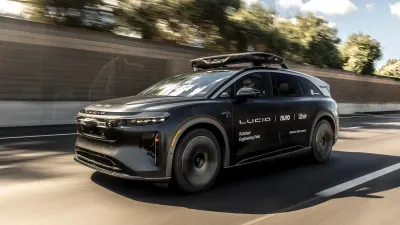
Uber is committing more than $10 billion to an autonomous vehicle fleet, hedging its bets with a hybrid approach that mixes human drivers with robotaxis on a single ride-hailing platform, calling out Waymo's all-AV approach as unreliable, inequitable and, referring to one specific instance, "scary."
Electrek reports that Uber's investments in Rivian, Lucid, and Nuro represent a "strategic" move from a platform model to asset ownership:
"The real story here is that Uber got spooked. The company once believed it could be the platform layer on top of everyone’s robotaxis, taking a cut of every ride without owning any vehicles. But Waymo’s rapid scaling to 400,000 rides per week proved that AV operators might not need Uber at all. Waymo has its own app. It has its own customers. It’s expanding to new cities without Uber’s help," Electrek's analysis reads. "So Uber pivoted to asset ownership — $10 billion worth."
Waymo vehicles still operate on Uber’s platform in Austin and Atlanta.
FULL STORY: Uber turns on Waymo as it pours $10B+ into owning robotaxi alternatives

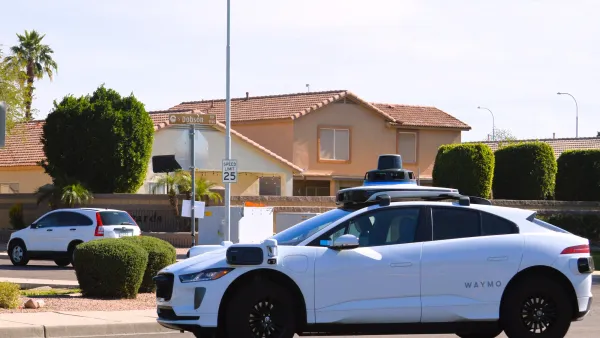
Uber and Waymo part ways in Phoenix
The companies ended a three-year pilot program, with Waymo saying it plans to keep its Phoenix robotaxi fleet available through its own app.
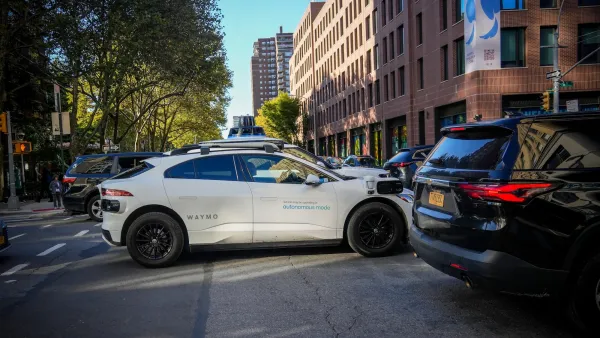
Uber says more Waymos are good for Uber too
The company believes robotaxis are spurring growth in the ride-hailing sector as a whole.
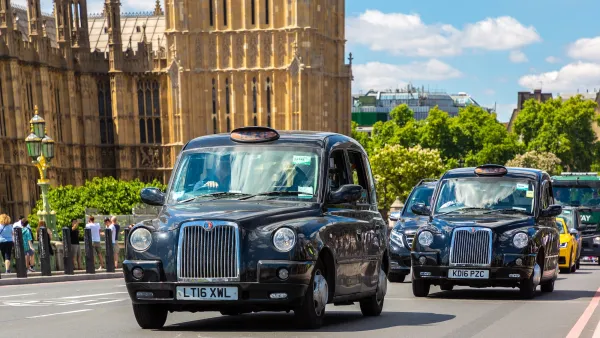
Can Robotaxis Handle London's Famously Tangled Streets?
Black Cab drivers say autonomous cars won’t be able to handle London’s unique conditions.

Planetizen Federal Action Tracker
A weekly monitor of how Trump’s orders and actions are impacting planners and planning in America.

The state-sanctioned urbicide of Austin
People don’t kill cities. Freeways do.

US to reduce Colorado River water deliveries to Mexico
A new Colorado Treaty amendment reduces Mexico’s Colorado River water allocation by 250,000 acre feet.

Mamdani overhauls NYC's Vision Zero plan with 100 new policy goals
The overhaul aims to reduce traffic deaths and make streets safer for pedestrians, cyclists and drivers through lower speed limits, new safety infrastructure and more.

Amtrak not solely to blame for New Jersey commuter rail's unreliability, report finds
A new study from the Garden State Initiative found that NJ Transit’s budget grew 20% across a 4 year period, but reliability declined significantly over the same period.

EPA erases limits on planet-warming pollution from power plants
Under Monday’s plan, power plants would still have some limits on how much mercury, arsenic and other contaminants they can emit.

FREE Course: Walkable City 1: Why Walkability?
After describing his path towards focusing on walkability as the essence of good planning, Jeff Speck marches through his five principal reasons for making more walkable places.
Reinventing Malls: Planning Alchemy—Turning Gray Fields Into Gold
The course focuses on the opportunities and imperatives that shape reinvention of mall sites.

Eagle County Government
Harvard University Graduate School of Design
Nashville Planning Department
The Architects Foundation
University of Cincinnati Online
The Pocatello Development Authority
The Urban Renewal Agency of the City of Pocatello
Journal of the American Planning Association