The new framework from Brown University researchers evaluates the impact of urban design elements on mental health disorders separate from pollution-related factors — a first in its field.


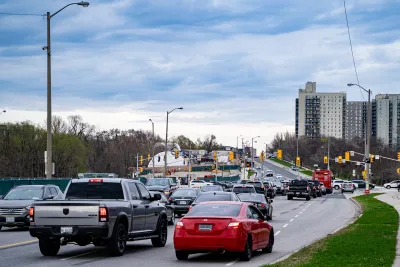
A groundbreaking new study by Brown University researchers has revealed the mental health impacts of "community severance" caused by roadways and traffic patterns, Bioengineer.org reports. Specifically, the study details hospital visits related to mood, anxiety, adjustment, and schizophrenia disorders in New York State, showing significantly increased rates of schizophrenia-related hospital admissions in areas of higher severance across demographic boundaries.
“While previous research has extensively documented the harmful impacts of traffic-related air pollution and noise on psychological well-being, this study uniquely focuses on how the physical fragmentation of neighborhoods by roads and the resultant social isolation affect mental health outcomes, with a particular emphasis on schizophrenia-related hospital visits,” Bioengineer.org reports.
“Unlike traditional measures of urban pollution and noise, this index captures the extent to which road infrastructure—such as divided highways, lack of sidewalks, and inadequate crosswalks—disrupts pedestrian connectivity and social interactions within communities. This framework allows for an unprecedented evaluation of how urban design elements contribute independently to mental health disorders, separate from pollution-related factors.”
The study details how neighborhood walkability, vibrancy and sociability — all discouraged by severance — impact key protective mental health pillars like social supports, exercise and access to the outdoors. They emphasized the importance of the findings in relation to the transition to electrified vehicles, noting that while EVs reduce emissions and noise pollution, they do not sufficiently mitigate the mental health impacts of car dependency and the loss of community connectivity it brings.
The federally-funded study was supported by the National Institute of Environmental Health Sciences and the National Institute on Aging. It was based on the Community Severance Index, a metric developed initially at Columbia Mailman School of Public Health and refined through collaboration with Brown University experts.
Read the full story, below.
FULL STORY: Study Reveals Impact of Road Infrastructure and Traffic on Community Mental Health


The Death of the Living Room
High housing costs are squeezing out common shared spaces in many UK apartments, leading to social isolation and negative mental health impacts.

The Panacea of Outdoor Human Movement
Humans relish in over-complicating things, but the sweetest and healthiest things in life are the simplest.

The Unseen Aftermath: Wildfires’ Lasting Health and Emotional Burden
Wildfires in Los Angeles not only pose immediate physical health risks but also lead to long-term respiratory problems and mental health struggles, underscoring the need for a coordinated public health response to mitigate their lasting effects.

Planetizen Federal Action Tracker
A weekly monitor of how Trump’s orders and actions are impacting planners and planning in America.

The state-sanctioned urbicide of Austin
People don’t kill cities. Freeways do.

US to reduce Colorado River water deliveries to Mexico
A new Colorado Treaty amendment reduces Mexico’s Colorado River water allocation by 250,000 acre feet.

5 New England states march closer to 800 megawatt wind energy project
Securing federal approval for the project may be complicated under the Trump administration, which has historically been hostile towards domestic wind power.

Baltimore to break ground on $50 million Transit Priority Project
The project will bring faster bus trips, safer streets and better bike connections to Baltimore.

Airbnb launches $250 million 'last-dollar financing' housing accelerator, makes first investment in Austin
The company will put $6.4 million towards affordable housing development in Texas’ capital.

FREE Course: Walkable City 1: Why Walkability?
After describing his path towards focusing on walkability as the essence of good planning, Jeff Speck marches through his five principal reasons for making more walkable places.
Reinventing Malls: Planning Alchemy—Turning Gray Fields Into Gold
The course focuses on the opportunities and imperatives that shape reinvention of mall sites.

Eagle County Government
Harvard University Graduate School of Design
Nashville Planning Department
The Architects Foundation
University of Cincinnati Online
The Pocatello Development Authority
The Urban Renewal Agency of the City of Pocatello
Journal of the American Planning Association