The budget also reduces funding for FEMA, climate resilience projects, and water infrastructure programs.


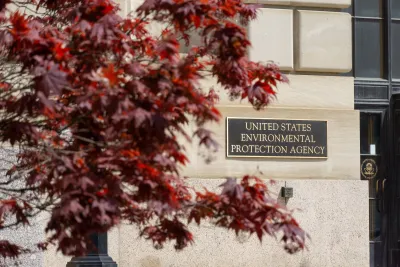
President Trump's proposed budget for fiscal year 2027 includes a 10% cut to non-defense spending, slashing budgets for what the administration calls "woke, weaponized, and wasteful programs" including emergency management and renewable energy grants.
As Robyn Griggs Lawrence explains in Smart Cities Dive, the budget cuts non-disaster FEMA funding by $1.3 billion, eliminates environmental justice grants, and Department of Interior renewable energy programs. It also cuts $510 million in Department of Agriculture funds for projects tied to green infrastructure and climate change.
According to a statement from Climate Action Campaign Director Margie Alt, "This budget would slash the EPA budget by 52%." International Association of Emergency Managers President Josh Morton warned that "The proposed reductions would significantly weaken national readiness at a time when communities are facing more frequent, complex, and costly threats."
Read the full story: Trump’s FY27 budget slashes climate and disaster funding, shifting costs to cities and states

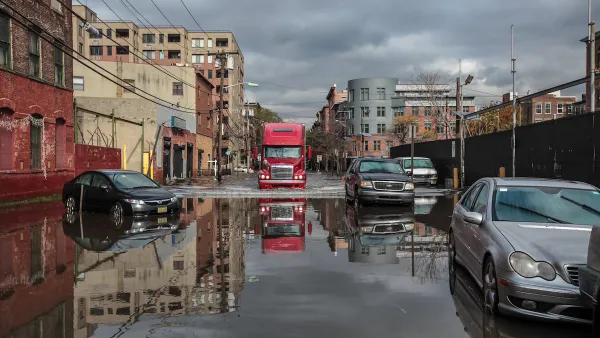
FEMA Resilience Program Cuts Grant Funding
The Building Resilient Infrastructure and Communities program funded projects from flood prevention to power station upgrades.
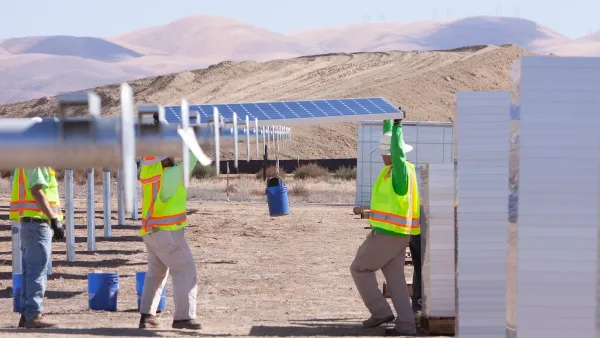
21 Climate Resilience Projects Cancelled by the EPA
The federal government has pulled funding for at least 21 projects related to farming, food systems, and environmental justice to comply with one of Trump’s early executive orders.

Court unfreezes $20B in federal climate grants
A U.S. Court of Appeals ruled that the Trump administration potentially violated the Inflation Reduction Act by attempting to claw back grants awarded under the Greenhouse Gas Reduction Fund program.

Planetizen Federal Action Tracker
A weekly monitor of how Trump’s orders and actions are impacting planners and planning in America.

California plans to bury El Niño’s downpour
If the state plays its cards right, it may be able to store a billion acre-feet of El Niño’s water in aquifers.

Chicago breaks ground on $3 billion megadevelopment
The new neighborhood, titled Foundry Park, will one day host 3,700 residences.

Satanic Place Names
From streams and lakes to valleys and canyons, I mapped more than 1,000 places named after the Devil.

California High-Speed Rail Authority CEO resigns after $600,000 scandal
Under Ian Choudri, the authority used taxpayer dollars to fund first class flights and trips to nightclubs.

Want to study the Missouri River? Soon, you may need unanimous approval from 10 states
Legislation would require 10 governors’ permission to study or build projects moving water outside the basin.

FREE Course: Walkable City 1: Why Walkability?
After describing his path towards focusing on walkability as the essence of good planning, Jeff Speck marches through his five principal reasons for making more walkable places.
Reinventing Malls: Planning Alchemy—Turning Gray Fields Into Gold
The course focuses on the opportunities and imperatives that shape reinvention of mall sites.

City of Rosemead
Rutgers University, Edward J. Bloustein School of Planning and Public Policy
One Hundred Miles
Hunter College, City University of New York (CUNY)
The Architects Foundation
University of Cincinnati Online
City of Cambridge
Montrose County
The Pocatello Development Authority