The Green River Ferry shuttles cars in a 30-second trip.


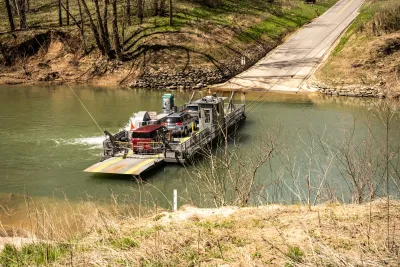
A nearly century-old ferry that shuttles cars across the Green River in Mammoth Cave National Park is the nation’s shortest, with the crossing spanning just 200 feet for a roughly 30-second trip.
As Brian Silvestro explains in The Autopian, “The boat, a single-engine barge, transports about 135,000 vehicles and 270,000 passengers a year. Drivers have to come up to the crossing, drive onto the boat, and take a 30-second ride across the water.”
The ferry, established in 1934, operates 364 days a year and can accommodate two cars at a time — too few at times when close to 30 cars can stack up waiting to cross. The National Park Service restored and upgraded the ferry last year for $3.9 million, far less than the $50 million it would cost to build a bridge at the same location. The ferry also serves locals who need to travel through the area.
FULL STORY: America’s Shortest Car Ferry Sails Only 200 Feet And Somehow It Makes More Sense Than A Bridge

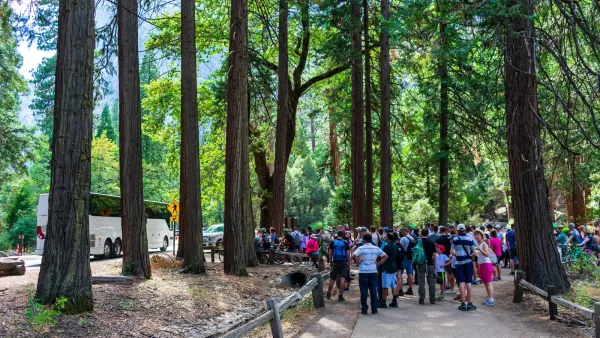
Yosemite crowds wait hours to enter park after NPS ends reservation system
Bumper-to-bumper traffic and a lack of parking foreshadowed a potentially chaotic summer.
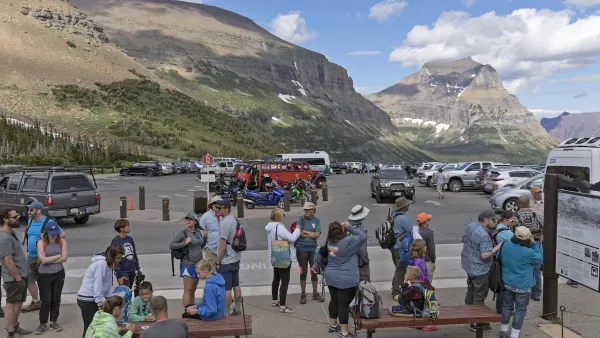
Glacier National Park drops reservation requirement, plans to double down on shuttle network
Since 2021, visitors with cars have had to make a reservation to access the park.
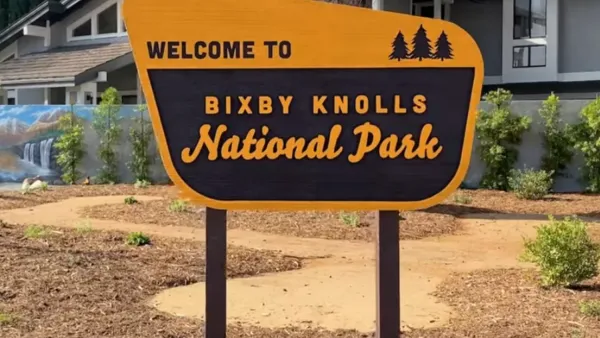
Tour Long Beach’s 0.05-acre ‘National Park’
A tongue-in-cheek community improvement project touts itself as the nation’s “smallest national park.”

Planetizen Federal Action Tracker
A weekly monitor of how Trump’s orders and actions are impacting planners and planning in America.

The state-sanctioned urbicide of Austin
People don’t kill cities. Freeways do.

US to reduce Colorado River water deliveries to Mexico
A new Colorado Treaty amendment reduces Mexico’s Colorado River water allocation by 250,000 acre feet.

Brightline West’s future may rely on $6 billion federal loan
The company has until Nov. 2 to make a $400 million equity investment into its proposed high-speed rail line.

LA Metro’s ultimatum: no extra buses for LA28 if federal funding isn’t imminently secured
If Metro does not provide additional buses, LA28 organizers will have to find a new way to manage Olympic traffic. LA28’s budget does not include a line item for transit.

Colorado’s Largest Data Center Could Rise Next to Homes — Without a Public Hearing
The proposed campus would consume 11 times the power of Denver International Airport; as it has across the country, opposition mounts.

FREE Course: Walkable City 1: Why Walkability?
After describing his path towards focusing on walkability as the essence of good planning, Jeff Speck marches through his five principal reasons for making more walkable places.
Reinventing Malls: Planning Alchemy—Turning Gray Fields Into Gold
The course focuses on the opportunities and imperatives that shape reinvention of mall sites.

Eagle County Government
Harvard University Graduate School of Design
Nashville Planning Department
The Architects Foundation
University of Cincinnati Online
The Pocatello Development Authority
The Urban Renewal Agency of the City of Pocatello
Journal of the American Planning Association