Championship soccer games will be held in 11 U.S. cities this summer as part of the 2026 FIFA World Cup.


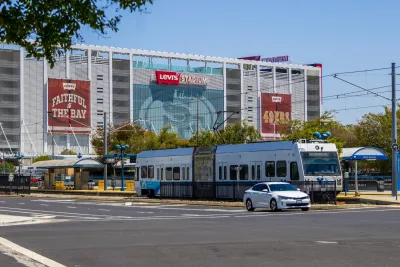
The Federal Transit Administration (FTA) announced $100.3 million in public transit grants available to cities hosting 2026 World Cup events, reports Trevor Hughes in USA Today.
According to Hughes, “Atlanta, Miami, Los Angeles, Kansas City, Missouri, and Dallas are among the U.S host cities, with the July 19 final played at MetLife Stadium in East Rutherford, New Jersey.” Federal officials say the grants, appropriated as part of the Consolidated Appropriations Act, can be used for “everything from buying additional buses to providing transportation assistance for disabled visitors and express shuttle service to fans.”
FIFA estimates roughly 5 million fans will attend at least one of the 104 matches spread out across the United States, Canada, and Mexico, but U.S. tourism could be impacted by Trump administration policies. “Though tourism worldwide grew in 2025, the United States was the only major country to experience a decline in foreign visitors, with a 6% drop in people costing the economy $19 billion, according to the World Travel and Tourism Council.’”
FULL STORY: US cities hosting World Cup eligible to get $100M transit boost

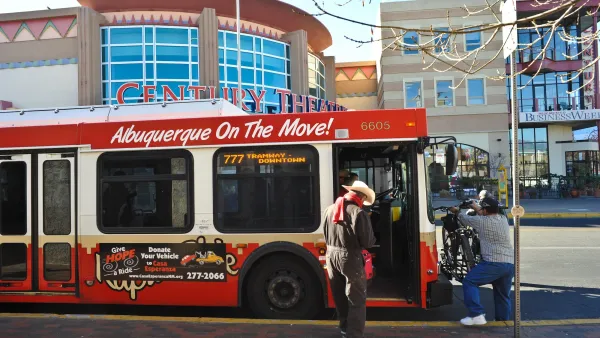
Trump DOT Wants to Ban Free Buses
The department wants to prevent cities that receive funds from the Federal Transit Administration from offering free transit fares.
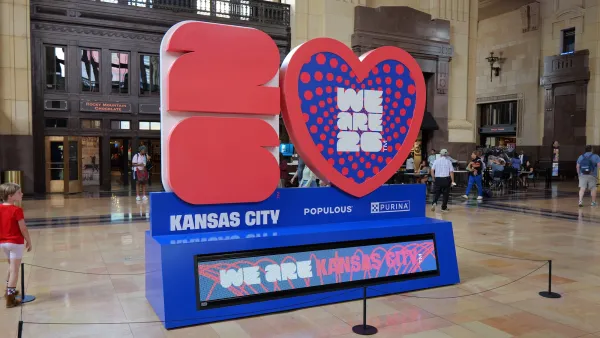
World Cup crowds offer 'stress test' for Kansas City transit planners
Transportation officials are closely monitoring travel patterns during the World Cup to understand how the city's transit system can be improved as the population grows.
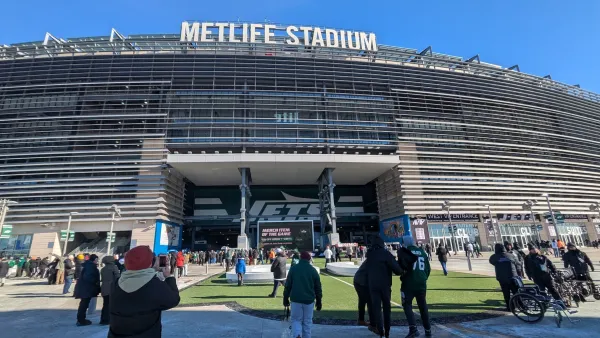
New Jersey FIFA transit will cost $6 million per match
World Cup host cities are bracing for an influx of visitors — and transit users.

Planetizen Federal Action Tracker
A weekly monitor of how Trump’s orders and actions are impacting planners and planning in America.

The state-sanctioned urbicide of Austin
People don’t kill cities. Freeways do.

US to reduce Colorado River water deliveries to Mexico
A new Colorado Treaty amendment reduces Mexico’s Colorado River water allocation by 250,000 acre feet.

5 New England states march closer to 800 megawatt wind energy project
Securing federal approval for the project may be complicated under the Trump administration, which has historically been hostile towards domestic wind power.

Baltimore to break ground on $50 million Transit Priority Project
The project will bring faster bus trips, safer streets and better bike connections to Baltimore.

Airbnb launches $250 million 'last-dollar financing' housing accelerator, makes first investment in Austin
The company will put $6.4 million towards affordable housing development in Texas’ capital.

FREE Course: Walkable City 1: Why Walkability?
After describing his path towards focusing on walkability as the essence of good planning, Jeff Speck marches through his five principal reasons for making more walkable places.
Reinventing Malls: Planning Alchemy—Turning Gray Fields Into Gold
The course focuses on the opportunities and imperatives that shape reinvention of mall sites.

Eagle County Government
Harvard University Graduate School of Design
Nashville Planning Department
The Architects Foundation
University of Cincinnati Online
The Pocatello Development Authority
The Urban Renewal Agency of the City of Pocatello
Journal of the American Planning Association