While the total number of Denver residents without permanent housing is growing, the city has leveraged its resources to quickly create over 1,000 new emergency shelter beds.


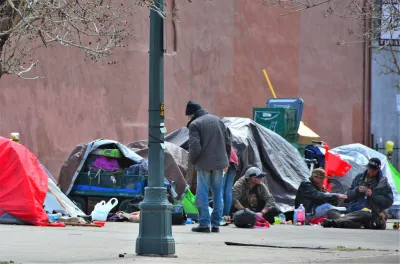
Denver has reduced unsheltered homelessness by 45 percent since 2023 — but the total number of unhoused people in the city is growing, writes Carl Smith in Governing.
According to Smith, “If the city had not found new ways to provide transitional shelter for thousands of the newly unhoused, the unsheltered count could have doubled or tripled.”
During the first part of Mayor Mike Johnson’s administration, the city mobilized funding and resources to streamline permitting and building of new temporary shelter facilities and purchased or leased hotel rooms to add to its emergency shelter stock. “By the end of December [2023], the city had cleared nine major encampments and moved 1,100 people indoors into 1,100 new beds in hotels and ‘micro communities’ of tiny homes.”
The mayor’s approach of bringing together various city agencies to strategize and act on homelessness, dubbed “tiger team,” has set a useful example for other communities. But as housing remains unaffordable for many Denver households, high costs of living are driving more people out of their homes and into the streets.
Bolstered by a voter-approved homelessness resolution fund and a nonprofit impact investment fund that purchases apartment buildings for affordable and transitional housing, the city hopes it can open 2,500 new permanent housing units in 2026.
Read the full story: Denver Cut Street Homelessness Nearly in Half


Investigation Reveals Just How Badly California’s Homeless Shelters are Failing
Fraud, violence, death, and chaos follow a billion dollar investment in a temporary solution that is proving ineffective.

Austin Approves Over $10 Million for Homelessness Programs
The funding package supports emergency shelters totaling close to 500 beds.
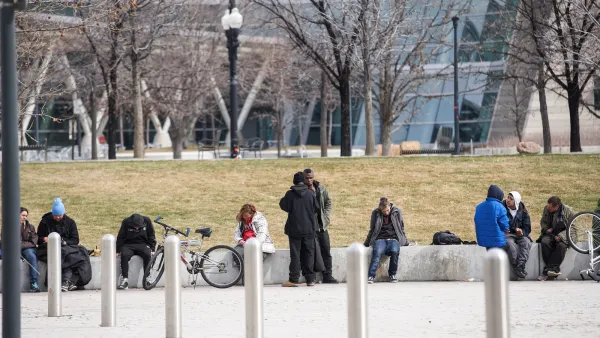
Utah Shelter Plan Criticized as ‘Homeless Detention Camp’
A proposal to build a 1,300-bed shelter campus faces backlash from advocates concerned that it would be akin to a detention center.

Planetizen Federal Action Tracker
A weekly monitor of how Trump’s orders and actions are impacting planners and planning in America.

California plans to bury El Niño’s downpour
If the state plays its cards right, it may be able to store a billion acre-feet of El Niño’s water in aquifers.

Chicago breaks ground on $3 billion megadevelopment
The new neighborhood, titled Foundry Park, will one day host 3,700 residences.

California High-Speed Rail Authority CEO resigns after $600,000 scandal
Under Ian Choudri, the authority used taxpayer dollars to fund first class flights and trips to nightclubs.

Want to study the Missouri River? Soon, you may need unanimous approval from 10 states
Legislation would require 10 governors’ permission to study or build projects moving water outside the basin.

Desperate measures: Advocates weigh draining Lake Powell to fill Colorado River
Draining the reservoir could reduce evaporation losses by a couple hundred thousand acre-feet.

FREE Course: Walkable City 1: Why Walkability?
After describing his path towards focusing on walkability as the essence of good planning, Jeff Speck marches through his five principal reasons for making more walkable places.
Reinventing Malls: Planning Alchemy—Turning Gray Fields Into Gold
The course focuses on the opportunities and imperatives that shape reinvention of mall sites.

City of Rosemead
Rutgers University, Edward J. Bloustein School of Planning and Public Policy
One Hundred Miles
Hunter College, City University of New York (CUNY)
The Architects Foundation
University of Cincinnati Online
City of Cambridge
Montrose County
The Pocatello Development Authority