The funding package supports emergency shelters totaling close to 500 beds.


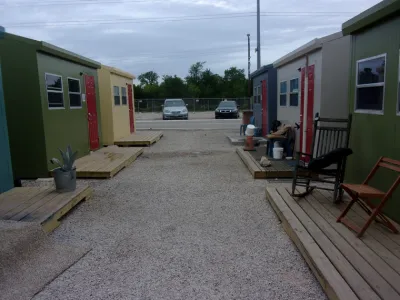
The Austin City Council voted to direct over $10 million to homelessness reduction programs including an expansion of the Esperanza community, one of the largest non-congregate shelter facilities in the nation.
As Ben Thompson explains in Community Impact, “Esperanza is approaching a 200-bed capacity and in the process of adding hundreds more spaces for clients exiting homelessness.” The shelter is seen as one of the city’s best-performing facilities that helps people successfully move into permanent housing. When complete, it will serve over 1,000 people each year.
The funding package will also support the 300-bed Marshaling Yard shelter, the 145-bed Southbridge Shelter, and a Homeless Outreach Street Team. “The city remains on the lookout for extra shelter space, with an estimated community-wide need of hundreds more beds still remaining.”
FULL STORY: Council directs millions of dollars to Austin shelters, 325-unit Esperanza Community expansion


Denver Cut Unsheltered Homelessness Almost in Half Even as Unhoused Population Grows
While the total number of Denver residents without permanent housing is growing, the city has leveraged its resources to quickly create over 1,000 new emergency shelter beds.
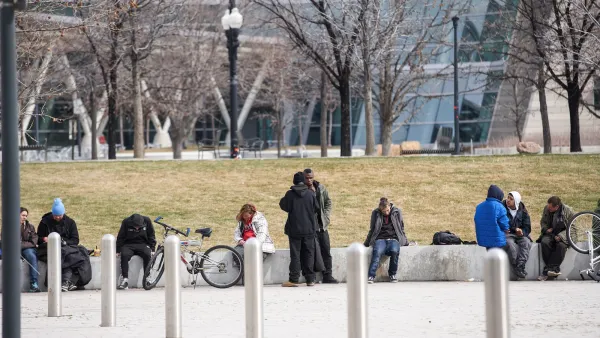
Utah Shelter Plan Criticized as ‘Homeless Detention Camp’
A proposal to build a 1,300-bed shelter campus faces backlash from advocates concerned that it would be akin to a detention center.

Investigation Reveals Just How Badly California’s Homeless Shelters are Failing
Fraud, violence, death, and chaos follow a billion dollar investment in a temporary solution that is proving ineffective.

The state-sanctioned urbicide of Austin
People don’t kill cities. Freeways do.

US to reduce Colorado River water deliveries to Mexico
A new Colorado Treaty amendment reduces Mexico’s Colorado River water allocation by 250,000 acre feet.

New Jersey’s second-largest city bans standalone data centers
Jersey City will continue to allow co-location facilities, such as those meant for research institutions that store their own data.

Amtrak not solely to blame for New Jersey commuter rail's unreliability, report finds
A new study from the Garden State Initiative found that NJ Transit’s budget grew 20% across a 4 year period, but reliability declined significantly over the same period.

EPA erases limits on planet-warming pollution from power plants
Under Monday’s plan, power plants would still have some limits on how much mercury, arsenic and other contaminants they can emit.

Phoenix announces new on-demand transit service, more frequent RAPID buses
Both new services will launch in October, and are part of Phoenix's Project Effective Access Solutions for Easing Congestion.

FREE Course: Walkable City 1: Why Walkability?
After describing his path towards focusing on walkability as the essence of good planning, Jeff Speck marches through his five principal reasons for making more walkable places.
Reinventing Malls: Planning Alchemy—Turning Gray Fields Into Gold
The course focuses on the opportunities and imperatives that shape reinvention of mall sites.

Eagle County Government
Harvard University Graduate School of Design
Nashville Planning Department
The Architects Foundation
University of Cincinnati Online
The Pocatello Development Authority
The Urban Renewal Agency of the City of Pocatello
Journal of the American Planning Association